The results show that a model's inductive generalization reflects the latent organization of its training data, with implications for data curation and for predicting how far a learned fact will spread.
Abstract
When told that robins have sesamoid bones, people are far more prone to extend the property to sparrows than to whales. This behavior, called category-based property induction, is well documented in humans, but whether and how it develops in language models trained only to predict the next token is unclear. To shed light on this, we construct a hierarchical taxonomy of synthetic entities grouped by the properties they share. We then inject facts from this latent taxonomy into the continued pre-training of Pythia and OLMo 2 models from 70M to 7B parameters, and track the development of inductive behaviors. We find that taxonomically aligned induction emerges from next-token prediction alone: a property learned for one entity transfers more strongly within its taxonomic category than across categories. Internally, entities that share a deeper category become more similar in activation space, and clustering recovers the full taxonomic tree from entity representations. Contrary to the usual expectation that scale helps, we find that induction weakens with model size when the data budget is fixed, suggesting that larger models memorize individual facts rather than compress them into shared structure. Induction also strengthens with more pre-training before the taxonomy injection, transfers to novel in-context properties, and can be overridden by a latent taxonomy implied by the prompt. Together, these results show that a model's inductive generalization reflects the latent organization of its training data, with implications for data curation and for predicting how far a learned fact will spread.
This publication proposes a definition and a classification of agile software development approaches and analyses ten software development methods that can be characterized as being "agile" against the defined criterion.
P. Abrahamsson, O. Salo, Jussi Ronkainen et al.· arXiv.org· 727 citations· ⚡54
The results indicate that software engineering work practices are chosen opportunistically, adapted and configured to provide value under the constrains imposed by the startup context.
Nicolò Paternoster, Carmine Giardino, M. Unterkalmsteiner et al.· Information and Software Tec...· 394 citations· ⚡54
The possibility of inferring high-dimensional data inference in a model that consists of a prior and an auxiliary differentiable constraint given some additional information is considered, thereby allowing a range of potential applications in adapting models to new domains and tasks.
Alexandros Graikos, Esmeralda S. Whitammer, N. Jojic et al.· Neural Information Processin...· 316 citations· ⚡15
It is proved that any global minimizer of the trajectory balance objective can define a policy that samples exactly from the target distribution, and empirically demonstrate the benefits of the trajectories balance objective for GFlowNet convergence, diversity of generated samples, and robustness to long action sequenc...
Esmeralda S. Whitammer, Moksh Jain, Emmanuel Bengio et al.· Neural Information Processin...· 302 citations· ⚡60
Consequences of happiness and unhappiness that are beneficial and detrimental for developers' mental well-being, the software development process, and the produced artifacts are found.
D. Graziotin, Fabian Fagerholm, Xiaofeng Wang et al.· Journal of Systems and Softw...· 236 citations· ⚡13
The Mobile-D approach is briefly outlined here and the experiences gained from four case studies are discussed, which helped develop an agile development approach for mobile application development.
P. Abrahamsson, Antti Hanhineva, H. Hulkko et al.· Conference on Object-Oriente...· 225 citations· ⚡18
Related blog posts
MIT News · Artificial Intelligence· news.mit.eduAug 27, 2026
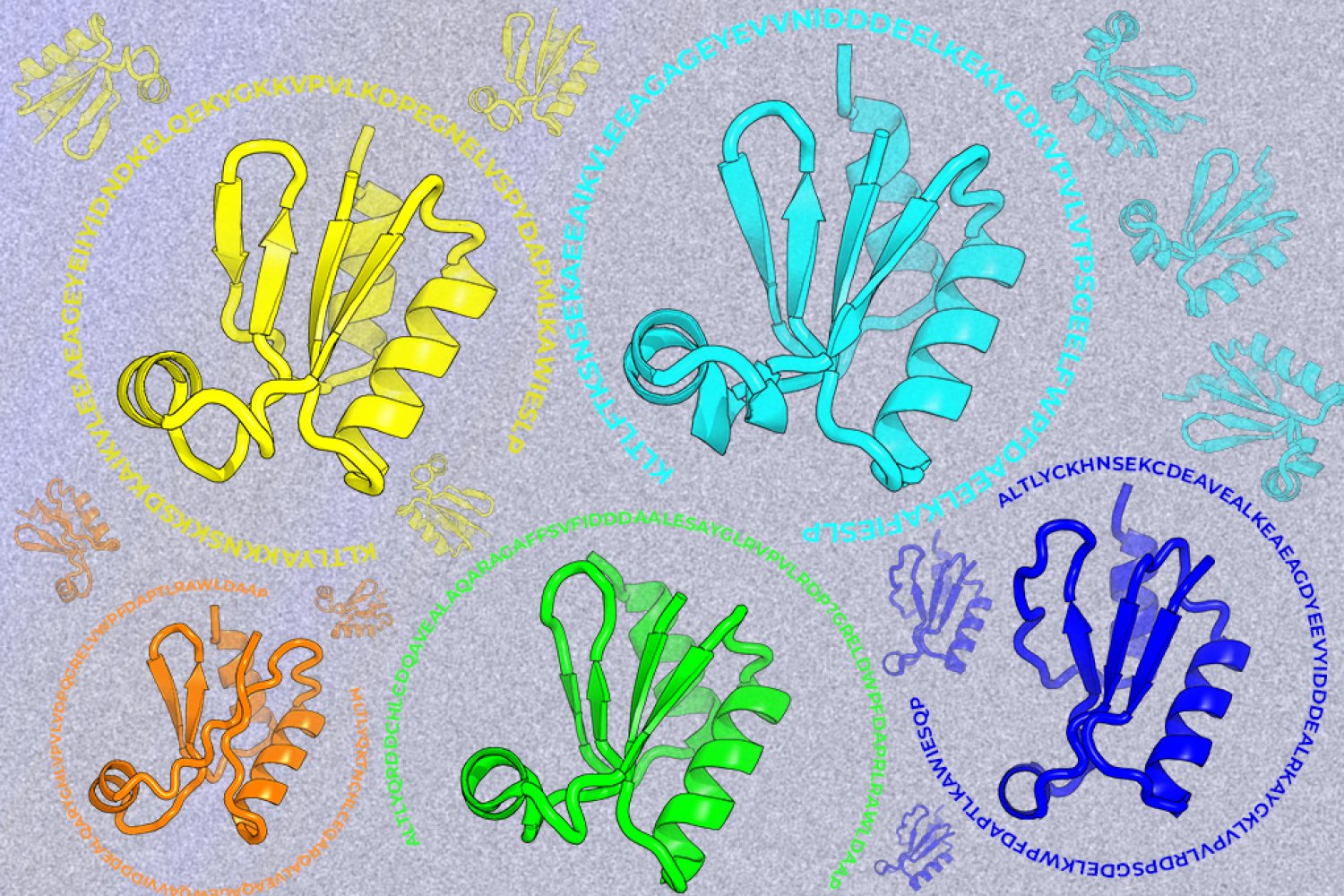
A new machine-learning framework aims to improve the success rate of computational protein design while moving away from results that reproduce sequences found in nature.