This work studies what shapes citation in two 90-day collections of answers to commercial questions in contrasting markets, and controlled experiments show that brand names reorder its rankings of products with identical facts.
Abstract
Generative search engines such as ChatGPT, Gemini and Perplexity now decide which Web pages users see as sources, and a growing industry of generative engine optimization advises publishers on how to earn these citations. We study what shapes citation in two 90-day collections of answers to commercial questions in contrasting markets: 158,099 answers with 468,037 citations. Comparing pages of the same website, content matters in one way: pages whose title and paragraphs match the questions people ask are cited more, whereas FAQ blocks, structured data, summary boxes and page speed appear effective only across websites. Page properties nevertheless explain little of the variation between pages of a website. Replaying the questions through the engines'APIs shows why. Every page ChatGPT cites is one its own search retrieved, and which pages that search retrieves, for sub-queries the model rewrites on every answer and that rarely coincide with Google's or Bing's results, explains far more of the variation than page properties (32% against 2.8%). Content acts mainly through this step, by matching the engine's queries in meaning. The model's own knowledge shapes it too: ChatGPT writes brands it knows into its searches, prefers websites it knows, and names brands without any supporting page, and controlled experiments show that brand names reorder its rankings of products with identical facts. Pages are thus cited when searched; brands are also named when remembered. The findings replicate in a market of small B2B vendors. We release data and code.
This paper investigates developing real-world perception for active agents, proposes Gibson Environment for this purpose, and showcases a set of perceptual tasks learned therein.
F. Xia, Amir Zamir, Zhi-Yang He et al.· 2018 IEEE/CVF Conference on...· 1,069 citations· ⚡112
This publication proposes a definition and a classification of agile software development approaches and analyses ten software development methods that can be characterized as being "agile" against the defined criterion.
P. Abrahamsson, O. Salo, Jussi Ronkainen et al.· arXiv.org· 727 citations· ⚡54
The results indicate that software engineering work practices are chosen opportunistically, adapted and configured to provide value under the constrains imposed by the startup context.
Nicolò Paternoster, Carmine Giardino, M. Unterkalmsteiner et al.· Information and Software Tec...· 394 citations· ⚡54
The possibility of inferring high-dimensional data inference in a model that consists of a prior and an auxiliary differentiable constraint given some additional information is considered, thereby allowing a range of potential applications in adapting models to new domains and tasks.
Alexandros Graikos, Esmeralda S. Whitammer, N. Jojic et al.· Neural Information Processin...· 316 citations· ⚡15
It is proved that any global minimizer of the trajectory balance objective can define a policy that samples exactly from the target distribution, and empirically demonstrate the benefits of the trajectories balance objective for GFlowNet convergence, diversity of generated samples, and robustness to long action sequenc...
Esmeralda S. Whitammer, Moksh Jain, Emmanuel Bengio et al.· Neural Information Processin...· 302 citations· ⚡60
Consequences of happiness and unhappiness that are beneficial and detrimental for developers' mental well-being, the software development process, and the produced artifacts are found.
D. Graziotin, Fabian Fagerholm, Xiaofeng Wang et al.· Journal of Systems and Softw...· 236 citations· ⚡13
Related blog posts
MIT News · Artificial Intelligence· news.mit.eduAug 27, 2026
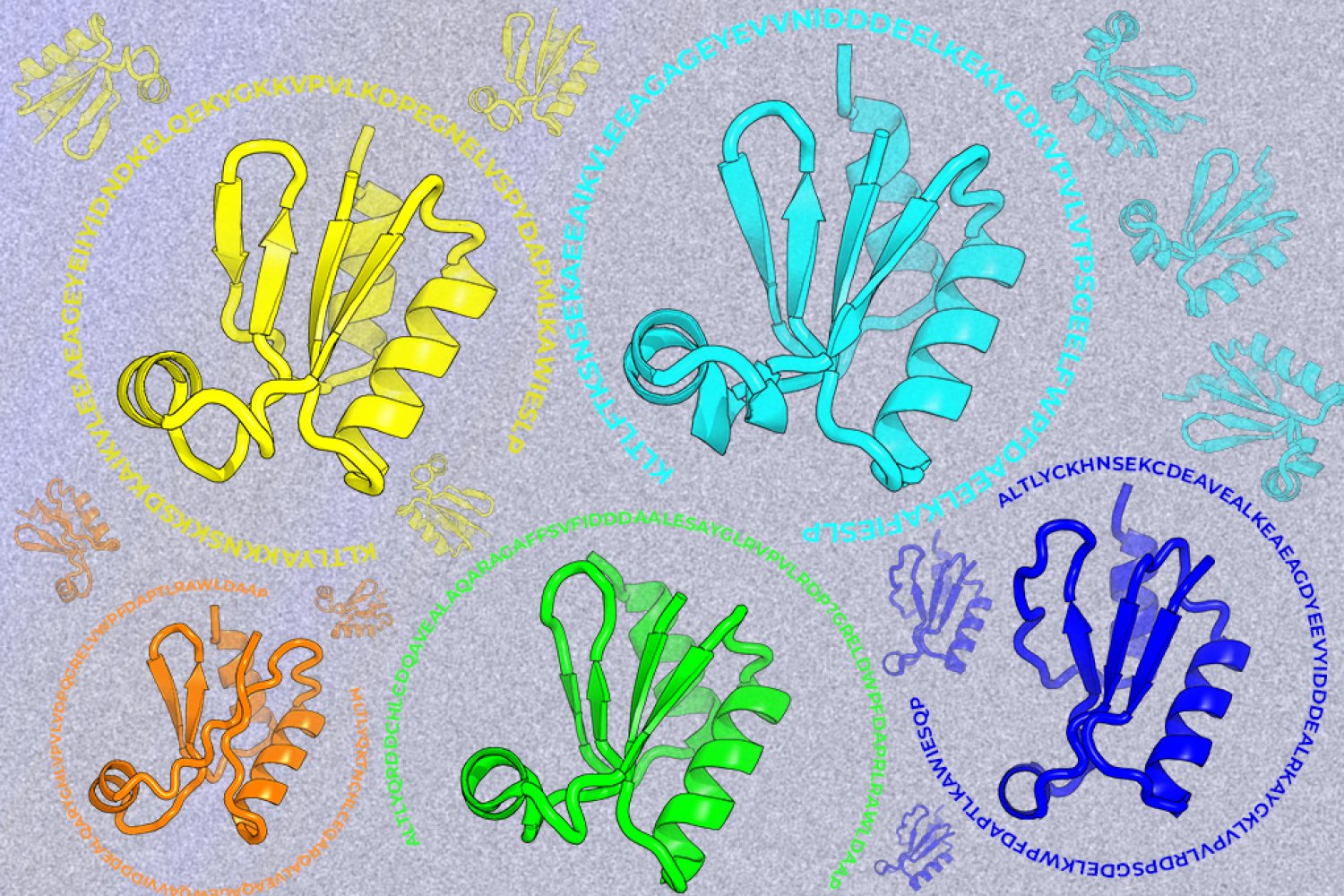
A new machine-learning framework aims to improve the success rate of computational protein design while moving away from results that reproduce sequences found in nature.