Skip to content

Agentic-MatriBO: Capability-Compiled Agentic Bayesian Optimization for Materials and Chemical Design

Yu Zeng Yuchuan Chen Ziyue Zhang Zijian Wei Yanyi Su Guojiang Zhao Hongshuai Wang Zhifeng Gao
Oct 2026
Artificial Intelligence Machine Learning

Abstract

Materials and chemical optimization must choose the next synthesis, characterization, or high-fidelity simulation from sequential observations under a limited budget. Large language models can use task knowledge to propose adjustments, but composing surrogates, acquisition functions, and search strategies is constrained by compatibility, parameter dependencies, and evidence requirements. We present Agentic-MatriBO, a capability-compiled agentic Bayesian optimization (BO) framework that represents BO components and selection conditions as composable capabilities. A language policy proposes BO recipes and candidate plans; a compiler checks proposals against the registered capability catalog; and a deterministic execution layer validates and commits candidates. Oracle observations are stored in research memory and inform later rounds. We compare Agentic-MatriBO with eight baselines on four offline finite candidate pools---COF, PCE10, Buchwald--Hartwig (BH), and Suzuki--Miyaura---using five seeds per condition; results are reported descriptively. Across the four tasks, Agentic-MatriBO has the best mean endpoint quality after orienting each objective so that higher is better. On COF, it reaches the tabulated optimum in all five seeds both in the end-to-end comparison and after shared initialization, where it also retains an advantage in cumulative quality. Its normalized area under the best-so-far quality curve during the BO stage (nAUC-BO) is substantially higher on COF, near parity with the best baseline on PCE10 and BH, and lower on Suzuki. COF ablations show that removing the capability compiler or evidence gate coincides with lower cumulative quality and fewer exact-optimum hits. The framework provides an inspectable interface for evidence-conditioned BO adaptation.

View source

Similar papers

#artificial intelligence Conference Open access Jun 2018

Gibson Env: Real-World Perception for Embodied Agents

This paper investigates developing real-world perception for active agents, proposes Gibson Environment for this purpose, and showcases a set of perceptual tasks learned therein.

F. Xia, Amir Zamir, Zhi-Yang He et al. · 1,069 citations · ⚡112
#machine learning Review Open access Oct 2014

Software development in startup companies: A systematic mapping study

The results indicate that software engineering work practices are chosen opportunistically, adapted and configured to provide value under the constrains imposed by the startup context.

Nicolò Paternoster, Carmine Giardino, M. Unterkalmsteiner et al. · 394 citations · ⚡54

Diffusion models as plug-and-play priors

The possibility of inferring high-dimensional data inference in a model that consists of a prior and an auxiliary differentiable constraint given some additional information is considered, thereby allowing a range of potential applications in adapting models to new domains and tasks.

Alexandros Graikos, Esmeralda S. Whitammer, N. Jojic et al. · 316 citations · ⚡15

Trajectory Balance: Improved Credit Assignment in GFlowNets

It is proved that any global minimizer of the trajectory balance objective can define a policy that samples exactly from the target distribution, and empirically demonstrate the benefits of the trajectories balance objective for GFlowNet convergence, diversity of generated samples, and robustness to long action sequenc...

Esmeralda S. Whitammer, Moksh Jain, Emmanuel Bengio et al. · 302 citations · ⚡60
#artificial intelligence Open access May 2023

Evaluating the Performance of Large Language Models on GAOKAO Benchmark

GAOKAO-Bench is introduced, an intuitive benchmark that employs questions from the Chinese GAOKAO examination as test samples, including both subjective and objective questions that contribute a robust evaluation benchmark for future large language models and offers valuable insights into the advantages and limitations...

Xiaotian Zhang, Chun-yan Li, Yi Zong et al. · 216 citations · ⚡17

Related blog posts

MIT News · Artificial Intelligence Sep 29, 2026

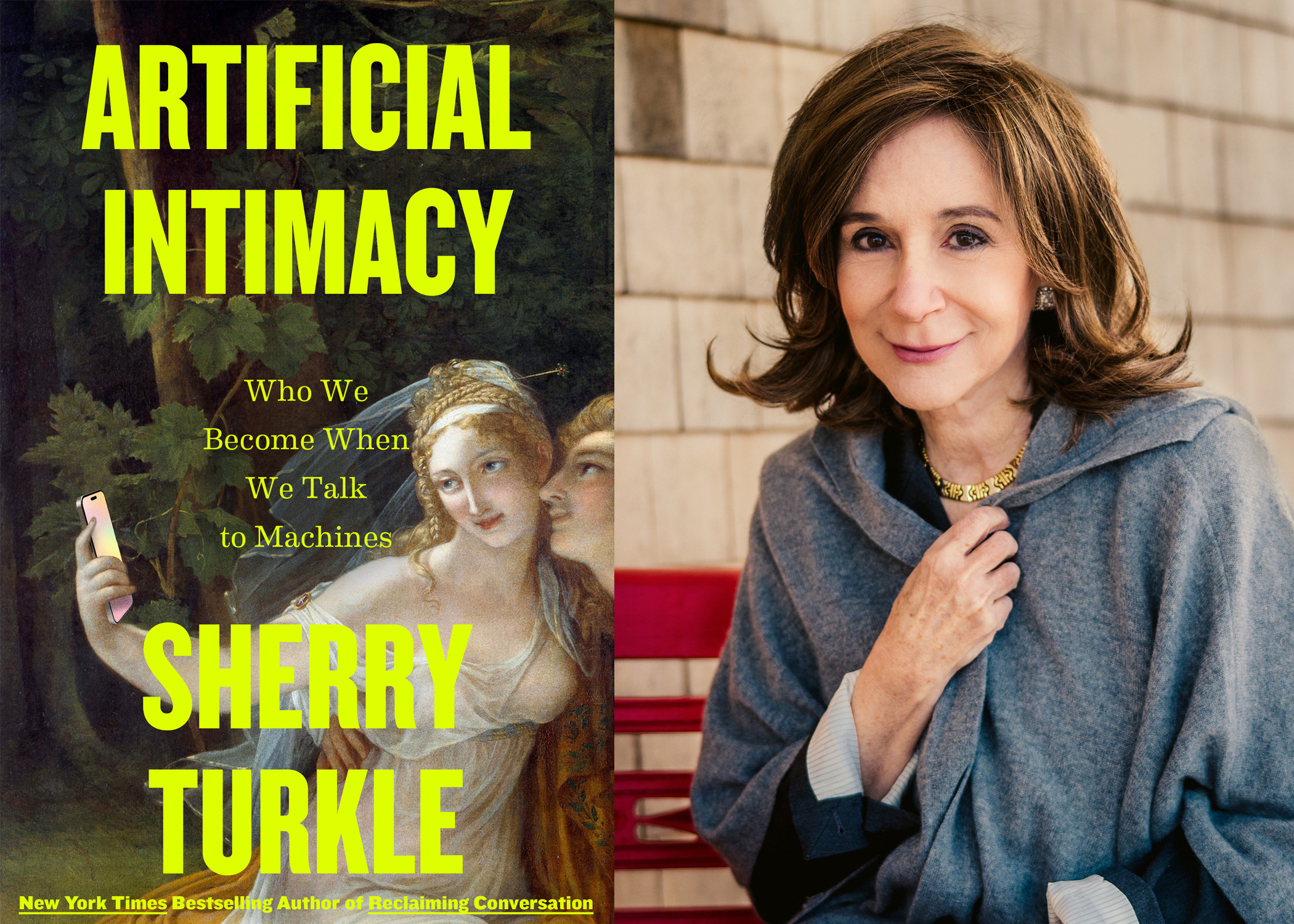
Who we become when we talk to machines

Professor Sherry Turkle’s new book, “Artificial Intimacy,” offers a withering critique of chatbots and the antisocial dynamics she believes they encourage.

We use cookies to run the site and, with your consent, for analytics and to show ads. See our Cookie Policy.