The NIST Assembly Task Board #1 remains a challenging benchmark for learning-based methods in robotic manipulation. Over short horizons, it demands precise, contact-rich control of small, tight-fitting parts. Over long horizons, it requires recovery and coordination across extended action sequences. Demonstrations, task decomposition, and dense progress rewards have enabled research advances by providing guidance on how to assemble. But how much of the strategy must be specified? The progression from AlphaGo to AlphaGo Zero showed that RL at scale can discover superhuman strategies without prescribing how to win. AlphaNIST asks whether a sparse binary task reward and task diversity admitted by this task-agnostic reward can similarly let a robot discover how to assemble. In simulation, we train a single policy from scratch across all 20 assembly tasks on the NIST Assembly Task Board #1, reaching 98.2% overall training success without demonstrations, progress shaping, scripted primitives, or per-task tuning. The framework also trains policies to complete ten assembly pairs in a single episode without a prescribed order, with task success rewarded only when all ten pairs are simultaneously complete. The learned policies discover dexterous and planning-like behaviors: choosing grasps for later assembly, using surrounding geometry to reorient parts, and preparing one part, assembling another, then returning to finish the first without an explicit planner. For videos, see our website: https://alpha-nist.github.io/

This paper investigates developing real-world perception for active agents, proposes Gibson Environment for this purpose, and showcases a set of perceptual tasks learned therein.
F. Xia, Amir Zamir, Zhi-Yang He et al.· 2018 IEEE/CVF Conference on...· 1,069 citations· ⚡112
GAOKAO-Bench is introduced, an intuitive benchmark that employs questions from the Chinese GAOKAO examination as test samples, including both subjective and objective questions that contribute a robust evaluation benchmark for future large language models and offers valuable insights into the advantages and limitations...
Xiaotian Zhang, Chun-yan Li, Yi Zong et al.· arXiv.org· 216 citations· ⚡17
An algorithm is proposed which leverages disentangled semantic factors to generate adversarial perturbation by altering controlled semantic attributes to fool the learner towards various "adversarial" targets.
Haonan Qiu, Chaowei Xiao, Lei Yang et al.· arXiv.org· 208 citations· ⚡17
This work proposes a HALO that directly maximizes the utility of generations instead of maximizing the log-likelihood of preferences, and suggests that the best loss depends on the inductive biases most appropriate for a given setting, an oft-overlooked consideration.
This work investigates the possibilities of using LLMs in a resume screening setting via a document retrieval framework that simulates job candidate selection and finds that the MTEs are biased, significantly favoring White-associated names in 85% of cases and female-associated names in only 11.1% of cases.
This work shows that orders of magnitude enhancement in performance could be obtained by a combination of hardware improvements and tight quantum-HPC integration and introduces high-performance architectures for quantum-probabilistic computing with custom-designed accelerators to tackle today's industry-scale classical...
Masoud Mohseni, Artur Scherer, K. Johnson et al.· arXiv.org· 121 citations· ⚡9
Related blog posts
MIT News · Artificial Intelligence· news.mit.eduJul 30, 2026
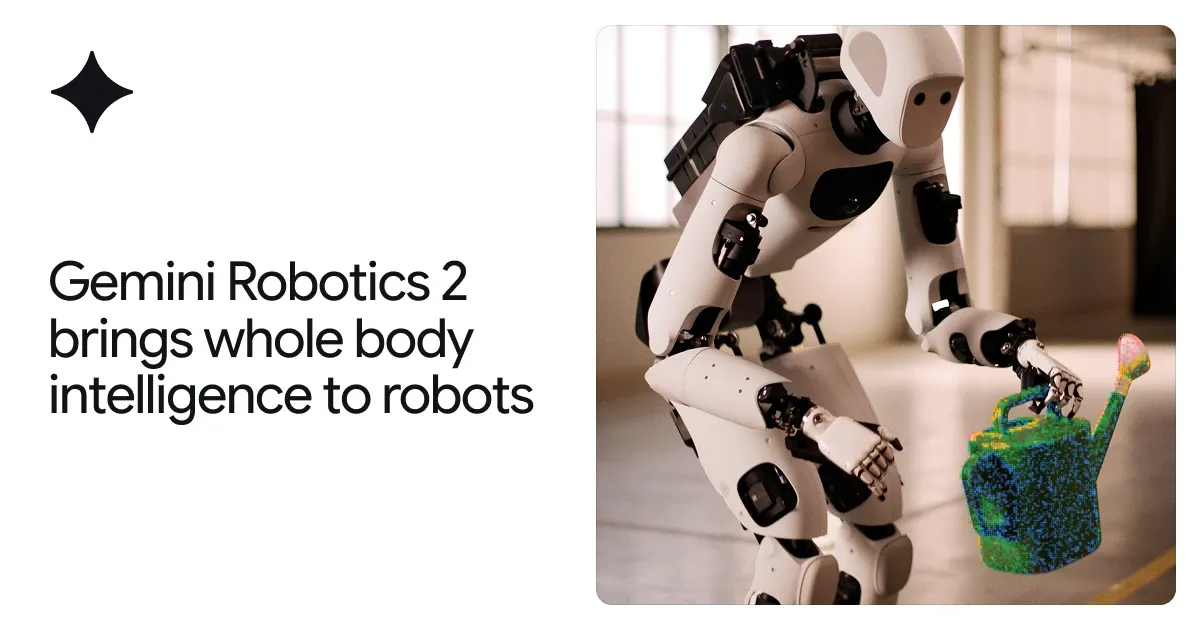
From feet to fingertips — we are teaching robots intelligent whole-body control, fine dexterity, and teamwork to complete a broad range of complex tasks.