Skip to content

3D printed non-imaging baffle-optics for linear LED light fixtures

Oct 2026 · Nonimaging Optics: Efficient Design for Illumination and Concentration XXI · 0 citations

Abstract

Linear LED light fixtures are very popular in many interior lighting applications. Some high efficacy linear LED light fixtures result in undesirable glare for the occupants in a lighted space. Traditionally, light absorbing baffles or optical diffusers are used to minimize glare. Such solutions negatively affect the fixture efficacy. Therefore, the objective of this study is to explore custom designed baffle optics that can reduce the glare while minimally affecting the fixture efficacy. The strategy used here transferred the luminous flux above 50˚ to lower angles without wasting them. This basically alters the intensity distribution of the light output of the fixture. An additional benefit of this method is that the Lambertian output beam distribution can be modified to produce a batwing shaped intensity distribution. As a result, the batwing shaped intensity distribution produces uniform illuminance on the horizontal task plane and the lower light intensity above 50˚ mitigating the glare. The study began with an optical ray tracing analysis using a commercial ray tracing software, namely, LightTools. This allowed for designing a suitable baffle that enabled reshaping the light fixture output distribution to the desired shape. It further helped analyze the UGR (glare metric), and the fixture efficiency. Next, the light intensity distribution (IES files) was imported into AGi32 software to analyze the task plane illuminance uniformity an d the fixture UGR value. Once a satisfactory baffle design was realized, it was 3D-printed using a FDM printer using PLA matte white filament material. The printed baffles were assembled and installed in a 2 feet long linear LED light fixture, and the fixture was tested in the photometry lab to compare the measured fixture efficiency, UGR value, intensity distribution a nd the task plane illuminance distribution when mounted at a height above the task plane. The measured and the ray tracing results showed good agreement. The details of the study and the results are explained in this manuscript.
View source

Similar papers

#computer vision Review Sep 2017

Agile Software Development Methods: Review and Analysis

This publication proposes a definition and a classification of agile software development approaches and analyses ten software development methods that can be characterized as being "agile" against the defined criterion.

P. Abrahamsson, O. Salo, Jussi Ronkainen et al. · 727 citations · ⚡54
#computer vision Jun 2008

The impact of agile practices on communication in software development

The study shows that agile practices improve both informal and formal communication, but indicates that, in larger development situations involving multiple external stakeholders, a mismatch of adequate communication mechanisms can sometimes even hinder the communication.

M. Pikkarainen, Jukka Haikara, O. Salo et al. · 401 citations · ⚡48
#machine learning Review Open access Oct 2014

Software development in startup companies: A systematic mapping study

The results indicate that software engineering work practices are chosen opportunistically, adapted and configured to provide value under the constrains imposed by the startup context.

Nicolò Paternoster, Carmine Giardino, M. Unterkalmsteiner et al. · 394 citations · ⚡54
#computer vision Review Mar 2008

Agile methods in European embedded software development organisations: a survey on the actual use and usefulness of Extreme Programming and Scrum

The results show that the embedded industry has been able to apply agile methods in its development processes and that the appreciation of the agile methods and their individual practices appears to increase once adopted and applied in practice.

O. Salo, P. Abrahamsson · 238 citations · ⚡9
#computer vision Open access Jul 2017

What happens when software developers are (un)happy

Consequences of happiness and unhappiness that are beneficial and detrimental for developers' mental well-being, the software development process, and the produced artifacts are found.

D. Graziotin, Fabian Fagerholm, Xiaofeng Wang et al. · 236 citations · ⚡13
#computer vision Open access Oct 2004

Mobile-D: an agile approach for mobile application development

The Mobile-D approach is briefly outlined here and the experiences gained from four case studies are discussed, which helped develop an agile development approach for mobile application development.

P. Abrahamsson, Antti Hanhineva, H. Hulkko et al. · 225 citations · ⚡18

Related blog posts

Microsoft Research Blog Nov 5, 2026

Formally verifying agent-written full-stack web apps with PDD Kit

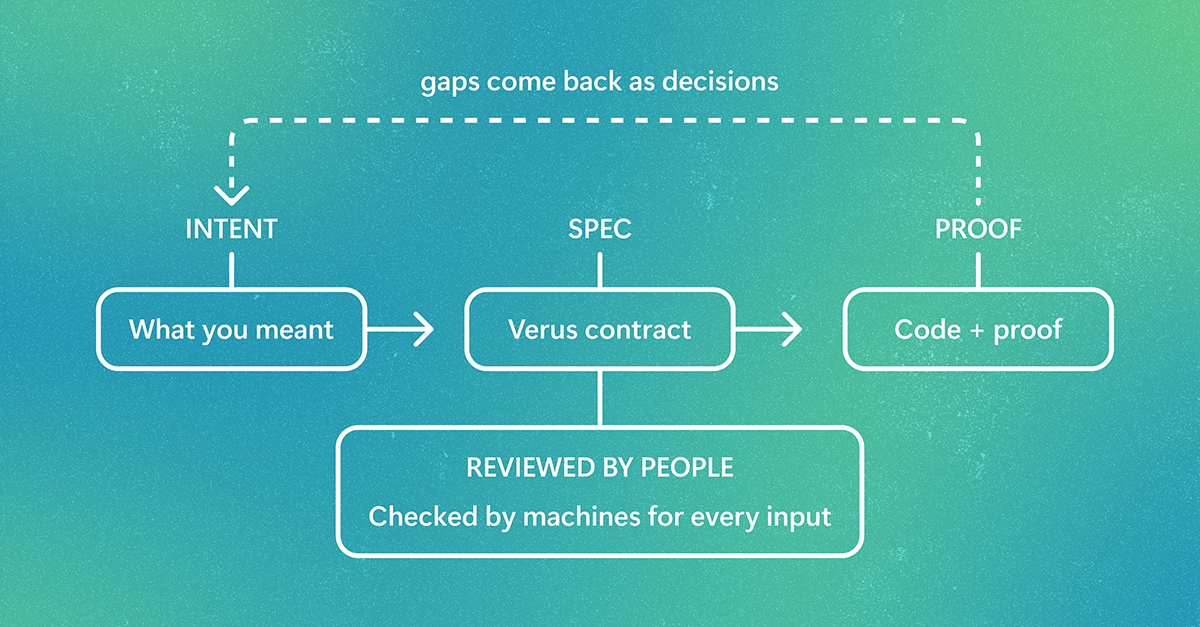
AI agents can generate code at a scale that’s hard for humans to review line-by-line. PDD Kit helps ensure the code is doing what the developer intended by creating formal specifications and testing against them. It converts developer intent into a Verus specification, proves AI-generated code meets it for every input, and uses tests where proofs aren't practical. Developers review intent, not every line. The post Formally verifying agent-written full-stack web apps with PDD Kit appeared first o…

GPT-Lab Nov 3, 2026

Sovereignty Is the Option to Leave

Is your company’s AI sovereign? A practical guide for CIOs on AI vendor lock-in, EU Data Act switching, cloud sovereignty, and testing your exit plan before you need it. The post Sovereignty Is the Option to Leave appeared first on GPT-Lab.

Microsoft Research Blog Oct 30, 2026

From synthetic enterprise data evaluations to real Microsoft Copilot AI confidence

Evaluating Microsoft Copilot at enterprise scale requires test data that captures the full complexity of real organizations, yet real enterprise data contains sensitive information that cannot be used for evaluation under any circumstances. The post From synthetic enterprise data evaluations to real Microsoft Copilot AI confidence appeared first on Microsoft Research.

We use cookies to run the site and, with your consent, for analytics and to show ads. See our Cookie Policy.