Aug 2016· EUROMICRO Conference on Software Engineering and Advanced Applications· pp. 128-135· 11 citations· ⚡ 1 influential· 42 references
Computer ScienceBusiness
TL;DR
A case study of a large software company was conducted to examine how a new product was developed through the internal startup effort and struggled to achieve the desired outcomes set by the management, and the conceptual framework was developed into a Lean startup-enabled new product development model for large software companies.
Abstract
Product innovation is a risky activity, but when successful, it enables large software companies accrue high profits and leapfrog the competition. Internal startups have been promoted as one way to foster product innovation in large companies, which allows them to innovate as startups do. However, internal startups in large companies are challenging endeavours despite of the promised benefits. How large software companies can leverage internal startups in software product innovation is not fully understood due to the scarcity of the relevant studies. Based on a conceptual framework that combines the elements from the Lean startup approach and an internal corporate venturing model, we conducted a case study of a large software company to examine how a new product was developed through the internal startup effort and struggled to achieve the desired outcomes set by the management. As a result, the conceptual framework was further developed into a Lean startup-enabled new product development model for large software companies.
The objective of this study is to investigate how major companies develop innovation projects in partnership with startups through the lens of corporate–startup engagement (CSE). The research aims to analyze the motivations, engagement models and internal validation processes for these partnerships, with a particular focus on the structural frictions that arise.
The research employs an exploratory and descriptive qualitative method. Data were collected through in-depth interviews and processed using content analysis to capture the micro-foundations of these collaborations.
The study reveals a significant gap between strategic intent and execution in CSE. Although corporations express a desire for disruptive, exploratory innovation, practical applications frequently devolve into projects focused on incremental operational efficiency. Major barriers are identified not merely as bureaucracy, but as fundamental structural frictions driven by corporate centralization, which constricts knowledge flows. Furthermore, the study identifies critical “pathbreakers” to collaboration, including severe speed mismatches and project dormancy driven by demands for uncompensated proof of concept (POCs).
The research is limited by a non-probabilistic sample and a limited number of interviews, which preclude generalizable empirical conclusions.
For corporate managers, the study emphasizes that establishing CSE requires intentional internal architecture – such as creating structural “shortcuts” and dedicated innovation units – to bypass the friction of centralized processes. For startups, it underscores the need for strategic alignment to navigate corporate requirements and avoid the pitfalls of speed mismatches and delayed financing.
The paper underscores the strategic importance of technological innovation for boosting national productivity and presents CSE as a vital alternative for economic development.
The research contributes to the theory of organizational ambidexterity by providing a multi-perspective empirical analysis (triangulating data from corporate managers, startup entrepreneurs and connecting agents). It explicitly maps the theoretical ““pathbreakers”“ and practical friction points that hinder the implementation of ambidextrous strategies.
A. Ghobril· Academia : Revista Latinoame...· 0 citations
This research adopts data of A-share listed firms from 2012 to 2024 and applies fixed-effect regression models. The results show that core lean startup tools including minimum viable products, rapid iteration and customer feedback can greatly lift corporate innovation outcomes. Mechanism tests reveal two parallel working paths of this method. First, it raises the level of entrepreneurial bricolage measured by the asset structure change index, which drives creative rearrangement of existing resources. Second, it improves the sufficiency of internal cash flow, calculated as the ratio of net operating cash flow to total assets, so firms gain stable self-owned capital to support innovation. Heterogeneity tests prove this positive effect is stronger in eastern regions, high-tech industries and non-regulated industries. Robustness checks, such as adding city fixed effects, removing samples from municipalities and dropping observations collected during pandemic years, all support the core conclusions. This study identifies two mediating paths that boost innovation, expands the practical application scope of lean startup theories, and offers practical references for innovation management under resource shortages.
Rui-Xin Lu· Advances in Economics, Manag...· 0 citations
This study develops a typology that shows different maturity levels of innovation-oriented HRM practices in startups and explores their association with innovation outcomes.
Primary data were collected from 108 founders of startups located in independent innovation habitats partnered to the University of São Paulo (USP), Brazil. A typology of HRM practices was developed using Hierarchical Cluster Analysis (HCA), enabling the differentiation of HRM practices oriented to innovation across the sampled ventures. The resulting clusters were then related to the startups' innovation outcomes, including the average number of new products developed, improved products, new processes developed, improved processes, and patent applications.
The analysis identifies a typology that classifies startups into three distinct clusters based on the maturity level of their innovation-oriented HRM practices. Cluster 1 includes startups at an early stage of HRM development; Cluster 2 comprises ventures with intermediate and evolving HRM practices; and Cluster 3 reflects advanced, consolidated HRM systems. We found a positive relationship between the maturity level of innovation-oriented HRM practices and innovation outcomes.
This research develops a typology of different maturity levels of innovation-oriented HRM practices among startups. By focusing on HRM practices explicitly designed to foster innovation, the study provides empirical evidence that greater maturity level in such practices is positively associated with multiple innovation outcomes in startups.
Lara Letícia Donegá Carreira, A. Dias, Marina Lourenção· Employee Relations: The Inte...· 0 citations
The manufacturing industry faces critical changes due to the increasing importance of sustainability. Ever faster changing customer requirements and the need to consider circular economy require a rethink of today's business models. Continuous innovation, realized through upgrades to existing technical products, holds the key to addressing these challenges. However, operational hurdles hinder its implementation, prompting the need for support in manufacturing companies. An essential point to support and set guard rails is the development of a target system, as it supports manufacturing companies in the prioritization of activities for the realization and implementation of continuous innovation. There is currently a scientific deficit in this area, as the targets of continuous innovation are not sufficiently described, taking into account the relevant dimensions of the product, business models, process and organization. Therefore, this paper focuses on the derivation of a target system for continuous innovation for technical products in the usage phase. It encompasses a systematic literature review-based methodology, a target clustering and target descriptions.
M. Riesener, M. Kuhn, S. Perau et al.· International Journal of Inn...· 0 citations
This study aims to examine how large technology multinationals use digital platforms as dynamic capability infrastructures to integrate open innovation (OI) with business process management (BPM) via absorptive capacity mechanisms.
The study adopts a qualitative multi-case design based on four global technology firms. Data were collected from 30 elite interviews, 24 annual reports, and more than 300 webpages and analysed through a three-stage coding process.
The findings show that digital platforms support open innovation by enabling firms to sense external opportunities, seize knowledge from distributed actors and reconfigure innovation-related business processes. Four strategic objectives shape platform deployment: developing global expert networks, accelerating digital transformation, accessing external R&D talent and exploring future technologies. The study also identifies firm-, managerial- and employee-level challenges that affect the integration of platform-generated knowledge into BPM routines.
The qualitative case design provides rich process insight but limits statistical generalisability. Future research could test the proposed relationships through quantitative and longitudinal designs.
Managers should align platform types with open innovation objectives, establish clear governance mechanisms, invest in absorptive capacity and develop analytics and digital skills to translate external knowledge into process improvements.
The study contributes by conceptualising digital platforms as infrastructures that connect open innovation with BPM through dynamic capabilities and absorptive capacity. It clarifies how platform-enabled knowledge flows are embedded into business processes and identifies the organisational conditions that support or constrain this integration.
Ghadeer R. Alsaeed, Naheed Bashir· Business Process Management...· 0 citations
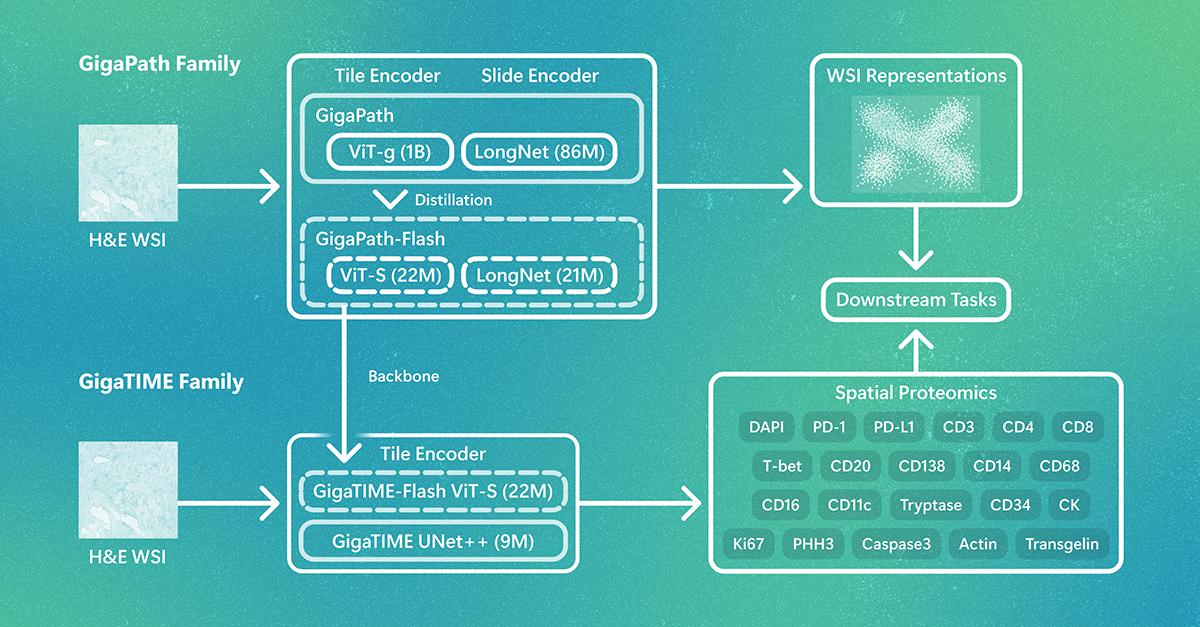
What if pathology foundation models could do more with less? GigaPath-Flash and GigaTIME-Flash cut computational demands while maintaining strong performance, opening the door to larger studies and broader exploration. The post GigaPath-Flash and GigaTIME-Flash: Toward population-scale discovery with efficient pathology foundation models appeared first on Microsoft Research.