Skip to content

Building an entrepreneurship data warehouse

Jun 2017 · International Conference on Engineering, Technology and Innovation · pp. 100-110 · 4 citations · 16 references
Computer Science

TL;DR

This paper will focus on how to build and set up a test harness to gather empirical data from Companies and how to store these data together with demographical and financial data from the PROFF-portal in the Entrepreneurial Data Warehouse (from now called the EDW).

Abstract

The main principle of the Lean Startup movement is that static business planning should be replaced by a dynamic development, where products, services, business model elements, business objectives and activities are frequently changed based on constant customer feedback. Our ambition is to empirically measure if such changes of the business idea, the business model elements, the project management and close interaction with customers really increases the success rate of entrepreneurs, and in what way. Our first paper; “Does Lean Startup really work? Foundation for an empirical study” presented the first attempt to model the relations we want to measure. This paper will focus on how to build and set up a test harness (from now on called the Entrepreneurship Platform or EP) to gather empirical data from Companies and how to store these data together with demographical and financial data from the PROFF-portal in the Entrepreneurial Data Warehouse (from now called the EDW). We will end the paper by discussing the potential methodological problems with our method, before we document a test run of our set-up to verify that we are actually able to populate the Data Warehouse with time series data.


Read PDF

Similar papers

#computer vision Review Sep 2017

Agile Software Development Methods: Review and Analysis

This publication proposes a definition and a classification of agile software development approaches and analyses ten software development methods that can be characterized as being "agile" against the defined criterion.

P. Abrahamsson, O. Salo, Jussi Ronkainen et al. · 727 citations · ⚡54
#computer vision Jun 2008

The impact of agile practices on communication in software development

The study shows that agile practices improve both informal and formal communication, but indicates that, in larger development situations involving multiple external stakeholders, a mismatch of adequate communication mechanisms can sometimes even hinder the communication.

M. Pikkarainen, Jukka Haikara, O. Salo et al. · 401 citations · ⚡48
#machine learning Review Open access Oct 2014

Software development in startup companies: A systematic mapping study

The results indicate that software engineering work practices are chosen opportunistically, adapted and configured to provide value under the constrains imposed by the startup context.

Nicolò Paternoster, Carmine Giardino, M. Unterkalmsteiner et al. · 394 citations · ⚡54

Diffusion models as plug-and-play priors

The possibility of inferring high-dimensional data inference in a model that consists of a prior and an auxiliary differentiable constraint given some additional information is considered, thereby allowing a range of potential applications in adapting models to new domains and tasks.

Alexandros Graikos, Esmeralda S. Whitammer, N. Jojic et al. · 316 citations · ⚡15

Trajectory Balance: Improved Credit Assignment in GFlowNets

It is proved that any global minimizer of the trajectory balance objective can define a policy that samples exactly from the target distribution, and empirically demonstrate the benefits of the trajectories balance objective for GFlowNet convergence, diversity of generated samples, and robustness to long action sequences and large action spaces.

Esmeralda S. Whitammer, Moksh Jain, Emmanuel Bengio et al. · 302 citations · ⚡60

Related blog posts

Microsoft Research Blog Aug 31, 2026

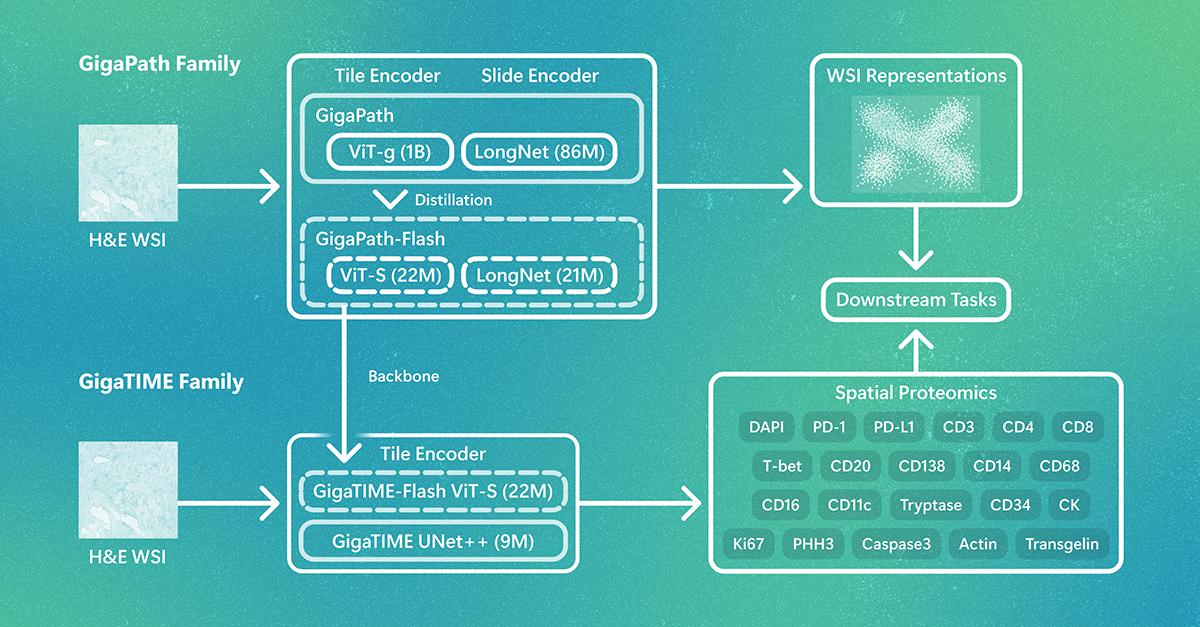
GigaPath-Flash and GigaTIME-Flash: Toward population-scale discovery with efficient pathology foundation models

What if pathology foundation models could do more with less? GigaPath-Flash and GigaTIME-Flash cut computational demands while maintaining strong performance, opening the door to larger studies and broader exploration. The post GigaPath-Flash and GigaTIME-Flash: Toward population-scale discovery with efficient pathology foundation models appeared first on Microsoft Research.

We use cookies to run the site and, with your consent, for analytics and to show ads. See our Cookie Policy.