Skip to content

THE EL-RAKHAWI GRAND THEORY OF REGENERATIVE CYBERNETIC INFRASTRUCTURE AND SOVEREIGN COMPUTING From Isolated Algorithms to a Harmonious Planetary Nervous System A Groundbreaking Theoretical Framework Unifying Artificial Intelligence, Bio-Digital Convergence, Distributed Systems, Cryptographic Sovereignty, Software Architecture, and Human-Centric IT Governance to Transform Information Technology from Fragmented Technical Disciplines into an Integrated Planetary Nervous Sy

Oct 2026 · Zenodo (CERN European Organization for Nuclear Research)
Diverse Interdisciplinary Research Studies

Abstract

The El-Rakhawi Grand Theory of Regenerative Cybernetic Infrastructure and Sovereign Computing (DOI: 10.5281/zenodo.23232575) reimagines Information Technology as a **decentralized, edge-intelligent planetary nervous system** operating in cybernetic harmony with human dignity and ecological boundaries. Built on six pillars: (1) **Sovereign Neuro-Symbolic AI** combining neural flexibility with formal verification; (2) **Bio-Digital Convergence** through Sovereign Federated Learning preserving data locality; (3) **Regenerative Cyber-Physical Infrastructure** integrating IoT, cloud, and networks with resource-awareness; (4) **Algorithmic Integrity** via blockchain and post-quantum cryptography; (5) **Regenerative Software Architecture** using Existential Type Systems and **Normative Operationalization** to translate ethics into mathematically verifiable constraints; (6) **Cognitive IT Governance** measuring systemic health via the **Regenerative Computational Integrity Index (RCII)**: RCII = (A×S×E×T)/[(A×S×E×T)+V×C+ε], bounded 0-1, operating under the **Weakest-Link Axiom** reflecting cybernetic interdependence. Complemented by Sub-Indices Diagnostic Framework for precise reform targeting. Serves as the technical operating system for the entire El-Rakhawi Corpus. Released under the Ferial Zayed Humanitarian License.

View source

Similar papers

#computer vision Review Sep 2017

Agile Software Development Methods: Review and Analysis

This publication proposes a definition and a classification of agile software development approaches and analyses ten software development methods that can be characterized as being "agile" against the defined criterion.

P. Abrahamsson, O. Salo, Jussi Ronkainen et al. · 727 citations · ⚡54
#computer vision Jun 2008

The impact of agile practices on communication in software development

The study shows that agile practices improve both informal and formal communication, but indicates that, in larger development situations involving multiple external stakeholders, a mismatch of adequate communication mechanisms can sometimes even hinder the communication.

M. Pikkarainen, Jukka Haikara, O. Salo et al. · 401 citations · ⚡48
#machine learning Review Open access Oct 2014

Software development in startup companies: A systematic mapping study

The results indicate that software engineering work practices are chosen opportunistically, adapted and configured to provide value under the constrains imposed by the startup context.

Nicolò Paternoster, Carmine Giardino, M. Unterkalmsteiner et al. · 394 citations · ⚡54

Related blog posts

MIT News · Artificial Intelligence Aug 27, 2026

Looking beyond natural sequences

A new machine-learning framework aims to improve the success rate of computational protein design while moving away from results that reproduce sequences found in nature.

Microsoft Research Blog Aug 20, 2026

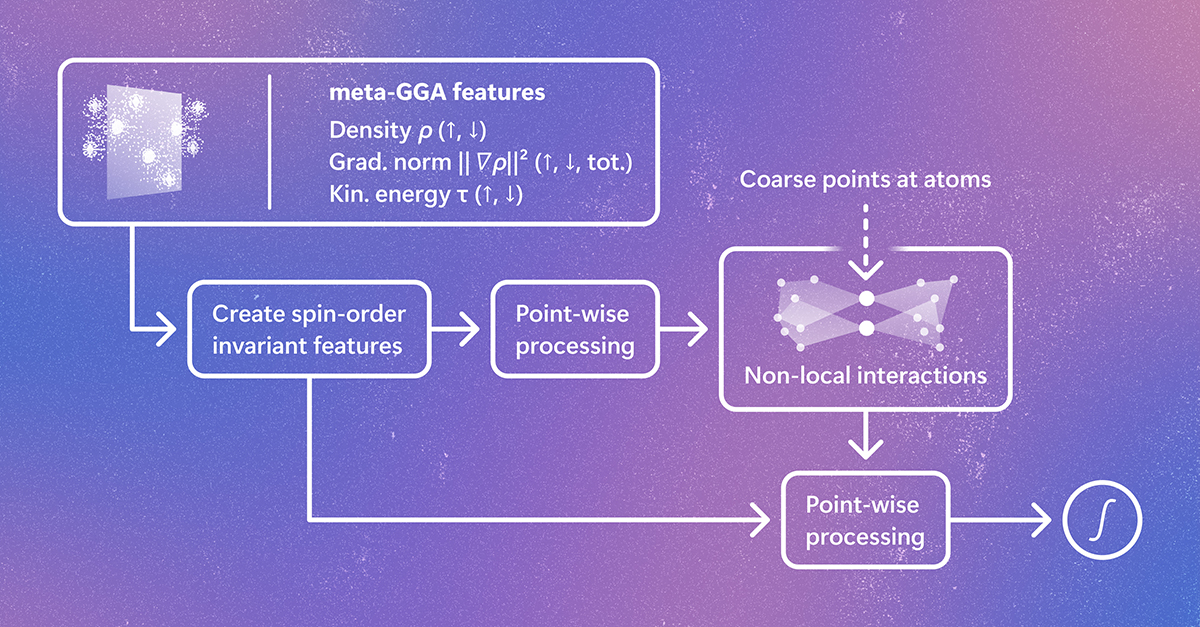
Broadening access to Skala creates a faster path to predictive DFT 

Skala 1.1, the updated deep-learning exchange-correlation functional from Microsoft Research, provides greater accuracy, expanded accessibility across the computational chemistry ecosystem, and a living benchmark to track computational performance. The post Broadening access to Skala creates a faster path to predictive DFT  appeared first on Microsoft Research.

We use cookies to run the site and, with your consent, for analytics and to show ads. See our Cookie Policy.