AuraLuxMuse: Adaptive Fusion Modeling for Aesthetic Stage Lighting Design with Music and Expert Guidance
Junyu DengJiale CaoMengtian LiZhongxia JiRuhua ChenYiyi HeGuangnan YeZuo Hu
Oct 2026
Artificial Intelligence
Abstract
We present AuraLuxMuse, a novel system for automated aesthetic stage lighting design that integrates expert knowledge, representation learning, and preference-adaptive modeling. Lighting design in live performance settings requires the seamless translation of musical features into dynamic lighting behaviors. However, traditional workflows remain time-consuming, labor-intensive, and difficult to transfer. AuraLuxMuse encodes music and professional cue sequences into a shared retrieval space, estimates cue-event density, and retargets selected fixture commands to the destination stage. It assists pre-production authoring by returning editable cues rather than replacing the designer with an unconstrained generator. At the heart of AuraLuxMuse are two key modules: Lighting-Aligned Music Pretraining (LAMP), which performs contrastive learning between audio and lighting cues for alignment, and Preference-Adaptive Mixture of Experts (PAMoE), which conditions preference-aware cue retrieval and adaptation on designers' intent through a gated ensemble of style-specific expert networks. To support training and evaluation, we introduce Musilux, the first dataset of paired musical audio and professional lighting cue sequences under diverse performance scenarios. We evaluate AuraLuxMuse across both virtual simulation environments and professional-grade laboratories. Experimental results, including objective and subjective evaluation, demonstrate that AuraLuxMuse retrieves and adapts stage-lighting cues that are visually cohesive, semantically meaningful, and artistically expressive, showing its potential for AI-assisted aesthetic stage design.

GAOKAO-Bench is introduced, an intuitive benchmark that employs questions from the Chinese GAOKAO examination as test samples, including both subjective and objective questions that contribute a robust evaluation benchmark for future large language models and offers valuable insights into the advantages and limitations...
Xiaotian Zhang, Chun-yan Li, Yi Zong et al.· arXiv.org· 216 citations· ⚡17
This work investigates the possibilities of using LLMs in a resume screening setting via a document retrieval framework that simulates job candidate selection and finds that the MTEs are biased, significantly favoring White-associated names in 85% of cases and female-associated names in only 11.1% of cases.
This paper presents a comprehensive overview of the Ultralytics YOLO family, emphasizing architectural evolution, benchmarking, deployment, and emerging directions from YOLOv5 through YOLO27, and examines detection, segmentation, depth, classification, pose, oriented detection, tracking, export, quantization, and deplo...
This work revisits schema linking when using the latest generation of large language models (LLMs) and finds empirically that newer models are adept at utilizing relevant schema elements during generation even in the presence of large numbers of irrelevant ones.
Karime Maamari, Fadhil Abubaker, Daniel Jaroslawicz et al.· arXiv.org· 109 citations· ⚡19
A novel threat is unveiled in which attackers steer the RAG system's response by injecting malicious passages into its knowledge base, enabling the attacker to steer the response without altering the user input or modifying the RAG weights.
Jiaqi Xue, Meng Zheng, Yebowen Hu et al.· arXiv.org· 109 citations· ⚡8
Empirically, PRISM reduces the end-to-end time for data selection and model tuning to just 30% of conventional pipelines, and achieves this efficiency while simultaneously enhancing performance, surpassing models fine-tuned on the full dataset across eight multimodal and three language understanding benchmarks.
Jinhe Bi, Yifan Wang, Danqi Yan et al.· arXiv.org· 73 citations· ⚡4
With $2.1 million funding from Google.org, the open-source Public Transit Intelligence Hub will unify public transit monitoring, operations, and passenger communication.
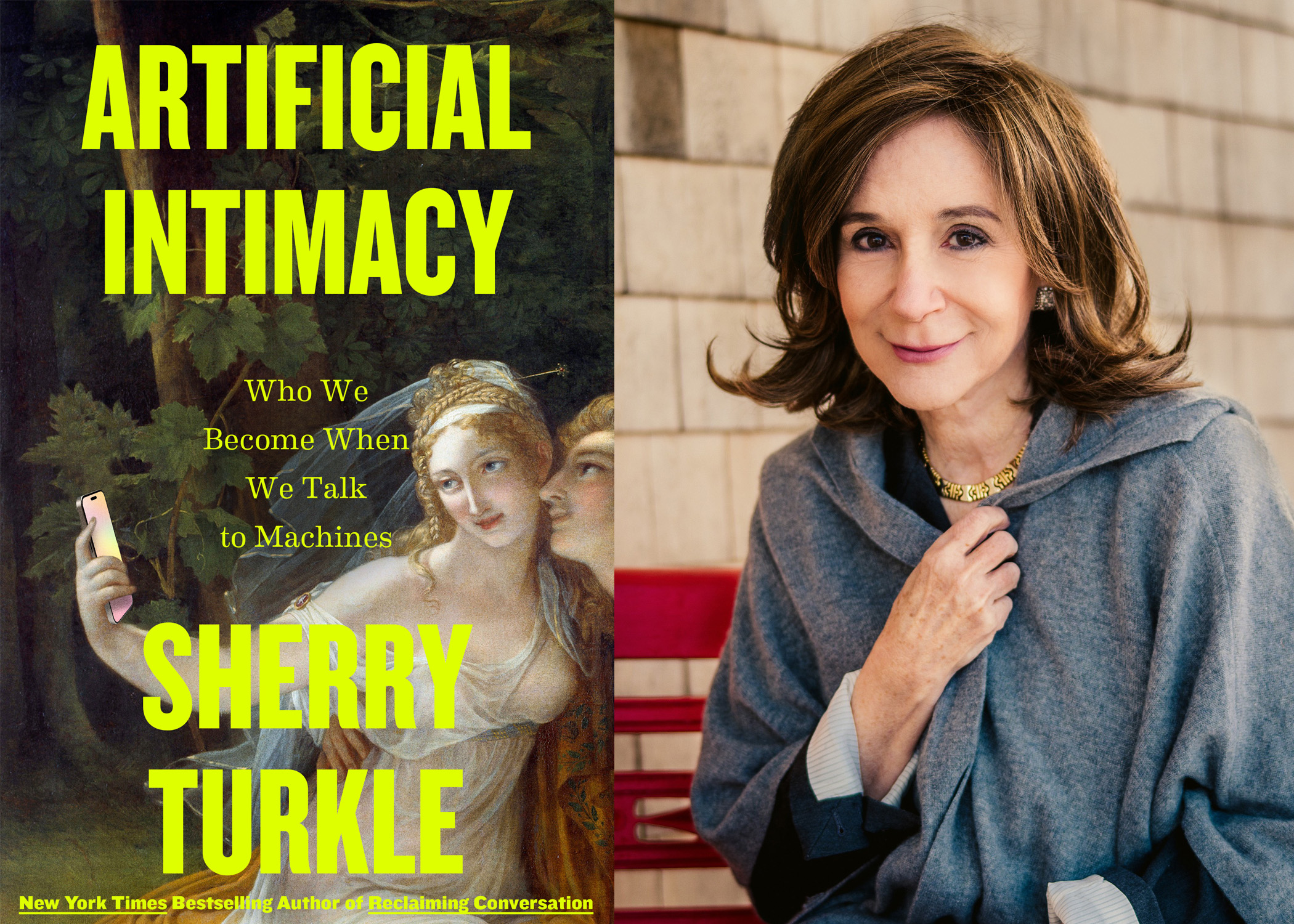
Professor Sherry Turkle’s new book, “Artificial Intimacy,” offers a withering critique of chatbots and the antisocial dynamics she believes they encourage.
We use cookies to run the site and, with your consent, for analytics and to show ads.
See our Cookie Policy.