Skip to content

Generative AI Model Assisted Multimodal Semantic Vehicular Edge Computing for Collaborative Perception

Nov 2026 · IEEE Transactions on Mobile Computing · Vol 25, pp. 21557-21573 · 0 citations · 45 references

Abstract

Vehicular edge computing (VEC) plays a pivotal role in enabling cooperative perception for connected autonomous vehicles (CAVs), providing comprehensive environmental awareness for safe vehicle control and road safety. However, collaborative perception in VEC faces significant challenges arising from stringent bandwidth constraints, communication latency, and high computational demands. In this paper, we propose a novel multimodal semantic vehicular edge computing (SVEC) architecture for cooperative perception to address these challenges. In the proposed SVEC framework, multimodal sensor data is intelligently selected for task-oriented sharing, and data modalities are adaptively transformed in response to dynamic communication and computing resource constraints. The selected information is then transmitted using advanced semantic encoding and decoding techniques, significantly reducing bandwidth consumption. To compensate for potential information loss introduced by semantic compression, we design a generative AI–based enhancement mechanism to preserve high perception fidelity. We further formulate a joint optimization problem to maximize the vehicles’ quality of experience (QoE) for cooperative perception. To solve this problem, we develop a diffusion-based multi-agent reinforcement learning algorithm that improves exploration efficiency and jointly optimizes vehicle policies in high-dimensional and complex state spaces. Extensive simulation results show that the proposed scheme significantly outperforms the benchmarks, reducing the average system latency by about 28%, decreasing the average system cost by about 19%, and lowering the semantic perception error by up to 40%, while achieving the highest average rewards and average QoE.
View source

Similar papers

#computer vision Review Sep 2017

Agile Software Development Methods: Review and Analysis

This publication proposes a definition and a classification of agile software development approaches and analyses ten software development methods that can be characterized as being "agile" against the defined criterion.

P. Abrahamsson, O. Salo, Jussi Ronkainen et al. · 727 citations · ⚡54
#computer vision Jun 2008

The impact of agile practices on communication in software development

The study shows that agile practices improve both informal and formal communication, but indicates that, in larger development situations involving multiple external stakeholders, a mismatch of adequate communication mechanisms can sometimes even hinder the communication.

M. Pikkarainen, Jukka Haikara, O. Salo et al. · 401 citations · ⚡48
#machine learning Review Open access Oct 2014

Software development in startup companies: A systematic mapping study

The results indicate that software engineering work practices are chosen opportunistically, adapted and configured to provide value under the constrains imposed by the startup context.

Nicolò Paternoster, Carmine Giardino, M. Unterkalmsteiner et al. · 394 citations · ⚡54

Related blog posts

Microsoft Research Blog Sep 29, 2026

Introducing Quine: An AI research system designed for the complexity of biology

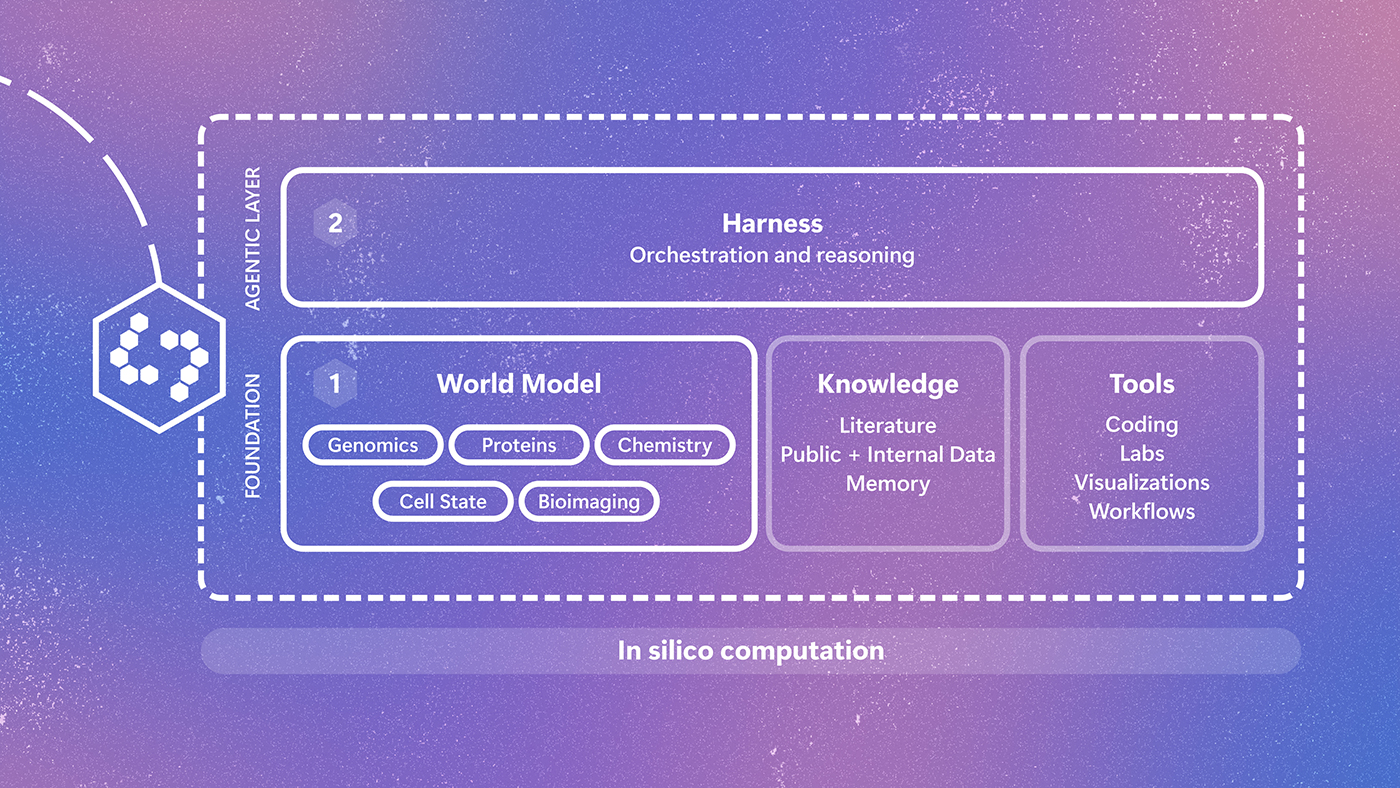
Biology doesn't operate in silos, and neither should the AI representation of it. Quine is an early-stage research effort to create a multimodal world model of biology. By connecting insights across biological scales and modalities, Quine helps scientists computationally search a space far larger than intuition allows and prioritize hypotheses before they reach the lab. Experimental results provide important feedback, helping researchers sharpen future research directions. The post Introducing Q…

MIT News · Artificial Intelligence Jul 14, 2026

Helping AI models to meet the real world

Through research and entrepreneurship, Professor Devavrat Shah is helping to design methods that can handle constant decision-making using limited computational resources.

We use cookies to run the site and, with your consent, for analytics and to show ads. See our Cookie Policy.