Temporal Visuo-Tactile Learning for Dexterous Grasp Stability
Ken NakaharaAleksei BuvailikProkhor KotovRoberto Calandra
Oct 2026
Machine LearningComputer VisionRobotics
Abstract
Humans can grasp everyday objects with almost perfect success rates using fingertip tactile feedback, yet much of the robotic grasping literature emphasizes vision-based grasp selection with parallel grippers. In this work, we systematically investigate how high-resolution, dynamic tactile sensing contributes to grasp stability prediction and model-guided grasping in dexterous robotic hands. To this end, we collected a dataset of 10,000 grasp trials across 200 objects using a multi-fingered robotic hand equipped with four Digit 360 tactile sensors, recording external vision, proprioception, and tactile streams throughout each grasp. With this dataset, we trained end-to-end temporal multimodal models to predict post-lift stability from pre-lift grasp observations and compared sensing modalities and encoding backbones. Experimental results and controlled input ablations show that incorporating touch, and particularly high-resolution, dynamic touch, improves grasp stability prediction. Finally, we deployed the learned predictor as an online stability gate on the real robot, where visuo-tactile model-guided regrasping improved the success rate among executed lifts by 10.5 percentage points over a non-tactile gate. These results show how rich fingertip sensing and expressive temporal models that capture the dynamics of touch can support learned grasping with multi-fingered hands without explicit contact or force modeling, providing a scalable data-driven path from tactile experience toward stable dexterous manipulation. The dataset is publicly available at https://lasr-lab.github.io/dexterous-grasp-stability/.
This publication proposes a definition and a classification of agile software development approaches and analyses ten software development methods that can be characterized as being "agile" against the defined criterion.
P. Abrahamsson, O. Salo, Jussi Ronkainen et al.· arXiv.org· 727 citations· ⚡54
The study shows that agile practices improve both informal and formal communication, but indicates that, in larger development situations involving multiple external stakeholders, a mismatch of adequate communication mechanisms can sometimes even hinder the communication.
M. Pikkarainen, Jukka Haikara, O. Salo et al.· Empirical Software Engineeri...· 401 citations· ⚡48
The results indicate that software engineering work practices are chosen opportunistically, adapted and configured to provide value under the constrains imposed by the startup context.
Nicolò Paternoster, Carmine Giardino, M. Unterkalmsteiner et al.· Information and Software Tec...· 394 citations· ⚡54
The possibility of inferring high-dimensional data inference in a model that consists of a prior and an auxiliary differentiable constraint given some additional information is considered, thereby allowing a range of potential applications in adapting models to new domains and tasks.
Alexandros Graikos, Esmeralda S. Whitammer, N. Jojic et al.· Neural Information Processin...· 316 citations· ⚡15
Exploring how generative AI could make machine vision more accessible to businesses. The post GenEye in a Box: Making Machine Vision Something You Can Just Ask For appeared first on GPT-Lab.
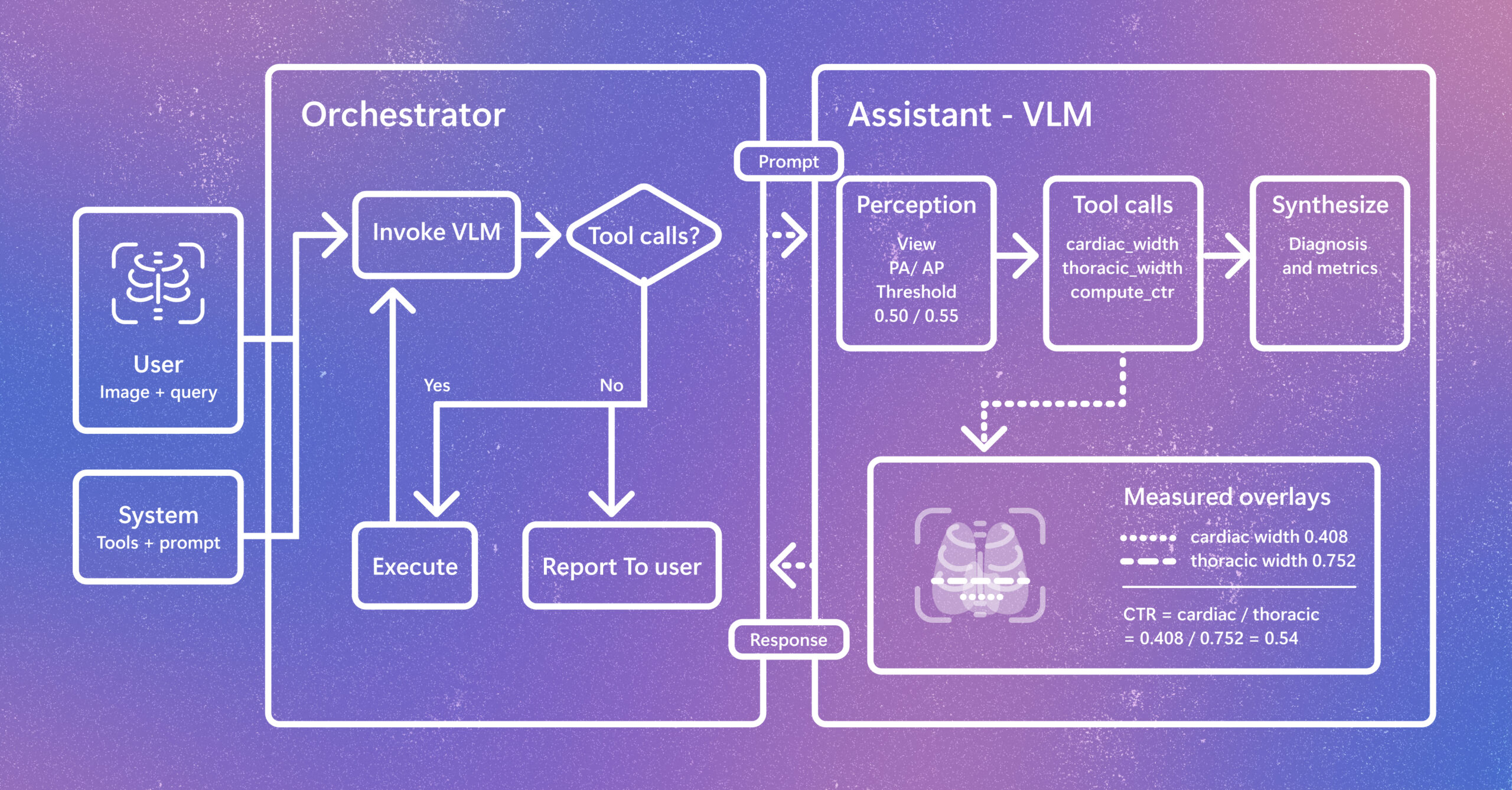
Radiology AI is evolving beyond report generation. CARE-X explores a unified approach that combines flexible reasoning, calibrated predictions, and measurement-based tools for chest X-ray interpretation. The post Introducing CARE-X: Towards Clinically Useful Radiology VLMs with Auxiliary Supervision, Reward-Aligned Learning, and Tool-Augmented Measurement appeared first on Microsoft Research.