Aug 2026· International Journal of Technology and Emerging Research· 0 citations· 38 references
TL;DR
A comprehensive review of spatial domain image steganography by examining its historical development, fundamental concepts, classification, and major techniques, including Least Significant Bit (LSB), Adaptive LSB, Pixel Value Differencing (PVD), Pixel Indicator Technique (PIT), Optimal Pixel Adjustment Process (OPAP), edge-based methods, and other adaptive spatial approaches.
Abstract
Spatial domain image steganography has emerged as one of the most widely adopted information-hiding techniques due to its simplicity, high embedding capacity, low computational complexity, and ability to preserve the visual quality of digital images. It plays a significant role in secure communication by concealing confidential information within digital images, thereby protecting sensitive data from unauthorized access in applications such as healthcare, military communication, banking, cloud computing, digital forensics, and multimedia systems. Despite these advantages, spatial domain techniques face several challenges, including vulnerability to steganalysis, limited robustness against image processing operations, and the trade-off between embedding capacity and imperceptibility. This paper presents a comprehensive review of spatial domain image steganography by examining its historical development, fundamental concepts, classification, and major techniques, including Least Significant Bit (LSB), Adaptive LSB, Pixel Value Differencing (PVD), Pixel Indicator Technique (PIT), Optimal Pixel Adjustment Process (OPAP), edge-based methods, and other adaptive spatial approaches. The reviewed techniques are comparatively analyzed based on embedding capacity, imperceptibility, robustness, computational complexity, and practical applicability, and are further illustrated through a quantitative case study that evaluates PSNR, SSIM, and MSE for LSB substitution on a standard test image. The study identifies existing research gaps and highlights future research directions aimed at improving robustness, visual quality, and embedding capacity. By providing a structured and critical synthesis of existing literature, this review serves as a valuable reference for researchers, academicians, and practitioners working in the field of digital image security and information hiding.
Keywords: Least Significant Bit (LSB); Pixel Value Differencing (PVD); Information Hiding; Digital Image Security; Steganalysis
Image steganography is an information-hiding technique, aiming to achieve confidentiality and data privacy while transmitting the data in a digital environment. Over the last two decades, steganography has evolved from classical spatial domain embedding to intelligent and adaptive steganographic systems capable of balancing imperceptibility, embedding capacity, robustness and security. This paper presents a review by categorizing the existing techniques into spatial domain-based, transform domain-based, hybrid and adaptive intelligent techniques. The review follows the PRISMA approach to make the selection process transparent for the inclusion and exclusion of papers in the study. Initially, the reviews include the spatial domain-based methods focusing on higher embedding capacity and simple embedding strategy, followed by transform-domain based techniques, including discrete cosine transform, discrete wavelet transform, and other multi-resolution wavelet transforms aiming to enhance robustness and imperceptibility by embedding the data into frequency coefficients. This paper further explores the methods that combine these techniques with other recent trends to develop adaptive and hybrid techniques. These techniques mainly integrate chaotic theory to enhance the security of secret data before embedding and optimization algorithms such as genetic algorithm, particle swarm optimization, Firefly, etc., for adaptive embedding to achieve an improved tradeoff. Finally, intelligent and adaptive techniques based on deep learning models such as convolutional neural networks, autoencoders, and generative adversarial networks are examined, highlighting their ability to learn intelligent embedding strategies and resist modern steganalysis. A comparative analysis is presented, including the technique, strengths, and limitations, together with the discussion of performance evaluation metrics and vulnerability analysis under image processing attacks. The review highlights the current trends and outlines the future direction to develop next-generation secure image steganographic systems.
Shikha Chaudhary, Gunjan Gupta, V. K. Mishra et al.· Signals· 0 citations
Image steganography performance depends on a trade-off among embedding capacity, imperceptibility, structural fidelity, robustness, security, and computational cost. This paper presents a comparative evaluation framework for spatial-domain and transform-domain image steganography using four standard benchmark images: Lena, Baboon, Barbara, and Cameraman. Representative spatial methods, Least Significant Bit (LSB) substitution and Pixel Value Differencing (PVD), are compared with transform-domain methods based on the Discrete Cosine Transform (DCT), Discrete Wavelet Transform (DWT), and a hybrid DWT–DCT approach. The evaluation parameters include embedding capacity, bits per pixel, PSNR, SSIM, extraction accuracy, robustness, and execution complexity. Equations, image-wise tables, average-performance tables, and bar charts are provided. The numerical comparison tables are explicitly presented as an illustrative experimental template because measured values require implementation under identical payload, image size, and attack conditions.
Keywords: Steganography; LSB; PVD; DCT; DWT; Embedding Capacity; PSNR; SSIM; Performance Evaluation
Nisha C. D., Thomas Monoth· International Journal of Tec...· 0 citations
VARStego is introduced, a reversible dual-layered steganographic framework designed to conceal confidential patient information within medical images, which uses the Huffman algorithm to compress all patient information in a separate layer of the framework, while a localized variance-based algorithm is employed to analyze medical images to find rough and complex regions.
Basten Andika Salim, Adifa Widyadhani Chanda D'Layla, Ntivuguruzwa Jean de La Croix et al.· Computers, Materials & C...· 0 citations
A new efficient technique for hiding a gray image inside a blue layer of color image is presented by combining the genetic algorithm (GA) with the Least Significant Bit (LSB) approach to optimal solution permutation for embedding pixel assortment of the image where data is to be concealed.
Dena Abu Laila, Ziad Dawahdeh, Amer Alqutaesh et al.· Journal of Cyber Security an...· 0 citations
The increasing demand for secure communication over public networks has intensified research on information
hiding techniques capable of protecting sensitive information from unauthorized access. Image steganography achieves this
objective by concealing secret information within digital images while preserving the visual appearance of the cover image.
Among the numerous image steganographic techniques, the Least Significant Bit (LSB) method is widely adopted because
of its simplicity, high embedding capacity, and low computational complexity. However, its sequential embedding
mechanism makes it susceptible to steganalysis and statistical attacks. To address this limitation, pseudorandom embedding
techniques distribute secret information randomly throughout the cover image using a shared secret key, thereby improving
security and imperceptibility. This paper presents a comparative performance analysis of the LSB and Pseudorandom
Encoding techniques for secure image steganography. Both techniques were implemented in MATLAB using identical cover
images and secret messages to ensure an unbiased evaluation. Performance was assessed using Peak Signal-to-Noise Ratio
(PSNR), Mean Square Error (MSE), Signal-to-Noise Ratio (SNR), embedding capacity, and visual image quality.
Experimental results demonstrate that although both techniques effectively conceal secret information with negligible
perceptual degradation, the Pseudorandom Encoding technique consistently produces higher PSNR values and lower
distortion than the conventional LSB method. Furthermore, the random distribution of embedded data significantly
improves resistance to unauthorized detection while maintaining comparable embedding capacity. The findings confirm
that pseudorandom embedding provides a more secure and robust alternative to sequential LSB steganography for digital
image information hiding.
Mujittaba Bature, A. Lawal, T. Lawal· International Journal of Inn...· 0 citations
AI is making software generation faster, but speed does not remove the need for expertise. As more work is delegated to AI, tacit knowledge may become one of the most important human advantages in software engineering. The post Beyond Prompt Engineering: The Role of Tacit Knowledge in Software Engineering appeared first on GPT-Lab.
MIT News · Artificial Intelligence· news.mit.eduSep 9, 2026
A weeklong summer workshop brought higher education faculty to campus to explore how AI and machine learning materials can be adapted for their classrooms.
MIT News · Artificial Intelligence· news.mit.eduSep 2, 2026
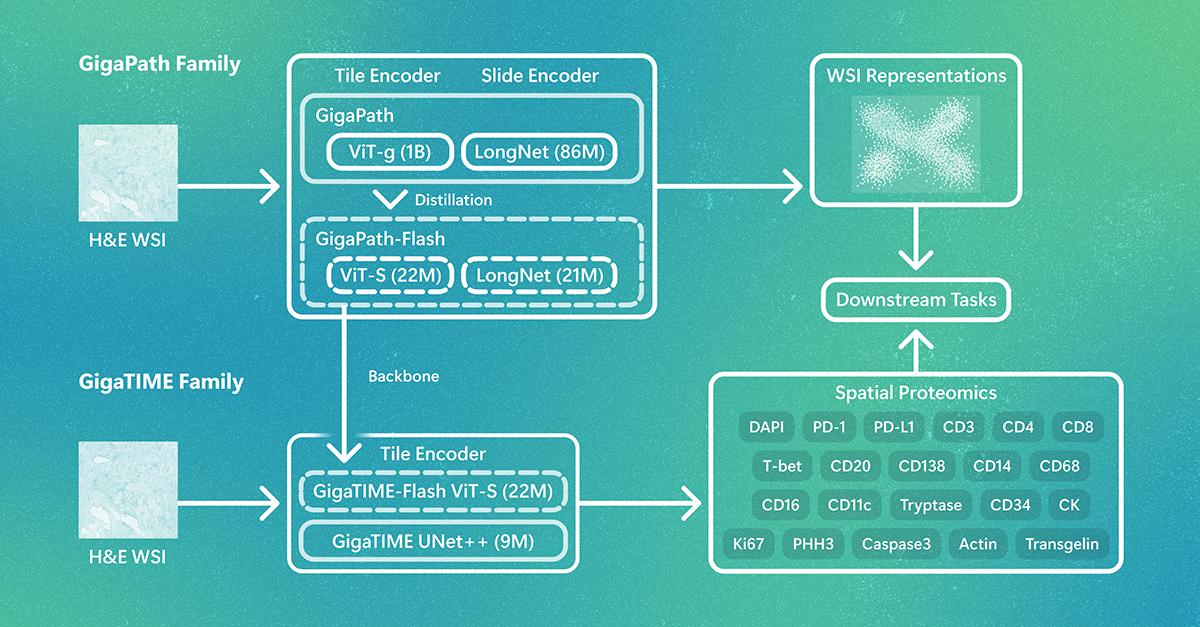
What if pathology foundation models could do more with less? GigaPath-Flash and GigaTIME-Flash cut computational demands while maintaining strong performance, opening the door to larger studies and broader exploration. The post GigaPath-Flash and GigaTIME-Flash: Toward population-scale discovery with efficient pathology foundation models appeared first on Microsoft Research.
We use cookies to run the site and, with your consent, for analytics and to show ads.
See our Cookie Policy.