Skip to content

Have I Seen Enough? Frozen Video-Language Models Encode Evidence Readiness

Dan Ben-Ami Kobi Cohen Chaim Baskin
Oct 2026
Machine Learning Natural Language Processing Computer Vision

Abstract

Streaming video-language models must decide not only what to answer, but whether the evidence needed for the current question has arrived. Existing systems learn that decision as a separate trigger; we ask whether an unmodified model already computes it. We show that frozen VideoLLMs carry a linearly readable evidence-readiness signal, labelled from timestamped evidence rather than from model output. It decodes in all seven models of a shared byte-identical evaluation (AUROC 0.733-0.905 under the strictest not-ready sampling, where a fitted clock is near chance), and a probe fitted without any of a benchmark family's footage still reads that family. It is question-conditioned: on byte-identical windows, changing only the question reverses the readout on 66.1% of pairs, while every question-blind control is at chance by construction. The model can answer incorrectly and still encode readiness: AUROC remains 0.722 among wrong answers. Readiness also beats uncertainty estimators and their supervised combination on latency-matched answer selection, and tracks independent human judgments more closely than confidence. Released streaming triggers are also linear readouts, yet a trained trigger read on its own base model's activations is approximately orthogonal to readiness and decodes it far less accurately than a probe. We turn the readout into Readiness Gating, an answer-timing policy that improves accuracy by up to +9.75 pp at matched video duration with negligible computational overhead. How much it gains varies with the accuracy headroom the task makes available: across 26 configurations the gain tracks that headroom, and an intervention that moves it over identical pixels moves the gain with it.


View source

Similar papers

#computer vision Review Sep 2017

Agile Software Development Methods: Review and Analysis

This publication proposes a definition and a classification of agile software development approaches and analyses ten software development methods that can be characterized as being "agile" against the defined criterion.

P. Abrahamsson, O. Salo, Jussi Ronkainen et al. · 727 citations · ⚡54
#computer vision Jun 2008

The impact of agile practices on communication in software development

The study shows that agile practices improve both informal and formal communication, but indicates that, in larger development situations involving multiple external stakeholders, a mismatch of adequate communication mechanisms can sometimes even hinder the communication.

M. Pikkarainen, Jukka Haikara, O. Salo et al. · 401 citations · ⚡48
#machine learning Review Open access Oct 2014

Software development in startup companies: A systematic mapping study

The results indicate that software engineering work practices are chosen opportunistically, adapted and configured to provide value under the constrains imposed by the startup context.

Nicolò Paternoster, Carmine Giardino, M. Unterkalmsteiner et al. · 394 citations · ⚡54

Diffusion models as plug-and-play priors

The possibility of inferring high-dimensional data inference in a model that consists of a prior and an auxiliary differentiable constraint given some additional information is considered, thereby allowing a range of potential applications in adapting models to new domains and tasks.

Alexandros Graikos, Esmeralda S. Whitammer, N. Jojic et al. · 316 citations · ⚡15

Trajectory Balance: Improved Credit Assignment in GFlowNets

It is proved that any global minimizer of the trajectory balance objective can define a policy that samples exactly from the target distribution, and empirically demonstrate the benefits of the trajectories balance objective for GFlowNet convergence, diversity of generated samples, and robustness to long action sequenc...

Esmeralda S. Whitammer, Moksh Jain, Emmanuel Bengio et al. · 302 citations · ⚡60

Related blog posts

MIT News · Artificial Intelligence Aug 27, 2026

Looking beyond natural sequences

A new machine-learning framework aims to improve the success rate of computational protein design while moving away from results that reproduce sequences found in nature.

Microsoft Research Blog Aug 11, 2026

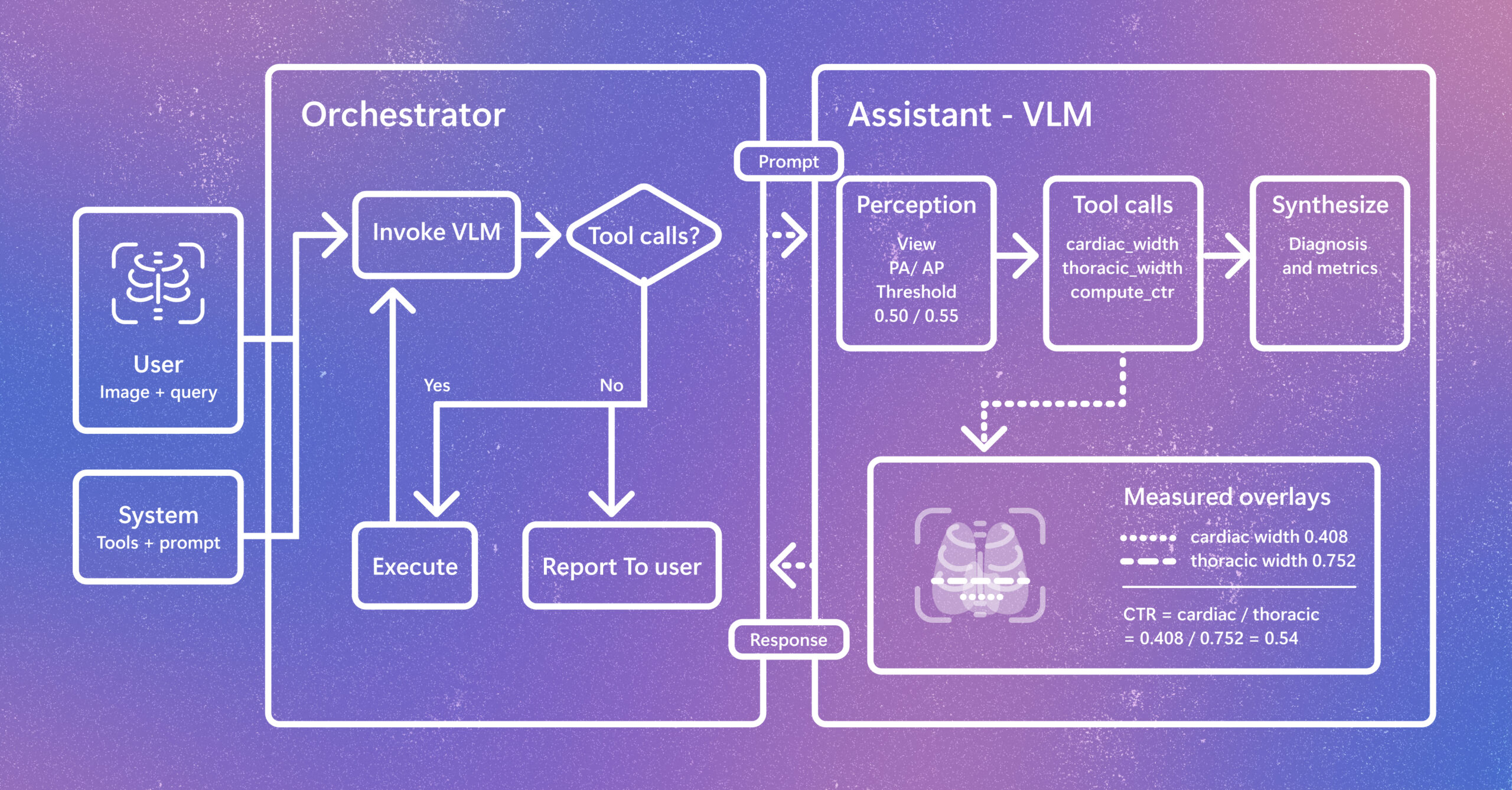
Introducing CARE-X: Towards Clinically Useful Radiology VLMs with Auxiliary Supervision, Reward-Aligned Learning, and Tool-Augmented Measurement

Radiology AI is evolving beyond report generation. CARE-X explores a unified approach that combines flexible reasoning, calibrated predictions, and measurement-based tools for chest X-ray interpretation. The post Introducing CARE-X: Towards Clinically Useful Radiology VLMs with Auxiliary Supervision, Reward-Aligned Learning, and Tool-Augmented Measurement appeared first on Microsoft Research.

We use cookies to run the site and, with your consent, for analytics and to show ads. See our Cookie Policy.