Skip to content

SUAVE: Unified Video-Action Models via Masked Diffusion

Oct 2026 · 0 citations · 30 references
Computer Science

Abstract

Vision-language-action models (VLAs) inherit strong semantic grounding from pretrained vision-language backbones but are typically optimized for predicting actions rather than future observations. They can see and act, but they do not imagine the future before acting. World action models (WAMs) built on video diffusion backbones can imagine but treat language as frozen conditioning on a continuous latent space. Unified models bring these modalities into one architecture, but they either decode autoregressively, one token at a time, or keep video continuous with an auxiliary action head. In this work, we present SUAVE, a Single vocabulary Unified Action-Video modEl in which a masked diffusion transformer generates video and actions conditioned on language, with all three modalities represented as discrete tokens in a shared sequence. Choosing which tokens to mask at inference turns the same network into a world model, a robot policy, or a video-action model. For action-free co-training, the action positions of unlabeled video are filled with mask tokens and excluded from the loss. Simulation and real-world experiments demonstrate two findings. First, a single SUAVE model predicts long-horizon video and acts as a policy, competitive with dedicated world models and specialized action policies on static and dynamic manipulation tasks. On a real robot, our model generates subgoal images and an action chunk spanning one second of motion in 1,030 ms on an RTX 5090 GPU, sustaining closed-loop control at 2.5 actions per second. Second, pretraining on robot video and co-training on human video substantially improves policy performance and zero-shot robustness to distribution shift. Together, these results show that masked diffusion is a practical and versatile foundation for unified video-action modeling.

View source

Similar papers

#computer vision Review Sep 2017

Agile Software Development Methods: Review and Analysis

This publication proposes a definition and a classification of agile software development approaches and analyses ten software development methods that can be characterized as being "agile" against the defined criterion.

P. Abrahamsson, O. Salo, Jussi Ronkainen et al. · 727 citations · ⚡54
#computer vision Jun 2008

The impact of agile practices on communication in software development

The study shows that agile practices improve both informal and formal communication, but indicates that, in larger development situations involving multiple external stakeholders, a mismatch of adequate communication mechanisms can sometimes even hinder the communication.

M. Pikkarainen, Jukka Haikara, O. Salo et al. · 401 citations · ⚡48
#machine learning Review Open access Oct 2014

Software development in startup companies: A systematic mapping study

The results indicate that software engineering work practices are chosen opportunistically, adapted and configured to provide value under the constrains imposed by the startup context.

Nicolò Paternoster, Carmine Giardino, M. Unterkalmsteiner et al. · 394 citations · ⚡54

Diffusion models as plug-and-play priors

The possibility of inferring high-dimensional data inference in a model that consists of a prior and an auxiliary differentiable constraint given some additional information is considered, thereby allowing a range of potential applications in adapting models to new domains and tasks.

Alexandros Graikos, Esmeralda S. Whitammer, N. Jojic et al. · 316 citations · ⚡15

Related blog posts

Microsoft Research Blog Aug 11, 2026

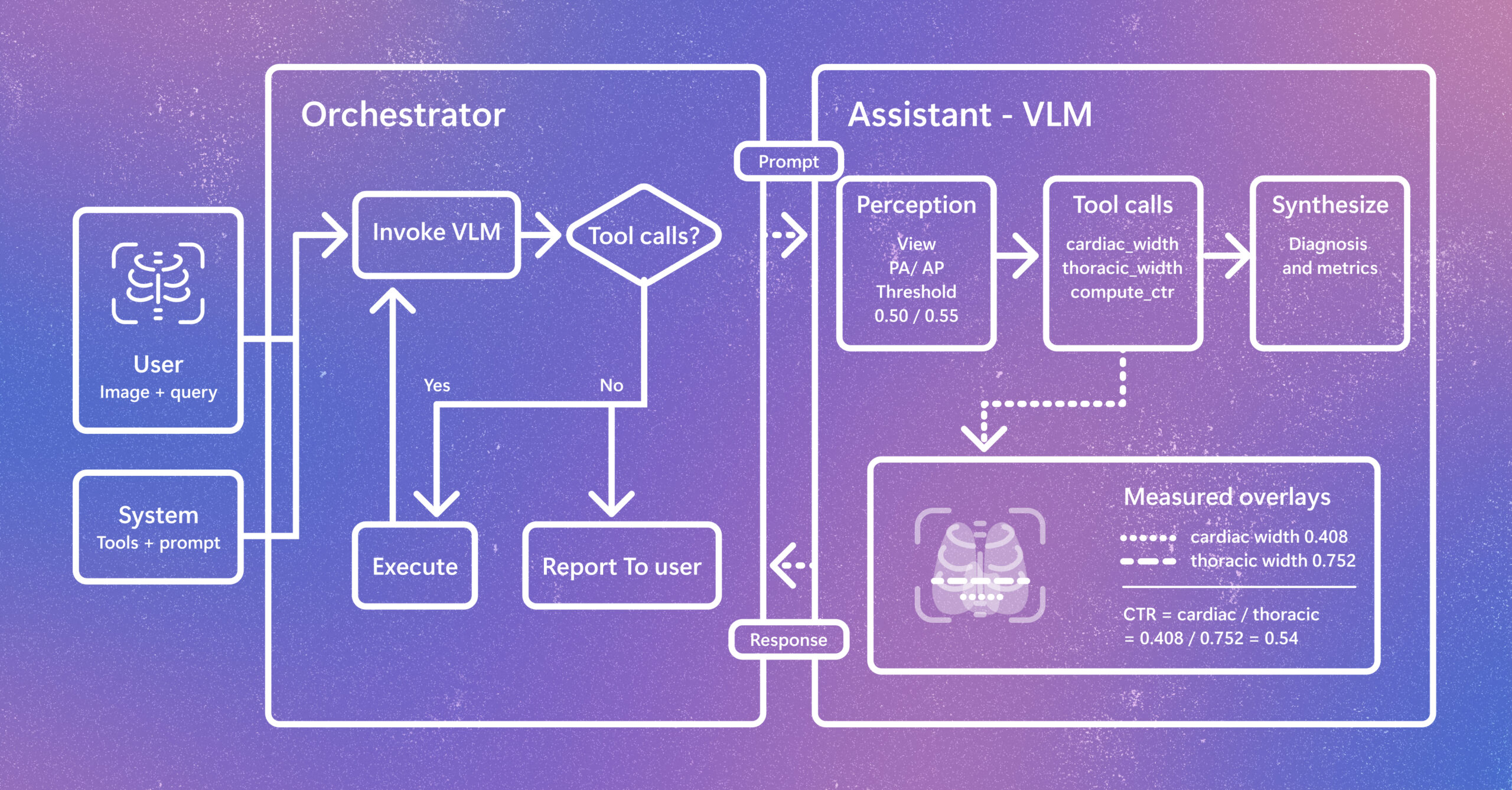
Introducing CARE-X: Towards Clinically Useful Radiology VLMs with Auxiliary Supervision, Reward-Aligned Learning, and Tool-Augmented Measurement

Radiology AI is evolving beyond report generation. CARE-X explores a unified approach that combines flexible reasoning, calibrated predictions, and measurement-based tools for chest X-ray interpretation. The post Introducing CARE-X: Towards Clinically Useful Radiology VLMs with Auxiliary Supervision, Reward-Aligned Learning, and Tool-Augmented Measurement appeared first on Microsoft Research.

We use cookies to run the site and, with your consent, for analytics and to show ads. See our Cookie Policy.
