Oct 2026· Zenodo (CERN European Organization for Nuclear Research)
Network Security and Intrusion DetectionInternet Traffic Analysis and Secure E-voting
Abstract
The increasing distribution of enterprise computing across cloud platforms, edge devices, branch networks, and Internet-of-Things environments has made the collection and centralized analysis of network telemetry increasingly difficult. Conventional deep-learning intrusion detection approaches commonly require the movement of traffic records to a common training repository, which can expose sensitive operational information and create substantial communication and storage demands. This study introduces AX-FDL, an adaptive and interpretable federated deep-learning architecture designed to classify network traffic while retaining the underlying records at participating sites. The proposed architecture combines dimensionality reduction, decentralized model optimization, and post-training feature attribution. An ensemble-based selection procedure reduces the original 79 CIC-IDS2017 flow attributes to 20 attributes before model training. Under the experimental configuration reported in this study, this reduction corresponds to a 74.68% decrease in model-update communication overhead. The resulting classifier is evaluated using centralized, federated IID, federated non-IID, and label-poisoning scenarios. With IID data, the framework records 99.89% accuracy, a 0.9988 macro F1-score, and a 0.9997 ROC-AUC. Under a Dirichlet non-IID configuration with α = 0.5, accuracy remains 99.54%. When 20% of participating clients are subjected to label-flipping poisoning, the reported accuracy is 98.12%. SHAP-based attribution is additionally used to identify the flow characteristics that contribute to individual predictions and aggregate model behavior. The findings indicate that the combination of feature reduction, federated optimization, and model interpretation can provide a communication-conscious approach to distributed network threat classification.

This publication proposes a definition and a classification of agile software development approaches and analyses ten software development methods that can be characterized as being "agile" against the defined criterion.
P. Abrahamsson, O. Salo, Jussi Ronkainen et al.· arXiv.org· 727 citations· ⚡54
The study shows that agile practices improve both informal and formal communication, but indicates that, in larger development situations involving multiple external stakeholders, a mismatch of adequate communication mechanisms can sometimes even hinder the communication.
M. Pikkarainen, Jukka Haikara, O. Salo et al.· Empirical Software Engineeri...· 401 citations· ⚡48
The results indicate that software engineering work practices are chosen opportunistically, adapted and configured to provide value under the constrains imposed by the startup context.
Nicolò Paternoster, Carmine Giardino, M. Unterkalmsteiner et al.· Information and Software Tec...· 394 citations· ⚡54
The perception of the impact of agile methods is predominantly positive, and several challenge areas were discovered, but based on this study, agile methods are here to stay.
M. Laanti, O. Salo, P. Abrahamsson· Information and Software Tec...· 260 citations· ⚡20
Related blog posts
MIT News · Artificial Intelligence· news.mit.eduOct 2, 2026
A weeklong summer workshop brought higher education faculty to campus to explore how AI and machine learning materials can be adapted for their classrooms.
MIT News · Artificial Intelligence· news.mit.eduAug 27, 2026
A new machine-learning framework aims to improve the success rate of computational protein design while moving away from results that reproduce sequences found in nature.
Microsoft Research Blog· microsoft.comAug 20, 2026
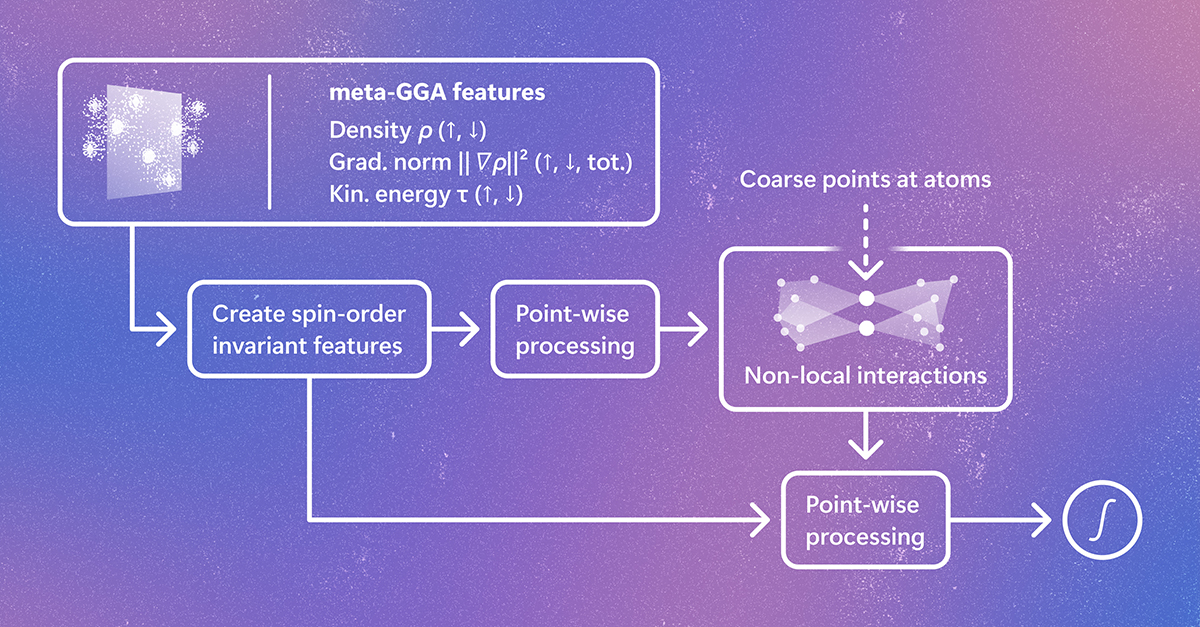
Skala 1.1, the updated deep-learning exchange-correlation functional from Microsoft Research, provides greater accuracy, expanded accessibility across the computational chemistry ecosystem, and a living benchmark to track computational performance. The post Broadening access to Skala creates a faster path to predictive DFT appeared first on Microsoft Research.
We use cookies to run the site and, with your consent, for analytics and to show ads.
See our Cookie Policy.