Skip to content

Continual Reinforcement Learning with Neuroevolution

Oct 2026 · 0 citations · 74 references
Computer Science

Abstract

Despite many studies about causes and remedies of plasticity loss in Reinforcement Learning (RL) under continual task changes, no RL method has yet consistently achieved a good balance between adaptation and forgetting. Here we turn to an alternative optimization paradigm, neuroevolution (NE): algorithms that search directly in weight space through mutation and selection over a population of neural networks. Across a wide array of environments and environmental changes, with policies ranging from a few hundred parameters to million-parameter networks, we compare evolution strategies (ES) and genetic algorithms (GAs) against state-of-the-art continual RL variants and population-based RL. ES most consistently achieves a good stability-plasticity trade-off, while the GA is the most plastic method but forgets more than ES. To explain this, we study the return landscape around each method's solutions. ES finds the widest neighborhoods, i.e.\ regions of weight space in which perturbed policies still solve the task, and the size of the overlap between the neighborhoods of consecutive tasks correlates with a method's stability-plasticity trade-off. Rewarding behavioral diversity in a GA through novelty search makes the population even more plastic, at the cost of forgetting. Finally, symptoms of plasticity loss commonly reported in RL do not transfer to NE. Overall, these results establish NE as a competitive alternative to RL under continual task changes, and suggest that training under perturbations in weight space may be a useful mechanism for continual learning more broadly.
View source

Similar papers

#machine learning Review Open access Oct 2014

Software development in startup companies: A systematic mapping study

The results indicate that software engineering work practices are chosen opportunistically, adapted and configured to provide value under the constrains imposed by the startup context.

Nicolò Paternoster, Carmine Giardino, M. Unterkalmsteiner et al. · 394 citations · ⚡54

Diffusion models as plug-and-play priors

The possibility of inferring high-dimensional data inference in a model that consists of a prior and an auxiliary differentiable constraint given some additional information is considered, thereby allowing a range of potential applications in adapting models to new domains and tasks.

Alexandros Graikos, Esmeralda S. Whitammer, N. Jojic et al. · 316 citations · ⚡15

Trajectory Balance: Improved Credit Assignment in GFlowNets

It is proved that any global minimizer of the trajectory balance objective can define a policy that samples exactly from the target distribution, and empirically demonstrate the benefits of the trajectories balance objective for GFlowNet convergence, diversity of generated samples, and robustness to long action sequenc...

Esmeralda S. Whitammer, Moksh Jain, Emmanuel Bengio et al. · 302 citations · ⚡60
#machine learning Review Open access Jun 2014

Why Early-Stage Software Startups Fail: A Behavioral Framework

This state-of-practice investigation was performed using a literature review followed by a multiple-case study approach and presents how inconsistency between managerial strategies and execution can lead to failure by means of a behavioral framework.

Carmine Giardino, Xiaofeng Wang, P. Abrahamsson · 175 citations · ⚡19
#artificial intelligence Open access Jul 2024

Gender, Race, and Intersectional Bias in Resume Screening via Language Model Retrieval

This work investigates the possibilities of using LLMs in a resume screening setting via a document retrieval framework that simulates job candidate selection and finds that the MTEs are biased, significantly favoring White-associated names in 85% of cases and female-associated names in only 11.1% of cases.

Kyra Wilson, Aylin Caliskan · 131 citations · ⚡8
#machine learning Review Open access Oct 2016

“Failures” to be celebrated: an analysis of major pivots of software startups

This study conducts a case survey study based on the secondary data of the major pivots happened in 49 software startups, and demonstrates that customer need pivot is the most common among all pivot types.

Sohaib Shahid Bajwa, Xiaofeng Wang, Anh Nguyen-Duc et al. · 127 citations · ⚡15

Related blog posts

Microsoft Research Blog Sep 30, 2026

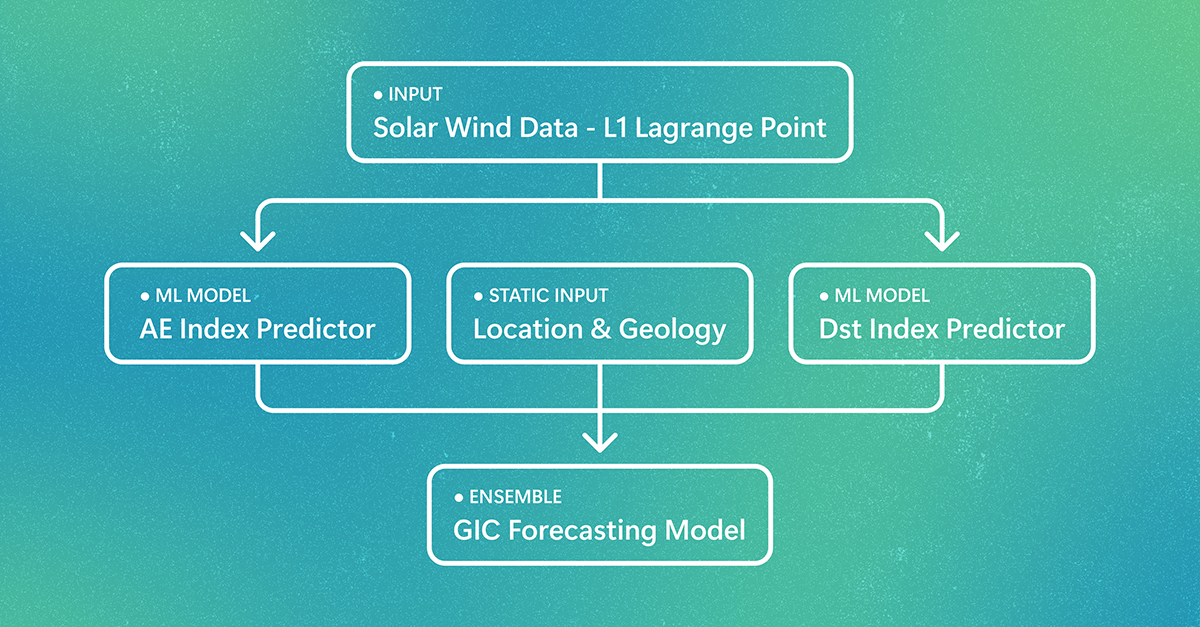
Forecasting space weather risks on power grids

Extreme space-weather events can damage power systems on Earth and degrade GPS accuracy and satellite operations. A new machine learning system can predict where damage is likely to occur 30-60 minutes before a storm arrives. The post Forecasting space weather risks on power grids appeared first on Microsoft Research.

We use cookies to run the site and, with your consent, for analytics and to show ads. See our Cookie Policy.