Jun 2025· World Journal of Advanced Research and Reviews· Vol 26, pp. 2877-2890· 1 citation
TL;DR
The paper provides a comprehensive analytical tool to make sense of micro and macro evidence, unpacks scenarios when AI agents will drive inclusive productivity growth, and outlines a policy roadmap focused on complementary investments, incentives for task-redesign, and workforce transition support measures.

Abstract
The spread of artificial intelligence (AI) agents in the economy inevitably asks questions about productivity and the shifts in the labour market and long-run macroeconomic growth. This paper, using a mixed-methods approach, pools microeconomic experimental evidence and macroeconomic modelling, for a thorough assessment of the economic impact of AI agents. The paper reports on four pioneering RCTs that randomized 6,478 workers in writing, coding, customer-service, and management-consulting domains showing a strong skill-levelling effect: Across various industries, overall productivity gains from AI agents range from 14% to 56%, with the majority of these gains occurring at the bottom of the talent distribution and only small or negative effects at the top. The modelling and simulation indicate that macroeconomic benefits will be achieved using a J-curve path and will result from a downward trend in the short term, followed by a long upward trend provided complementary investment is made. Based on macroeconomic forecasts from various organizations, the range of potential potential impacts of the EV transition is wide from +0.5% cumulative GDP growth (Acemoglu, 2024) to +7% cumulative GDP growth over a decade (Goldman Sachs) and +$25.6 trillion value added across industries (McKinsey, 2023). Analysis of the distribution of the labour supply shows that around 19% to 47% of workers are potentially highly affected in terms of the disruption of their tasks, including the relatively high exposure for high-education workers in routine cognitive occupations. The paper provides a comprehensive analytical tool to make sense of micro and macro evidence, unpacks scenarios when AI agents will drive inclusive productivity growth, and outlines a policy roadmap focused on complementary investments, incentives for task-redesign, and workforce transition support measures.
Supporting data, adapters, predictions and code for the article *Low-Cost LoRA Fine-Tuning of Small Language Models for Multi-Step Arithmetic Reasoning* by Jake O'Grady, Asena Isik Gürhan, Chee Fong Ting and Effirul Ramlan (University of Galway). We generated 20,000 GSM8K-derived arithmetic problems with step-by-step s...
O'Grady, Jake, Gürhan, Asena Isik, Chee, Fong Ting et al.· Zenodo (CERN European Organi...· 465 citations
GAOKAO-Bench is introduced, an intuitive benchmark that employs questions from the Chinese GAOKAO examination as test samples, including both subjective and objective questions that contribute a robust evaluation benchmark for future large language models and offers valuable insights into the advantages and limitations...
Xiaotian Zhang, Chun-yan Li, Yi Zong et al.· arXiv.org· 216 citations· ⚡17
The results are packaged in the Greenfield Startup Model (GSM), which explains the priority of startups to release the product as quickly as possible, and the need to shorten time-to-market, by speeding up the development through low-precision engineering activities.
Carmine Giardino, Nicolò Paternoster, M. Unterkalmsteiner et al.· IEEE Transactions on Softwar...· 178 citations· ⚡14
Software startup companies develop innovative, software-intensive products within limited timeframes and with few resources, searching for sustainable and scalable business models.
M. Unterkalmsteiner, P. Abrahamsson, Xiaofeng Wang et al.· e-Informatica Software Engin...· 157 citations· ⚡17
This work investigates the possibilities of using LLMs in a resume screening setting via a document retrieval framework that simulates job candidate selection and finds that the MTEs are biased, significantly favoring White-associated names in 85% of cases and female-associated names in only 11.1% of cases.
This study conducts a case survey study based on the secondary data of the major pivots happened in 49 software startups, and demonstrates that customer need pivot is the most common among all pivot types.
Sohaib Shahid Bajwa, Xiaofeng Wang, Anh Nguyen-Duc et al.· Empirical Software Engineeri...· 127 citations· ⚡15
Able to defeat top-ranked human players and more efficient than other models, the new system could help decision-makers in military maneuvers or business negotiations.
Microsoft Research Blog· microsoft.comSep 29, 2026
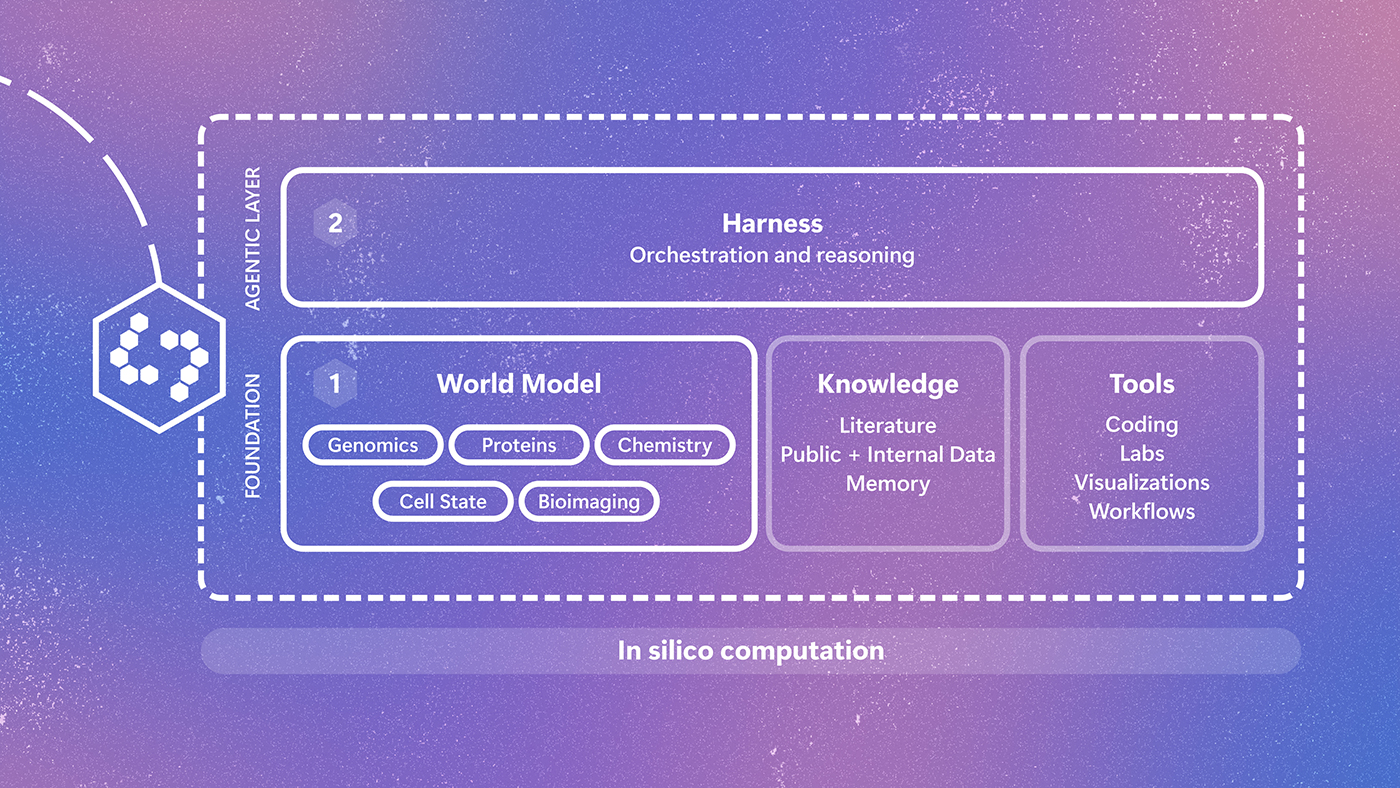
Biology doesn't operate in silos, and neither should the AI representation of it. Quine is an early-stage research effort to create a multimodal world model of biology. By connecting insights across biological scales and modalities, Quine helps scientists computationally search a space far larger than intuition allows and prioritize hypotheses before they reach the lab. Experimental results provide important feedback, helping researchers sharpen future research directions. The post Introducing Q…
We use cookies to run the site and, with your consent, for analytics and to show ads.
See our Cookie Policy.