RobotValues: Evaluating Household Robots When Human Values Conflict
Jongwook HanHyeongjin KimYohan Jo
Sep 2026
Artificial IntelligenceRobotics
Abstract
While household robots are often evaluated based on task completion, everyday domestic environments involve value-conflicting situations where robots are expected to choose actions that prioritize diverse values such as human autonomy, efficiency, or social appropriateness. Yet, there are no benchmarks for evaluating robots' value preferences in such scenarios. We introduce RobotValues, a benchmark to evaluate household robot planners in 8K value-conflict scenarios. Each instance consists of a realistic, synthetically generated household image with multiple plausible robot actions that prioritize different human values. We construct ROBOTVALUES through LLM-assisted scenario generation, stakeholder-grounded value extraction, image generation and automatic quality control. We evaluate 10 VLMs used in robotics and find that models show default value preferences, including safety and accommodation, while underselecting privacy-prioritizing actions. When models are prompted to prioritize values that conflict with their preferences, models often fail to override the default actions, choosing incorrect actions 80% of the time on average across models. These findings highlight the need to go beyond task completion or safety evaluations and assess robots' decision-making capability when human values conflict.

GAOKAO-Bench is introduced, an intuitive benchmark that employs questions from the Chinese GAOKAO examination as test samples, including both subjective and objective questions that contribute a robust evaluation benchmark for future large language models and offers valuable insights into the advantages and limitations...
Xiaotian Zhang, Chun-yan Li, Yi Zong et al.· arXiv.org· 216 citations· ⚡17
This work investigates the possibilities of using LLMs in a resume screening setting via a document retrieval framework that simulates job candidate selection and finds that the MTEs are biased, significantly favoring White-associated names in 85% of cases and female-associated names in only 11.1% of cases.
This work shows that orders of magnitude enhancement in performance could be obtained by a combination of hardware improvements and tight quantum-HPC integration and introduces high-performance architectures for quantum-probabilistic computing with custom-designed accelerators to tackle today's industry-scale classical...
Masoud Mohseni, Artur Scherer, K. Johnson et al.· arXiv.org· 121 citations· ⚡9
This paper presents a comprehensive overview of the Ultralytics YOLO family, emphasizing architectural evolution, benchmarking, deployment, and emerging directions from YOLOv5 through YOLO27, and examines detection, segmentation, depth, classification, pose, oriented detection, tracking, export, quantization, and deplo...
This work revisits schema linking when using the latest generation of large language models (LLMs) and finds empirically that newer models are adept at utilizing relevant schema elements during generation even in the presence of large numbers of irrelevant ones.
Karime Maamari, Fadhil Abubaker, Daniel Jaroslawicz et al.· arXiv.org· 109 citations· ⚡19
A novel threat is unveiled in which attackers steer the RAG system's response by injecting malicious passages into its knowledge base, enabling the attacker to steer the response without altering the user input or modifying the RAG weights.
Jiaqi Xue, Meng Zheng, Yebowen Hu et al.· arXiv.org· 109 citations· ⚡8
Related blog posts
MIT News · Artificial Intelligence· news.mit.eduJul 30, 2026
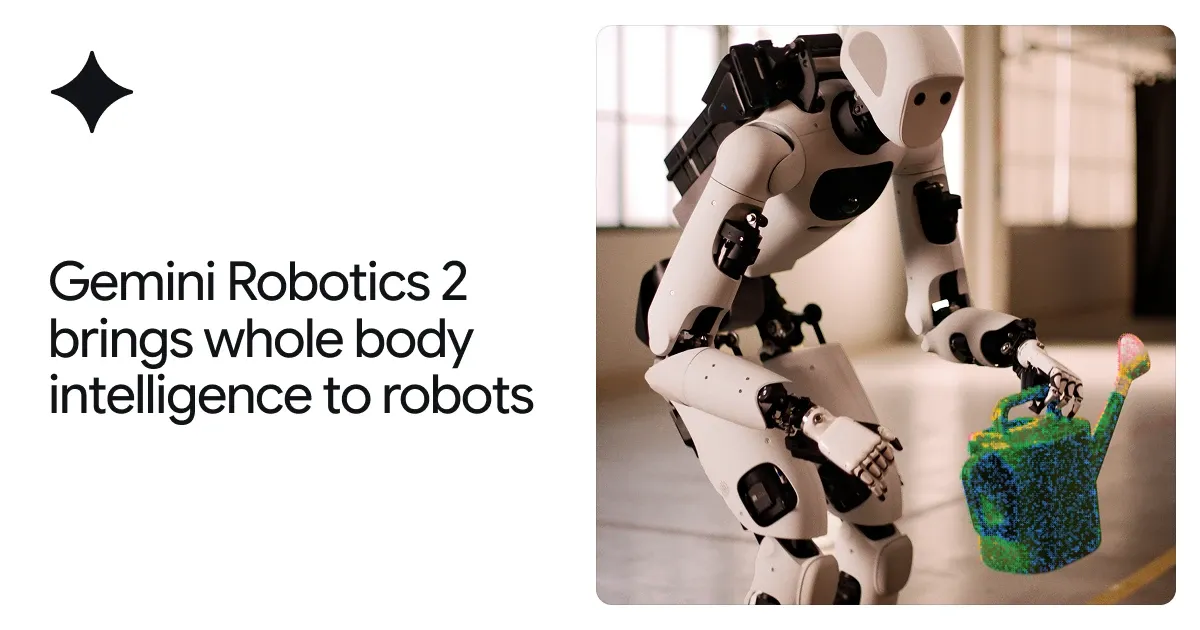
From feet to fingertips — we are teaching robots intelligent whole-body control, fine dexterity, and teamwork to complete a broad range of complex tasks.
With $2.1 million funding from Google.org, the open-source Public Transit Intelligence Hub will unify public transit monitoring, operations, and passenger communication.
We use cookies to run the site and, with your consent, for analytics and to show ads.
See our Cookie Policy.