In every base and instruction-tuned pair the authors test, instruction tuning strengthens the model's preference for reserved markers, and the gap persists on that channel.
Abstract
Prompt injection against LLM agents becomes much stronger when the injected instruction is wrapped in the model's own chat template. A forged template marker such as<|im_start|>can reach the model either as a single reserved control token or as a sequence of ordinary subword tokens. The two decode to exactly the same text, and because tokenization runs on the server, the defender rather than the attacker decides which one the model receives. We use this to measure how much of the injected instruction's authority comes from the reserved token's learned representation. Encoding the forged markers as subwords, with the text held fixed and a control for the extra tokens this adds, lowers attack success on the InjecAgent benchmark by 39 to 66 percentage points on three of four open-weight families, and the gap carries over to multi-turn agent tasks in AgentDojo. On Qwen3-8B the gap is 8 points, because without reserved ids the model still recognises the forged turn from its text by reasoning; suppressing the reasoning block widens the gap to 50. The authority sits in the single learned vector at the marker position: the mean of the marker's subword vectors does not reproduce it, the vector of the nearest ordinary token restores the attack on Llama-3.1, and an adaptive attacker who searches for non-reserved markers finds such embedding neighbours on three of four families. In every base and instruction-tuned pair we test, instruction tuning strengthens the model's preference for reserved markers. The standard mitigation, a tokenizer option that encodes special tokens as ordinary subwords, applies only to tokens a configuration declares special, so in 33 of 67 distinct tokenizer configurations, covering 255 of the 400 most-downloaded chat models on Hugging Face, it leaves intact the tool-protocol tokens through which agents read untrusted tool output, and the gap persists on that channel.
It is found that Llama 3 delivers comparable quality to leading language models such as GPT-4 on a plethora of tasks, and performs competitively with the state-of-the-art on image, video, and speech recognition tasks.
This paper investigates developing real-world perception for active agents, proposes Gibson Environment for this purpose, and showcases a set of perceptual tasks learned therein.
F. Xia, Amir Zamir, Zhi-Yang He et al.· 2018 IEEE/CVF Conference on...· 1,069 citations· ⚡112
The results indicate that software engineering work practices are chosen opportunistically, adapted and configured to provide value under the constrains imposed by the startup context.
Nicolò Paternoster, Carmine Giardino, M. Unterkalmsteiner et al.· Information and Software Tec...· 394 citations· ⚡54
The possibility of inferring high-dimensional data inference in a model that consists of a prior and an auxiliary differentiable constraint given some additional information is considered, thereby allowing a range of potential applications in adapting models to new domains and tasks.
Alexandros Graikos, Esmeralda S. Whitammer, N. Jojic et al.· Neural Information Processin...· 316 citations· ⚡15
It is proved that any global minimizer of the trajectory balance objective can define a policy that samples exactly from the target distribution, and empirically demonstrate the benefits of the trajectories balance objective for GFlowNet convergence, diversity of generated samples, and robustness to long action sequenc...
Esmeralda S. Whitammer, Moksh Jain, Emmanuel Bengio et al.· Neural Information Processin...· 302 citations· ⚡60
GAOKAO-Bench is introduced, an intuitive benchmark that employs questions from the Chinese GAOKAO examination as test samples, including both subjective and objective questions that contribute a robust evaluation benchmark for future large language models and offers valuable insights into the advantages and limitations...
Xiaotian Zhang, Chun-yan Li, Yi Zong et al.· arXiv.org· 216 citations· ⚡17
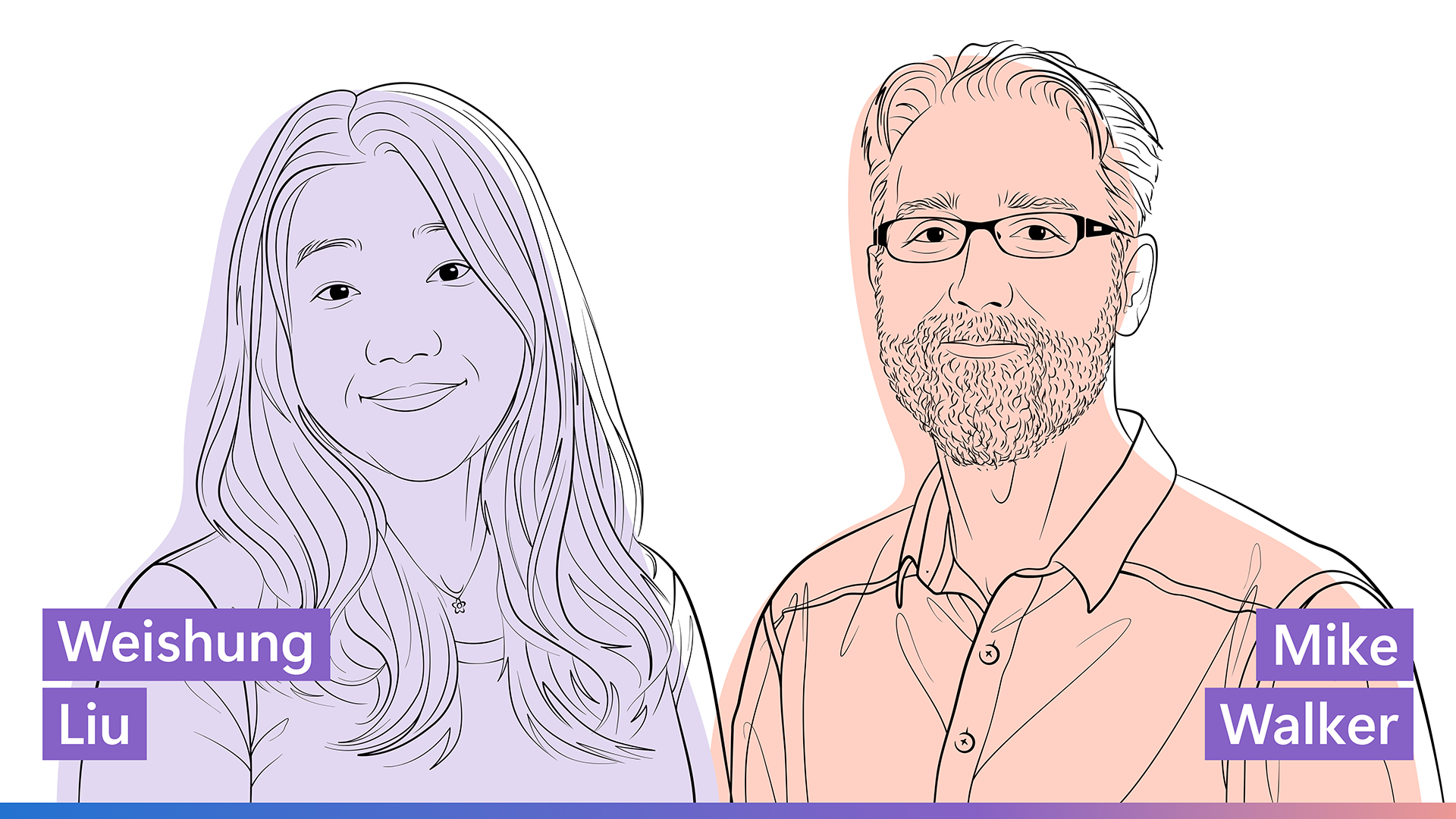
Research Manager Mike Walker reflects on a career spanning hacker culture, cybersecurity, and AI, sharing lessons about trust, teamwork, leadership, and why solving difficult problems requires curiosity, judgment, agility—and an understanding of the rules. The post Learn the rules: The hacker mindset appeared first on Microsoft Research.
MIT News · Artificial Intelligence· news.mit.eduOct 13, 2026
Machine-learning networks can learn without detailed instructions from a designer. Those that do may offer insight into how the brain reorganizes itself during learning.
MIT News · Artificial Intelligence· news.mit.eduSep 29, 2026
Professor Sherry Turkle’s new book, “Artificial Intimacy,” offers a withering critique of chatbots and the antisocial dynamics she believes they encourage.