Granularity alignment, not algorithm choice, localizes when routing helps, and what category supervision buys when deployed through routing is quantified.
Abstract
Mixture-of-experts (MoE) networks pursue specialization through learned routers, gates, and load-balancing losses, yet at matched total-parameter budgets learned routers can underperform equal-weight No-Routing baselines. Is the bottleneck the routing algorithm, or the alignment between training-signal granularity and the target categories? We probe the question with SpecDrop, a fixed parameter-free routing scheme: each of $K$ branches receives weight $p_a$ for its assigned category and a small leakage $p_i>0$ otherwise, merged through a category-independent fixed denominator, with no learned routing parameters and no auxiliary losses; the category label is required at inference. On vision tasks where each image has one superclass label (CIFAR-100 on ResNet-110; ImageNet-1K on ViT-S/16), SpecDrop reaches 79.23% on CIFAR-100 and 79.89% on ImageNet-1K, exceeding parameter-matched baselines that do not use the label (+4.75 over dense on CIFAR-100; +6.53 over the No-Routing+SE control on ImageNet-1K). These gains quantify what category supervision buys when deployed through routing -- not an advantage over label-aware deployments of the baselines: given the same label, masking a dense model's outputs is stronger for accuracy alone (85.2 / 83.7). SpecDrop's contribution is converting the label into trained-in modular structure: 68%/100% branch-category alignment, and masking gains of 0.00 (CIFAR) / +1.06 (ImageNet) -- the output-space restriction is largely internalized during training. On fuzzy partitions, where training units span multiple categories (SlimPajama-6B language modeling with a 30M Transformer; SuperNI instruction tuning over Llama-3.2-1B with LoRA), the routing mechanism reduces to the matched No-Routing controls within seed noise, the null our thesis predicts. Granularity alignment, not algorithm choice, localizes when routing helps. Code: https://github.com/Beryex/SpecDrop
Mixture-of-Experts (MoE) pretraining relies on an auxiliary load-balancing loss (LBL) to drive per-expert utilization toward uniformity. Post-training inherits a different situation: the base router already encodes non-uniform expert co-activation structure, which a re-imposed uniformity objective flattens away. We sho...
Jaedeok Lee, Keonwoo Kim, Dongyoon Han et al.· 0 citations
Mixture-of-Experts (MoE) layers are central to frontier language models, and recent architectures push toward more and smaller experts. In this regime, the standard linear router becomes a bottleneck: with $M$ experts and hidden dimension $h$, its per-token cost $\Theta(Mh)$ dominates the MoE layer once $M$ is large. W...
MetaNet is proposed, a support-set controller that predicts, for each layer, an expert-retention threshold and a bounded routing bias and provides a tunable accuracy-expert-activation trade-off on DeepSeek-MoE-16B-Chat.
Rong-Feng Wang, Shitao Weng, Zhiquan Wang et al.· 0 citations
Mixture-of-experts (MoE) layers increase model capacity without a proportional increase in per-example computation. However, conventional flat routers can yield imbalanced expert utilization and treat experts as an unstructured collection, whose indices carry no topological meaning. We introduce {\bf BRANCH-MoE}, a rou...
Gang Fu, Adel Javanmard, M. Bateni et al.· 0 citations
Sparse Mixture-of-Experts (MoE) models combine learned routing with selection from a large expert pool. We isolate the contribution of dynamic expert combination using a dense analogue: $K$ SwiGLU experts, all active for every token and combined by a softmax gate, at fixed total FFN width. With no larger pool or discre...
Sparsely activated Mixture-of-Experts (MoE) models increase model capacity without a proportional increase in per-token computation. Dense-to-MoE upcycling reuses pretrained dense models to construct such systems, commonly by copying feed-forward networks (FFNs) into independently trained experts. We introduce MASKerad...
Ming-Yuan Zhang, Yue Bai, Zhong-Ruo Wang et al.· 0 citations
Exploring how generative AI could make machine vision more accessible to businesses. The post GenEye in a Box: Making Machine Vision Something You Can Just Ask For appeared first on GPT-Lab.
A new machine-learning framework aims to improve the success rate of computational protein design while moving away from results that reproduce sequences found in nature.
Microsoft Research Blog· microsoft.comAug 11, 2026
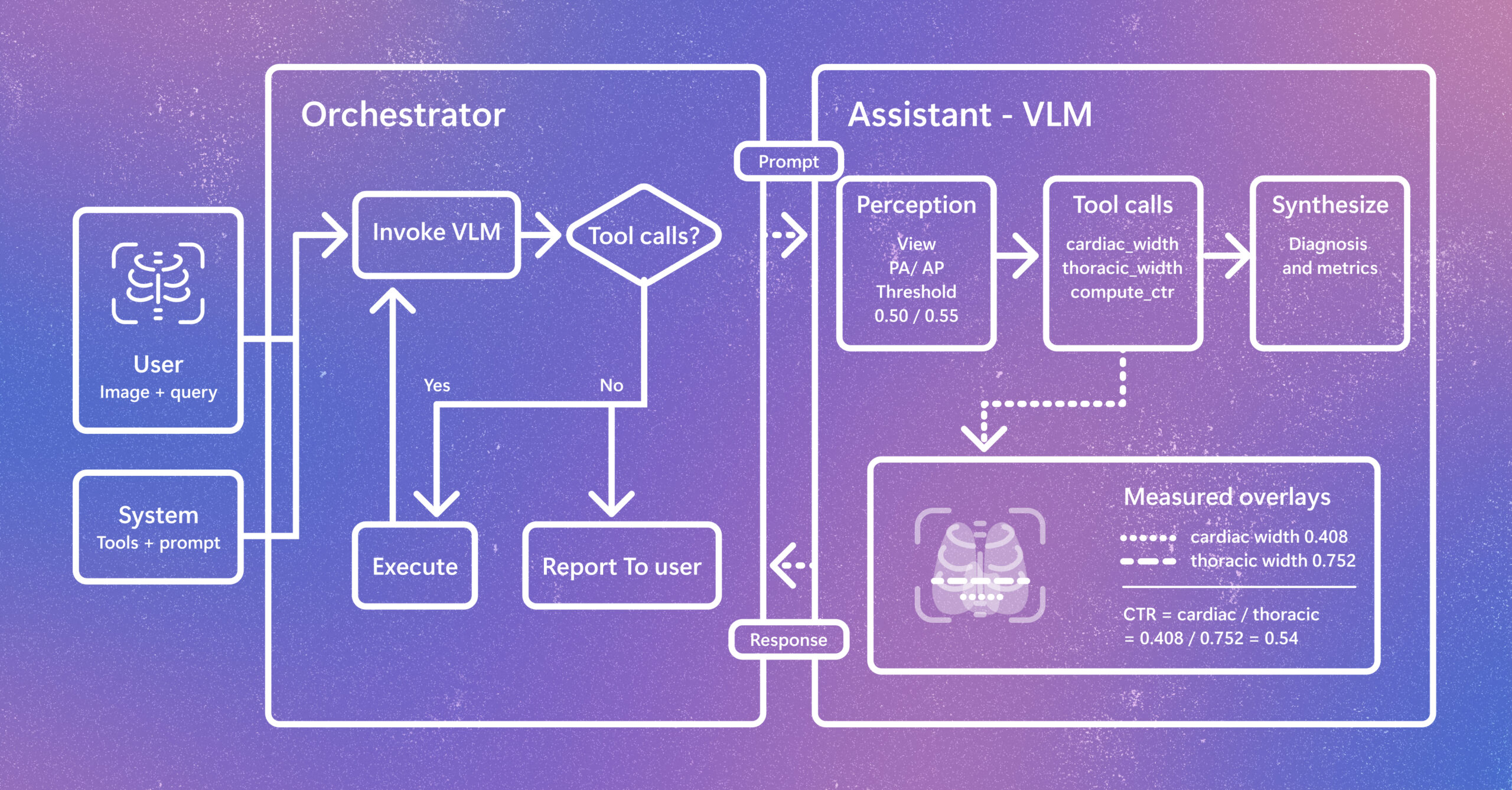
Radiology AI is evolving beyond report generation. CARE-X explores a unified approach that combines flexible reasoning, calibrated predictions, and measurement-based tools for chest X-ray interpretation. The post Introducing CARE-X: Towards Clinically Useful Radiology VLMs with Auxiliary Supervision, Reward-Aligned Learning, and Tool-Augmented Measurement appeared first on Microsoft Research.
We use cookies to run the site and, with your consent, for analytics and to show ads.
See our Cookie Policy.