May 2026· arXiv.org· Vol abs/2605.10616· 3 citations· 107 references
Computer Science
TL;DR
This work introduces MulTaBench, a benchmark of 40 datasets, split equally between image-tabular and text-tabular tasks, designed to enable the research of novel architectures which incorporate joint modeling and target-aware representations, paving the way for the development of novel Multimodal Tabular Foundation Models.
Abstract
Tabular Foundation Models have recently established the state of the art in supervised tabular learning, by leveraging pretraining to learn generalizable representations of numerical and categorical structured data. However, they lack native support for unstructured modalities such as text and image, and rely on frozen, pretrained embeddings to process them. On established Multimodal Tabular Learning benchmarks, we show that tuning the embeddings to the task improves performance. Existing benchmarks, however, often focus on the mere co-occurrence of modalities; this leads to high variance across datasets and masks the benefits of task-specific tuning. To address this gap, we introduce MulTaBench, a benchmark of 40 datasets, split equally between image-tabular and text-tabular tasks. We focus on predictive tasks where the modalities provide complementary predictive signal, and where generic embeddings lose critical information, necessitating Target-Aware Representations that are aligned with the task. Our experimental results demonstrate that the gains from target-aware representation tuning generalize across both text and image modalities, several tabular learners, encoder scales, and embedding dimensions. MulTaBench constitutes the largest image-tabular benchmarking effort to date, spanning high-impact domains such as healthcare and e-commerce. It is designed to enable the research of novel architectures which incorporate joint modeling and target-aware representations, paving the way for the development of novel Multimodal Tabular Foundation Models.
This publication proposes a definition and a classification of agile software development approaches and analyses ten software development methods that can be characterized as being "agile" against the defined criterion.
P. Abrahamsson, O. Salo, Jussi Ronkainen et al.· arXiv.org· 727 citations· ⚡54
The study shows that agile practices improve both informal and formal communication, but indicates that, in larger development situations involving multiple external stakeholders, a mismatch of adequate communication mechanisms can sometimes even hinder the communication.
M. Pikkarainen, Jukka Haikara, O. Salo et al.· Empirical Software Engineeri...· 401 citations· ⚡48
The results indicate that software engineering work practices are chosen opportunistically, adapted and configured to provide value under the constrains imposed by the startup context.
Nicolò Paternoster, Carmine Giardino, M. Unterkalmsteiner et al.· Information and Software Tec...· 394 citations· ⚡54
The possibility of inferring high-dimensional data inference in a model that consists of a prior and an auxiliary differentiable constraint given some additional information is considered, thereby allowing a range of potential applications in adapting models to new domains and tasks.
Alexandros Graikos, Esmeralda S. Whitammer, N. Jojic et al.· Neural Information Processin...· 316 citations· ⚡15
Exploring how generative AI could make machine vision more accessible to businesses. The post GenEye in a Box: Making Machine Vision Something You Can Just Ask For appeared first on GPT-Lab.
A new machine-learning framework aims to improve the success rate of computational protein design while moving away from results that reproduce sequences found in nature.
Microsoft Research Blog· microsoft.comAug 11, 2026
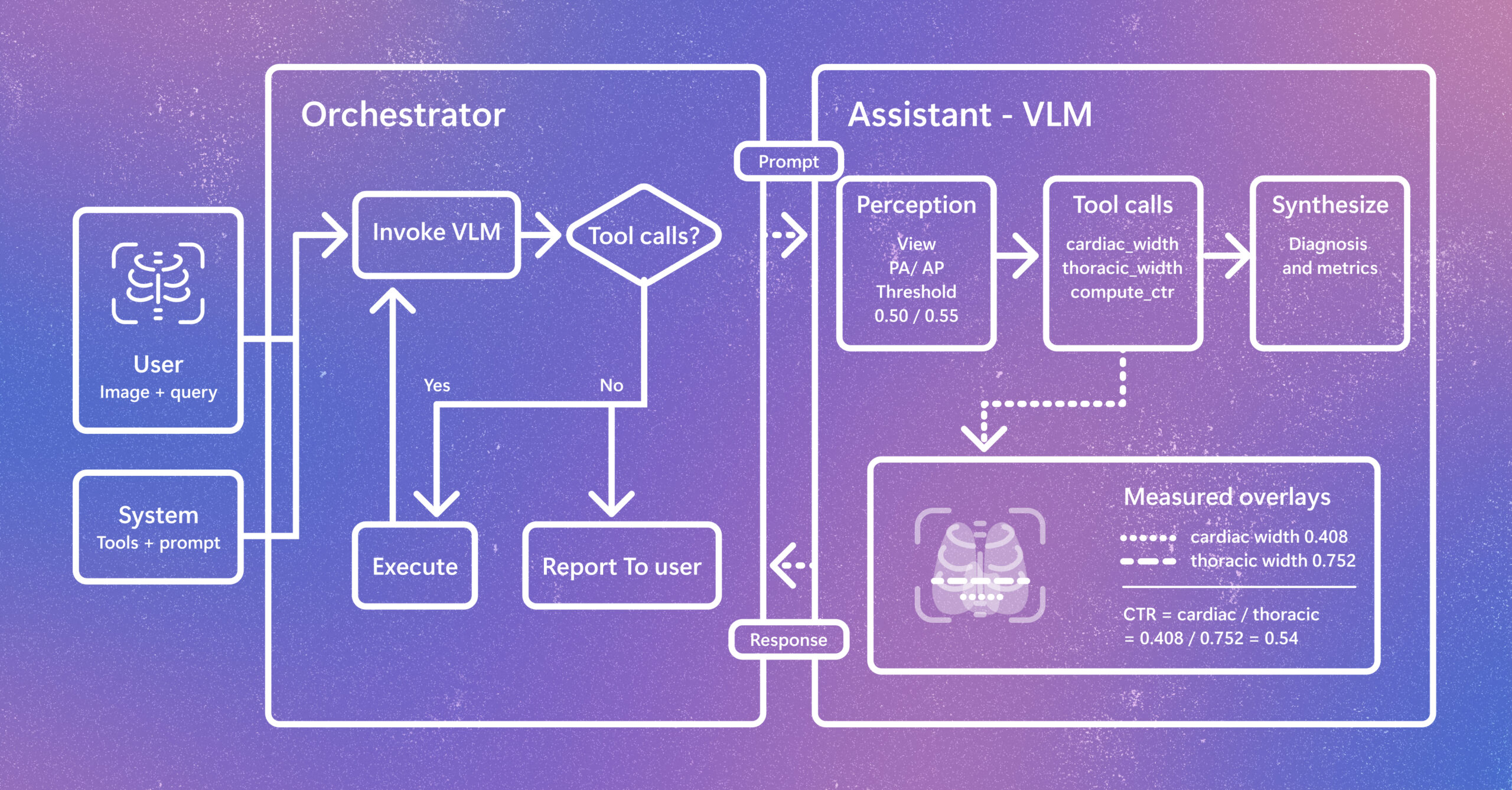
Radiology AI is evolving beyond report generation. CARE-X explores a unified approach that combines flexible reasoning, calibrated predictions, and measurement-based tools for chest X-ray interpretation. The post Introducing CARE-X: Towards Clinically Useful Radiology VLMs with Auxiliary Supervision, Reward-Aligned Learning, and Tool-Augmented Measurement appeared first on Microsoft Research.
We use cookies to run the site and, with your consent, for analytics and to show ads.
See our Cookie Policy.