Skip to content

How Synthetic Labels Improve Conformal Prediction: A Perspective on Conditional Coverage

Sep 2026 · 0 citations · 30 references
Computer Science Mathematics

TL;DR

This work introduces prediction-powered quantile learning: a synthetic-labeled pool estimates pinball risk, paired trusted and synthetic outcomes correct its bias, and an independent trusted split performs final conformalization.

Abstract

Conformal prediction provides distribution-free finite-sample marginal coverage, but post-hoc calibration data may be too scarce to learn how uncertainty varies across inputs. Meanwhile, abundant covariates can often be labeled cheaply by domain models or general-purpose language models. We study whether these synthetic labels can improve conditional coverage when only a small trusted sample is available. Building on score-quantile regression, we introduce prediction-powered quantile learning: a synthetic-labeled pool estimates pinball risk, paired trusted and synthetic outcomes correct its bias, and an independent trusted split performs final conformalization. Profiling pinball risk over scalar corrections reveals that population conditional-coverage error is its functional gradient; the corresponding Hessian removes global shifts and weights remaining shape error by boundary density. Composing this geometry with prediction-powered learning yields a three-resource expansion and a benefit--cost rule for synthetic power. Across eight regression benchmarks, synthetic-powered quantile learning substantially improves downstream conditional coverage while preserving marginal validity and producing more compact prediction sets. A human-rating study finds similar gains from external LLM labels and exposes a quality--quantity--cost tradeoff.

View source

Similar papers

#machine learning Preprint Sep 2026

Sharp training-conditional coverage for conformal prediction under covariate shift

Weighted split conformal prediction reweights calibration scores by the likelihood ratio between the test and training covariate distributions and guarantees marginal coverage under covariate shift. We study its coverage conditional on the calibration data. An elementary argument, based on a single concentration inequa...

Mehrdad Pournaderi · 0 citations
#machine learning Preprint Sep 2026

Conformal Prediction under Exponential-Tilt Joint Shift

Conformal prediction can lose coverage when the data distribution changes after deployment. We study adaptation using labeled source data and unlabeled target inputs, allowing both the input distribution and its relationship with outcomes to change. We use Exponential Tilt Reweighting Alignment (ExTRA), introduced for...

Seung-Jin Choi · 0 citations
Preprint Aug 2026

Local conformal prediction for individual causal effects

Standard CATE estimators become inadequate under strong treatment-effect heterogeneity: confidence intervals for conditional means need not cover individual counterfactual effects. We propose an Individualized Causal Prediction (ICP) framework that constructs finite-sample valid conformal prediction intervals for the i...

Fernando Delbianco, Fernando Tohmé · 0 citations

Bounded-load calibration splits for differentially private graph conformal prediction

It is shown that private graph calibration can be framed as a structural problem: choosing a calibration set that is large enough to provide useful calibration, yet sparse enough that the privacy noise remains manageable, and it is formalized that it is NP-hard.

Patrick Indri · 0 citations
#machine learning Preprint Sep 2026

Scaling Full Conformal Image Classifiers

Conformal prediction provides set-valued predictions with distribution-free coverage guarantees, making it attractive for high-stakes image classification. However, split conformal prediction is data-inefficient, while full conformal prediction (FCP), despite its stronger statistical efficiency, is computationally proh...

Julio Silva-Rodríguez, E. Konukoglu · 0 citations
#machine learning Preprint Sep 2026

Split Conformal Prediction with Label-Shift-Adjusted Bayesian Scores

The LSA score is proposed, a nonconformity score derived from a posterior predictive tilting identity that shows that the target predictive is an importance-weighted transformation of the source predictive, which is used to derive a direct correction to the Bayesian score.

Hyeonsu Lee, Juyeong Kim, Erkhembayar Jadamba et al. · 3 citations

Related blog posts

GPT-Lab Sep 3, 2026

Adaptive AI Agents in Construction Workflows

Adaptive AI agents can help make BIM data more machine-readable by navigating IFC models, interpreting inconsistent information, and mapping it to defined standards. In this blog, Alok Rawat shares findings from a real-world pilot in construction workflows. The post Adaptive AI Agents in Construction Workflows appeared first on GPT-Lab.

GPT-Lab Aug 28, 2026

We built an AI factory for HVAC control

What does it take to trust AI-driven HVAC optimization? Our AI Model Factory combines agents, machine learning, reinforcement learning and deterministic checks in a governed workflow designed for messy, real-world building data. The post We built an AI factory for HVAC control appeared first on GPT-Lab.

Microsoft Research Blog Jul 30, 2026

EvoLib: Turning experience into evolving knowledge

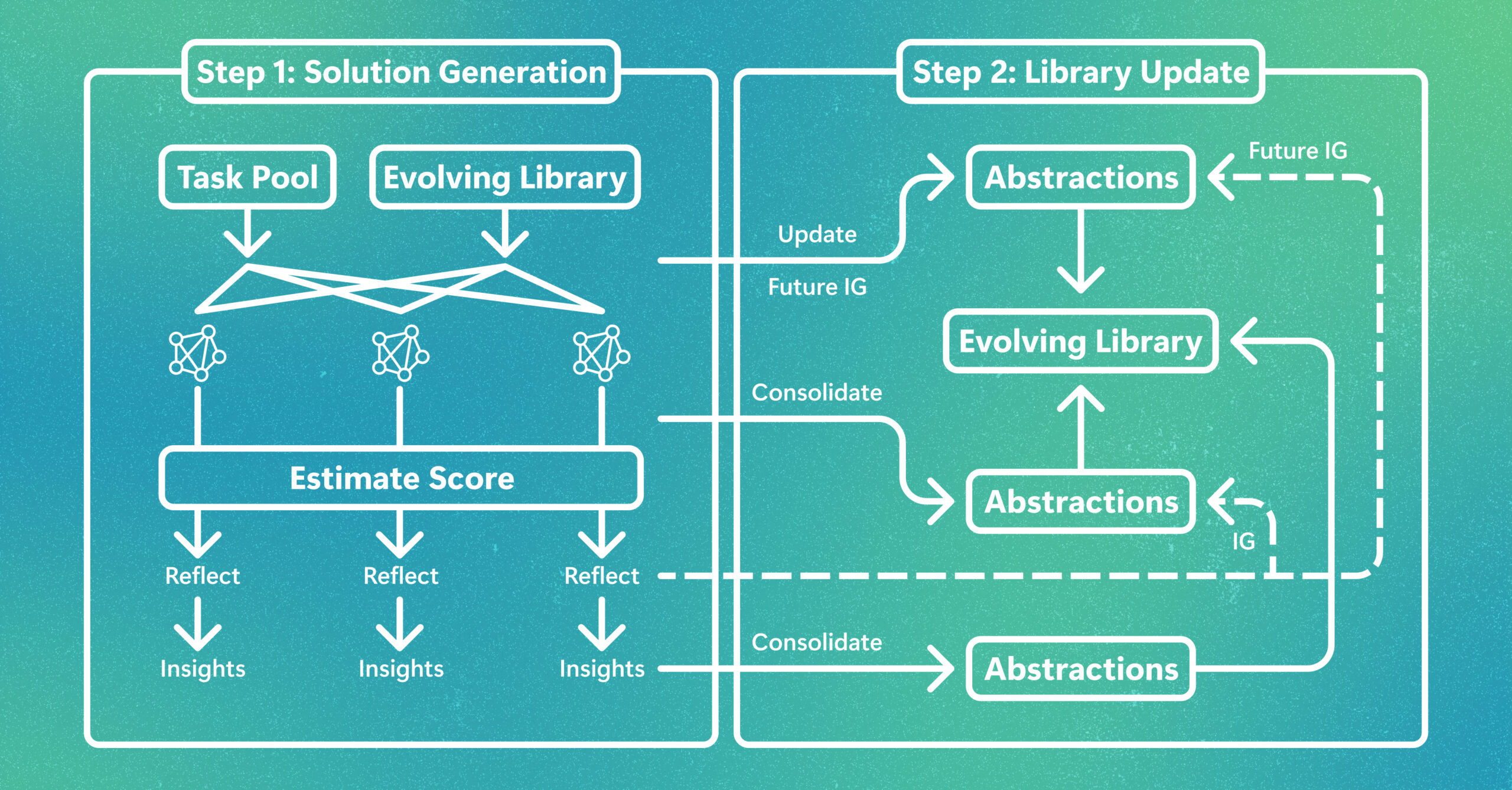
LLMs do not get smarter just by remembering more. EvoLib turns experience into evolving knowledge, taking reusable skills and insights that help models learn and adapt across tasks long after deployment. The post EvoLib: Turning experience into evolving knowledge appeared first on Microsoft Research.

We use cookies to run the site and, with your consent, for analytics and to show ads. See our Cookie Policy.