This work proposes SMORE, a mesh-agnostic framework for model order reduction of time-dependent PDEs, whose latent dynamics are trained with Lyapunov-guided stability regularization, which promotes stable long-horizon rollouts and theoretical guarantees under the stated structural assumptions.
Abstract
High-fidelity simulations of time-dependent partial differential equations (PDEs) are computationally expensive, motivating data-driven reduced-order surrogates for many-query tasks such as uncertainty quantification, design optimization, data assimilation, and optimal control. However, existing surrogate models often exhibit poor temporal stability, which can lead to unstable rollouts and exploding gradients during backpropagation, especially in multistep long-horizon forecasting. To address this, we propose SMORE, a mesh-agnostic framework for model order reduction of time-dependent PDEs. Its latent dynamics are trained with Lyapunov-guided stability regularization, which promotes stable long-horizon rollouts. We provide theoretical guarantees under the stated structural assumptions. Beyond forecasting PDE evolution, the learned latent dynamics, which are interpretable and linear or linear-quadratic, could bring benefits for downstream tasks such as data assimilation and optimal control. Moreover, our framework is capable of predicting continuous PDE solution fields from sparse measurements of the initial condition. We evaluate SMORE on a range of problems, including wave propagation, the Navier-Stokes equations, and the shallow water equations. Our results show that it improves long-horizon rollout generalization and empirical robustness, and achieves competitive accuracy at comparable parameter budgets relative to competitive baselines including DINo, FNO, CNO, and Transolver.

This work introduces the Spatiotemporal Conditional Operator (STCO) for prescribed-condition operator learning (PCOL), a common interface that supplies prescribed target-time condition fields to heterogeneous backbone architectures while retaining their architecture-specific core computation and context pathways.
The Time-Evolving Natural Gradient (TENG) method evolves neural approximations of time-dependent partial differential equations by projecting time-discrete target states onto the neural-network manifold through local natural-gradient iterations. For stiff diffusion-dominated problems, however, explicit Runge--Kutta met...
Neural surrogate models for Partial Differential Equations (PDEs) on unstructured 3D geometries are often limited by poor generalization and the high cost of generating large-scale training datasets. Consequently, pre-training on massive datasets of related PDE dynamics has emerged as a critical alternative to enhance...
Luis Medrano-Navarro, G. Baldan, Qiang Liu et al.· 0 citations
Neural operators provide efficient surrogates for spatiotemporal PDE systems, but purely data-driven formulations often accumulate substantial errors during long-horizon autoregressive prediction and may fail to exploit available governing-equation structure. Existing approaches incorporate physics primarily through re...
This work infer the initial latent state directly from a small set of early-time observations, treating latent-state initialization as an adaptation problem, and investigates two strategies: an auto-decoding formulation and a meta-learning approach in which the initial latent state acts as a task-specific context varia...
Stefano Maria Pizzamiglio, S. Pagani, Francesco Regazzoni· 0 citations
In this paper, we introduce a deep truncated forward-backward stochastic differential equation (FBSDE) method for high-dimensional partial differential equations (PDEs). Compared with existing deep-learning solvers for fully coupled FBSDEs, where strong coupling may lead to numerical instability, our approach exhibits...
Machine-learning networks can learn without detailed instructions from a designer. Those that do may offer insight into how the brain reorganizes itself during learning.
MIT News · Artificial Intelligence· news.mit.eduSep 29, 2026
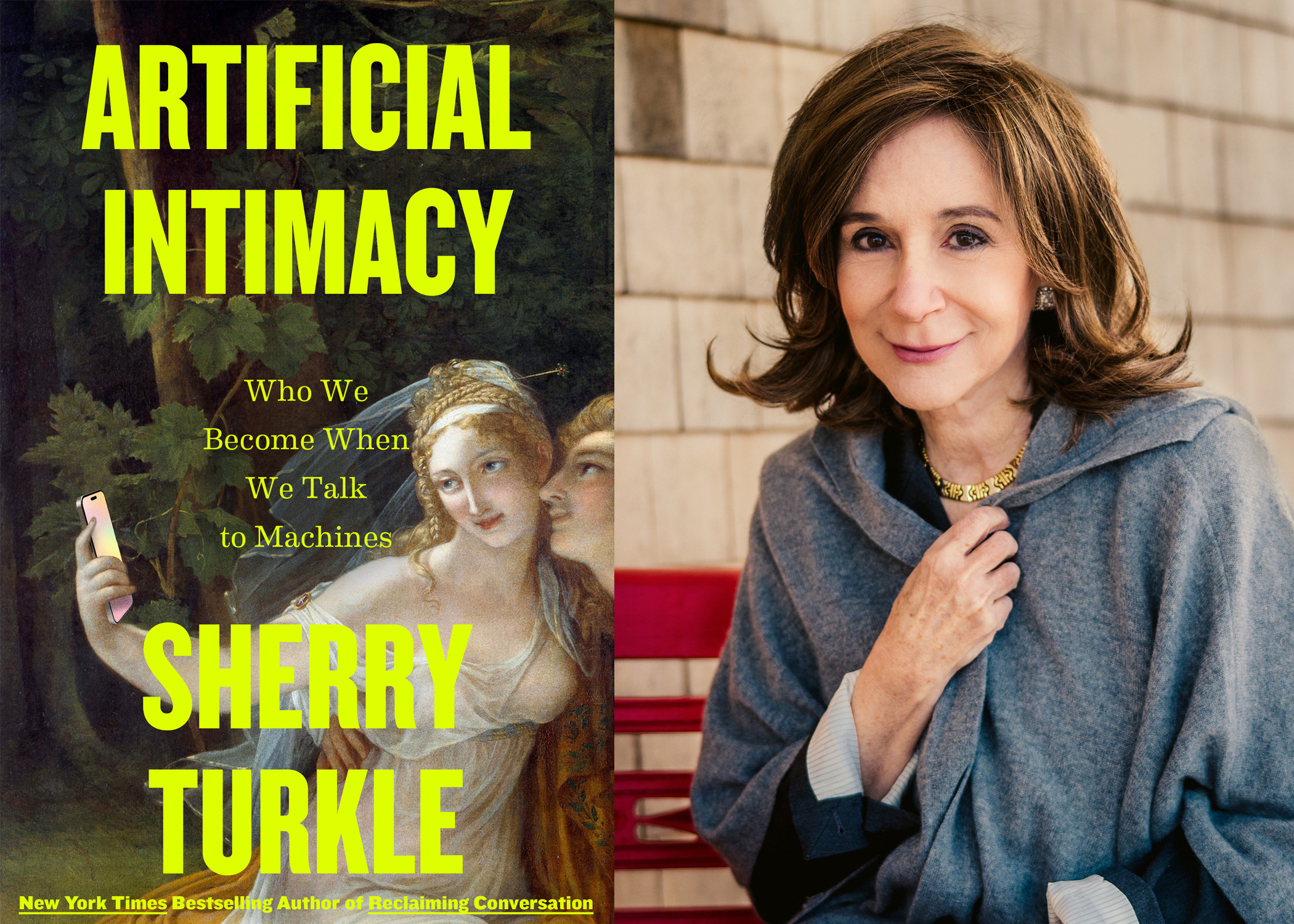
Professor Sherry Turkle’s new book, “Artificial Intimacy,” offers a withering critique of chatbots and the antisocial dynamics she believes they encourage.