Sep 2026· International Journal of Entrepreneurial Behavior & Research· 0 citations· 75 references
TL;DR
This study investigates how social capital theory (SCT) and diffusion of innovation theory (DOI) within a cluster can facilitate the SP of SMEs and reveals the innovative potential of SME clusters and the role that SCT and DOI play in helping sustainable performance through OI and DC.
Abstract
This study aims to develop a framework for the sustainable performance (SP) of small and medium enterprises (SMEs) that will benefit emerging markets by emphasizing the roles of open innovation (OI) and digital capacity (DC) within a business cluster. Thus, the research investigates how social capital theory (SCT) and diffusion of innovation theory (DOI) within a cluster can facilitate the SP of SMEs.
The study employed a confirmatory research design and Partial Least Squares Structural Equation Modelling (PLS-SEM). It analyzed 583 Nigerian SME owners/managers. SP was measured using environmental, social, and economic performance, while coexisting, business support, and knowledge sharing were employed to measure cluster support (CS), which are essential factors in understanding the overall impact of SMEs on their communities and economies. OI was measured using both inbound and outbound open innovation (OI) methods.
The findings reveal that CS, OI, and DC impact SMEs' SP within clusters. The evidence reveals the innovative potential of SME clusters and the role that SCT and DOI play in helping sustainable performance through OI and DC, indicating that cluster support is critical to OI. The finding highlights the role of clusters in facilitating collaborative innovation, particularly in how they enable SMEs to leverage shared resources and knowledge for enhanced innovative outcomes. Findings also indicate that DC is vital for SMEs' SP.
The study provides data to support informed decisions about sustainability in SME clusters, benefiting SMEs, researchers, policymakers, and practitioners. SMEs in clusters can leverage the ecosystem's collaborative potential to enhance OI practices across developing countries. This is significant for policy and practice in developing countries seeking to optimize SMEs' SP.
This study fills a gap in the literature by exploring how DC and OI can enhance SMEs' SP within a cluster. The integration of SCT and DOI in clusters for SMEs' SP is also a novel contribution of the study.
This study examines the impact of Environmental Corporate Social Responsibility (E-CSR) and Digital Technology Adoption (DTA) on the corporate performance (CP) of small and medium-sized enterprises (SMEs) in Dak Lak Province, Vietnam. While prior studies have typically examined E-CSR or DTA in isolation, empirical evid...
Le The Phiet, Thi Hoang Yen Nguyen, Ha Le Thanh· PaperASIA· 0 citations
This study aims to examine the significant drivers of Sustainable Firm Performance (SFP) in the context of Small and Medium-sized Enterprises (SMEs) during the transition to Industry 5.0. The research is underpinned by the Dynamic Capabilities Theory (DCT) and the Natural Resource-Based View (NRBV). A conceptual framew...
Sandy Francis Peris, Prasun Das Gupta, Fariha Tazin et al.· Journal of Applied Technolog...· 0 citations
This study aims to examine the mediating role of sustainable‐oriented innovation (SOI) in the relationship between knowledge management practices (KMP), corporate social responsibility (CSR), organizational green creativity (OGC), and government financial incentives (GFI) with the financial and environmental performa...
Yasir Aziz, Z. Ullah, Said Wali· Knowledge and Process Manage...· 0 citations
PURPOSE: Small and medium-sized enterprises (SMEs) in emerging economies face increasing pressure to improve Environmental Management Performance (EMP) under severe resource constraints. Within the green economy paradigm, green dynamic capabilities (GDCs), a firm’s ability to sense environmental opportunities, seize gr...
Leul Girma Haylemariam· Journal of Entrepreneurship,...· 0 citations
This study aims to examine how Small and Medium Enterprises (SMEs) utilize an entrepreneurial orientation (EO) to achieve sustainable development amid the complexities of the institutional environment in developing countries, with a focus on the Special Region of Yogyakarta. Using a descriptive qualitative approach sup...
A. Yamani, B. Syairudin, I. K. Gunarta· Edelweiss Applied Science an...· 0 citations
Small- and medium-sized enterprises (SMEs) increasingly need to reconfigure how they create, deliver, and capture value in response to digitalisation, sustainability demands, and environmental uncertainty. This study systematically reviews 162 English-language articles published in SSCI-indexed journals to integrate fr...
Bi Zhang, Nurul Atasha Jamaludin, Shan-Shan Yue et al.· Future Business Journal· 1 citation
Related blog posts
Microsoft Research Blog· microsoft.comNov 16, 2026
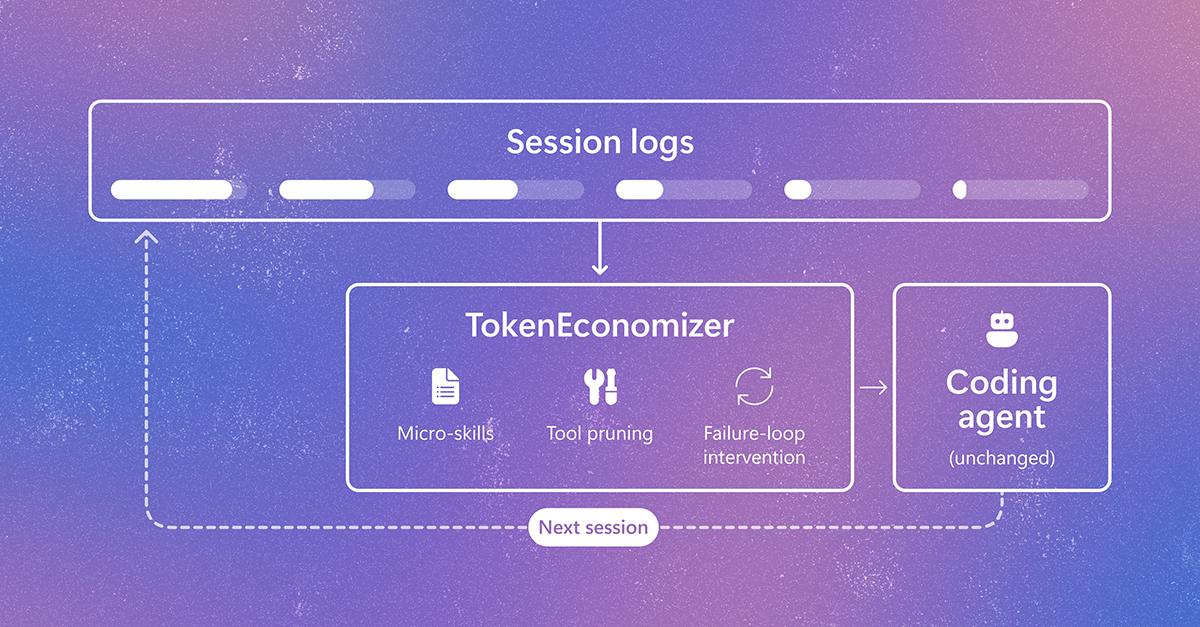
AI coding agents are increasingly help developers fix bugs and build features largely on their own, but every interaction with their models consumes tokens. In each session, an agent sends instructions, tool descriptions, and session history to its model. Most efforts to reduce this cost focus on individual tasks. Yet developers return to the same […] The post TokenEconomizer: Learning from Experience to Make AI Coding Agents More Efficient appeared first on Microsoft Research.
MIT scientists developed a training method to generate models that simulate the effects of human activities on climate much more quickly than other approaches.