Skip to content

Edge and Cloud Computing in Wearable AI Systems

Sep 2026
IoT and Edge/Fog Computing

Abstract

The swift evolution of wearable artificial intelligence (AI) systems has significantly impacted continuous health monitoring, personalized healthcare, and human–machine interaction. At the heart of this revolution is the complementary convergence of edge and cloud computing models, which together facilitate scalable, real-time, and intelligent processing of the massive amounts of physiological and contextual data generated by wearable devices. This chapter presents a thorough review of edge-cloud architectures for wearable AI systems, focusing on their significance in real-time health analytics, adaptive intelligence, and immersive healthcare applications in both physical and virtual spaces. Wearable devices like smartwatches, biosensor-embedded clothing, neural interfaces, and implantable sensors continuously collect multi-modal data such as vital signs, activity patterns, biochemical signals, and environmental context. Cloud-based processing of this data alone is associated with latency, privacy concerns, and bandwidth issues, which are not amenable to time-critical and safety-critical applications in healthcare. Edge computing addresses these challenges by facilitating on-device or near-device intelligence, which allows real-time inference, anomaly detection, and adaptive feedback with negligible latency. In contrast, cloud computing enables massive storage, long-term analytics, model training, population-level insights, and platform portability across healthcare systems. This chapter reviews hybrid edge–cloud architectures, AI model splitting, federated learning, resource-constrained inference, security, privacy preservation, and regulatory support. New applications in digital twins, immersive telemedicine, and metaverse-based healthcare are also covered. The chapter concludes with a discussion of potential research avenues for scalable, secure, and intelligent wearable AI systems.

View source

Similar papers

#computer vision Review Sep 2017

Agile Software Development Methods: Review and Analysis

This publication proposes a definition and a classification of agile software development approaches and analyses ten software development methods that can be characterized as being "agile" against the defined criterion.

P. Abrahamsson, O. Salo, Jussi Ronkainen et al. · 727 citations · ⚡54
#computer vision Jun 2008

The impact of agile practices on communication in software development

The study shows that agile practices improve both informal and formal communication, but indicates that, in larger development situations involving multiple external stakeholders, a mismatch of adequate communication mechanisms can sometimes even hinder the communication.

M. Pikkarainen, Jukka Haikara, O. Salo et al. · 401 citations · ⚡48
#machine learning Review Open access Oct 2014

Software development in startup companies: A systematic mapping study

The results indicate that software engineering work practices are chosen opportunistically, adapted and configured to provide value under the constrains imposed by the startup context.

Nicolò Paternoster, Carmine Giardino, M. Unterkalmsteiner et al. · 394 citations · ⚡54

Related blog posts

MIT News · Artificial Intelligence Aug 27, 2026

Looking beyond natural sequences

A new machine-learning framework aims to improve the success rate of computational protein design while moving away from results that reproduce sequences found in nature.

Microsoft Research Blog Aug 20, 2026

Broadening access to Skala creates a faster path to predictive DFT 

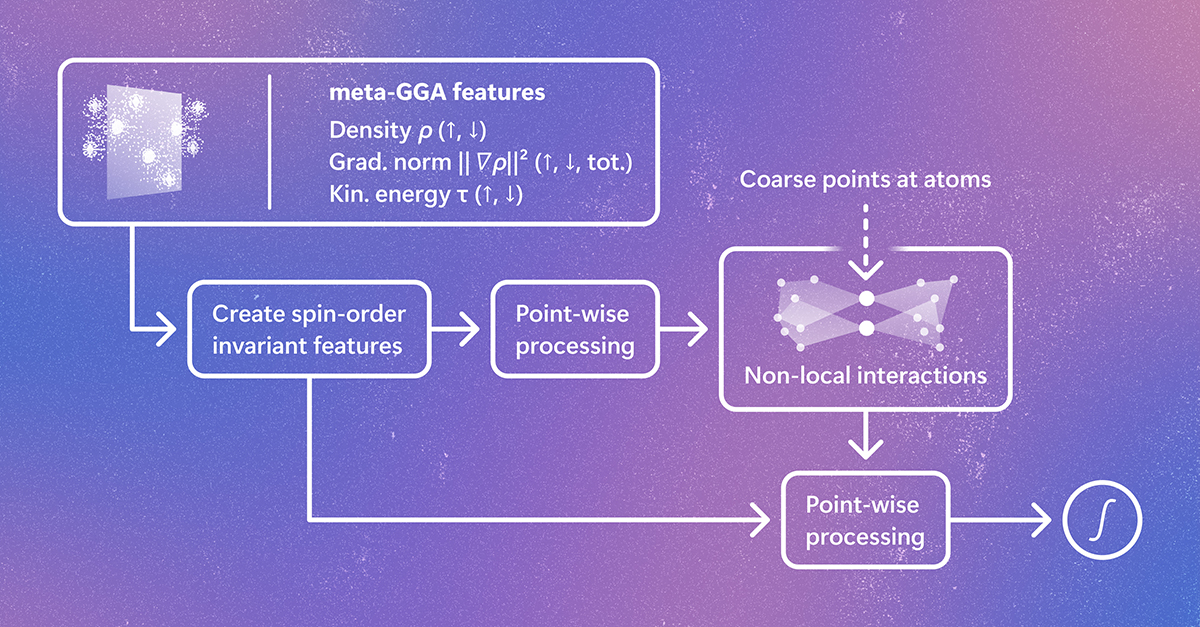
Skala 1.1, the updated deep-learning exchange-correlation functional from Microsoft Research, provides greater accuracy, expanded accessibility across the computational chemistry ecosystem, and a living benchmark to track computational performance. The post Broadening access to Skala creates a faster path to predictive DFT  appeared first on Microsoft Research.

We use cookies to run the site and, with your consent, for analytics and to show ads. See our Cookie Policy.