Skip to content
#software testing Open access

Beyond Fixed Restriction Time: Adaptive Restricted Mean Survival Time Methods in Clinical Trials

Sep 2026 · Biometrika · 0 citations
Statistical Methods in Clinical Trials Statistical Methods and Inference Advanced Causal Inference Techniques

TL;DR

This work proposes a novel data-driven, adaptive procedure that identifies the optimal restriction time from a continuous range by maximizing a criterion balancing effect size and estimation precision, and provides a rigorous theoretical foundation that accounts for the additional variability introduced by adaptive selection.

Abstract

Restricted mean survival time offers a compelling nonparametric alternative to hazard ratios for right-censored time-to-event data, particularly when the proportional hazards assumption is violated. By capturing the total event-free time over a specified horizon, it provides an intuitive and clinically meaningful measure of absolute treatment benefit. Nonetheless, selecting the restriction time poses challenges: choosing a small restriction time may overlook late-emerging benefits, while a large one can inflate variance and reduce power, an issue whose impact on the precision of inference is often underappreciated. We propose a novel data-driven, adaptive procedure that identifies the optimal restriction time from a continuous range by maximizing a criterion balancing effect size and estimation precision. Consequently, our procedure is particularly powerful when the pattern of the treatment effect is unknown at the design stage. We provide a rigorous theoretical foundation that accounts for the additional variability introduced by adaptive selection. To address nonregular estimation under the null, we develop two complementary strategies: a convex-hull-based estimator, and a penalized approach that regularizes restriction-time selection. Additionally, when restriction time candidates are pre-specified on a discrete grid, our procedure has the same first-order distribution as an oracle estimator evaluated at the penalized population optimizer, with no additional first-order variance from selection. Extensive simulations across realistic survival scenarios demonstrate that our method outperforms traditional restricted mean survival time analyses and the log-rank test, achieving superior power while maintaining approximately nominal type I error rates. In a phase III pancreatic cancer trial with transient treatment effects, our procedure uncovers clinically meaningful benefits that standard methods overlook. Software implementing the methods is available in the package AdaRMST.


Read PDF

Similar papers

Preprint Aug 2026

Nonparametric Efficient Estimation of Dynamic Treatment Regimes with Competing Risks

This work develops the nonparametric efficiency theory and derive the efficient influence function for the cumulative incidence of an event under a DTR in the presence of a competing risk and right-censoring and proposes a sequentially doubly robust estimator that accommodates flexible machine learning for nuisance est...

Nitya Shah, Laura D. Carbone, Howard A. Fink et al. · 0 citations
Preprint Aug 2026

Randomization inference for treatment effects on survival outcomes

The log-rank test and Kaplan--Meier plot are standard tools for analyzing time-to-event data in randomized clinical trials, yet neither provides a summary of the magnitude of the treatment effect. Practitioners typically fill this gap by reporting a hazard ratio from a Cox proportional-hazards model or an acceleration...

Lucy D'Agostino McGowan, Joseph Rigdon, Xin-Ran Li et al. · 0 citations
Open access Aug 2026

Saddlepoint Inference for a Proportional Reversed-Hazard Rank Test with Interval-Censored Survival Data

Interval censoring commonly arises in clinical trials, screening studies, and longitudinal medical investigations in which event status is assessed only at scheduled examination times. Rank-based procedures provide flexible tools for comparing interval-censored (IC) event-time distributions, but inference is usually ba...

A. Abdelraheem, M. H. Harpy · 0 citations
Review Open access Aug 2026

Two-sample survival probability curves: a graphical method for survival data beyond right censoring

Studies with complex censoring or truncation mechanisms in survival data have historically simplified their data to use right censoring methods and to report treatment effect measures such as the hazard ratio calculated under the right-censoring mechanism. This can lead to loss of information, potential biases, a...

Sandra Castro-Pearson, Yi-Fei Sun, Chap T. Le et al. · 0 citations
Open access Sep 2026

Interpretable Mean Residual Life Framework for Survival Rule Induction from Right-Censored Data: Methodology with Biostatistical Applications

Survival-rule induction is commonly guided by log-rank separation, whereas some prognostic questions target conditional future lifetime. We propose a directional finite-horizon mean residual life (MRL) criterion for survival-rule induction under right censoring, combining normalized subgroup support with a survival-wei...

A. A. Alharbi · 0 citations
Preprint Oct 2026

Surrogate-powered Causal Inference with Censored Outcomes

Clinical trials with survival endpoints lose information when participants are censored before death is observed. We develop target-preserving estimators that use posttreatment disease history, such as recurrence or progression, to recover information lost to censoring for marginal survival and restricted mean survival...

Yaroslav Mukhin, Tereza Oprea, Arielle Anderer et al. · 0 citations

Related blog posts

Microsoft Research Blog Nov 12, 2026

Microsoft Research Focus – Edition #98

What's new in research at Microsoft? Host Anson Ho explores the latest, including AI-powered universal translation, a breakthrough in a 31-year-old mathematics challenge, and advances making AI coding agents faster and more efficient.  The post Microsoft Research Focus – Edition #98 appeared first on Microsoft Research.

Microsoft Research Blog Nov 5, 2026

Formally verifying agent-written full-stack web apps with PDD Kit

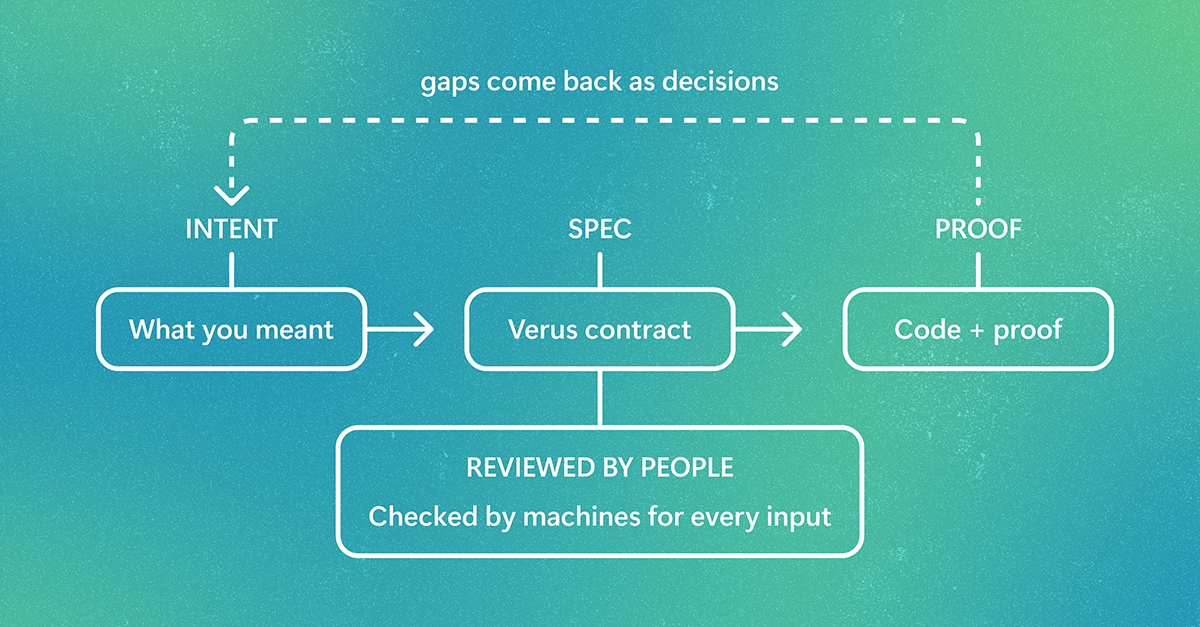
AI agents can generate code at a scale that’s hard for humans to review line-by-line. PDD Kit helps ensure the code is doing what the developer intended by creating formal specifications and testing against them. It converts developer intent into a Verus specification, proves AI-generated code meets it for every input, and uses tests where proofs aren't practical. Developers review intent, not every line. The post Formally verifying agent-written full-stack web apps with PDD Kit appeared first o…

We use cookies to run the site and, with your consent, for analytics and to show ads. See our Cookie Policy.