Skip to content

Exploring Solver-Level Warmstarting for Neural Network Verification

Sep 2026 · 0 citations · 24 references
Computer Science

TL;DR

This work explores the application of solver-level warmstarting for neural network verification to exploit information from previous solutions, using a pipeline that is generalisable and potentially adaptable to state-of-the-art verifiers.

Abstract

Neural network verification has become a key tool for providing formal guarantees on the behaviour of neural networks. However, many verification problems remain computationally intractable in the worst case: even for common adversarial robustness specifications, verification is NP-complete. Here, we explore the application of solver-level warmstarting for neural network verification to exploit information from previous solutions. We study the effect on running time as several properties are modified, including perturbation radii, input data and the networks themselves, using a pipeline that is generalisable and potentially adaptable to state-of-the-art verifiers. Our results show that warmstarting can significantly reduce verification time in most cases. Moreover, warmstarting enables the successful verification of instances that could not be solved from scratch within the given time limit.


View source

Similar papers

Review

Verification of DNNs with Marabou – Abstract

This tutorial explores Marabou, a tool for formally verifying deep neural networks (DNNs), and presents the theoretical foundations of DNN verification and an overview of Marabou’s core algorithms.

Omri Isac · 0 citations
#machine learning Preprint Sep 2026

Verifying Neural Networks with Reinforcement Learning

Formal verification can play a key role in ensuring the reliability of Deep Neural Networks (DNNs) deployed in safety-critical systems. Modern DNN verifiers employ a branch-and-bound framework, which alternates between branching (splitting into smaller subproblems) and bounding (pruning subproblems) to efficiently expl...

Hai Duong, Thanh Le, Thanhvu Nguyen · 5 citations
#machine learning Preprint Sep 2026

ZonoGPT: Towards An Abstract Domain for Verifying Large GPT Models

ZonoGpt, an abstract domain for verifying large transformers that maintains a space complexity independent of network depth, is introduced, an abstract domain for verifying large transformers that maintains a space complexity independent of network depth.

Hai Duong, Thanh Le, Thanhvu Nguyen · 1 citation
Sep 2026

Fast and Sample Efficient Safety Verification via Extreme Learning Machine

This work aims to formally verify safety properties of discrete-time unknown systems by synthesizing extreme learning machine (ELM)-based barrier certificates by minimizing the Lipschitz constant of the candidate barrier by presenting a grid-based sampling technique to formally verify its validity using the minimum num...

Ahan Basu, Mahathi Anand, Pushpak Jagtap · 0 citations
#artificial intelligence Review Sep 2026

NNV3: Expanding Neural Network Verification to New Architectures and Domains

NNV3 is presented, the latest version of the Neural Network Verification tool, a MATLAB framework for formal verification of deep learning models and learning-enabled cyber-physical systems, demonstrating NNV's maturation into a comprehensive, robust, and accessible verification tool for a diverse range of AI systems.

Anne M. Tumlin, Samuel Sasaki, Ben Wooding et al. · 0 citations

Related blog posts

MIT News · Artificial Intelligence Nov 17, 2026

Learning the language of machine learning

By studying the computational foundations of language learning, Associate Professor Jacob Andreas builds intelligent systems that can communicate effectively with humans.

Microsoft Research Blog Nov 16, 2026

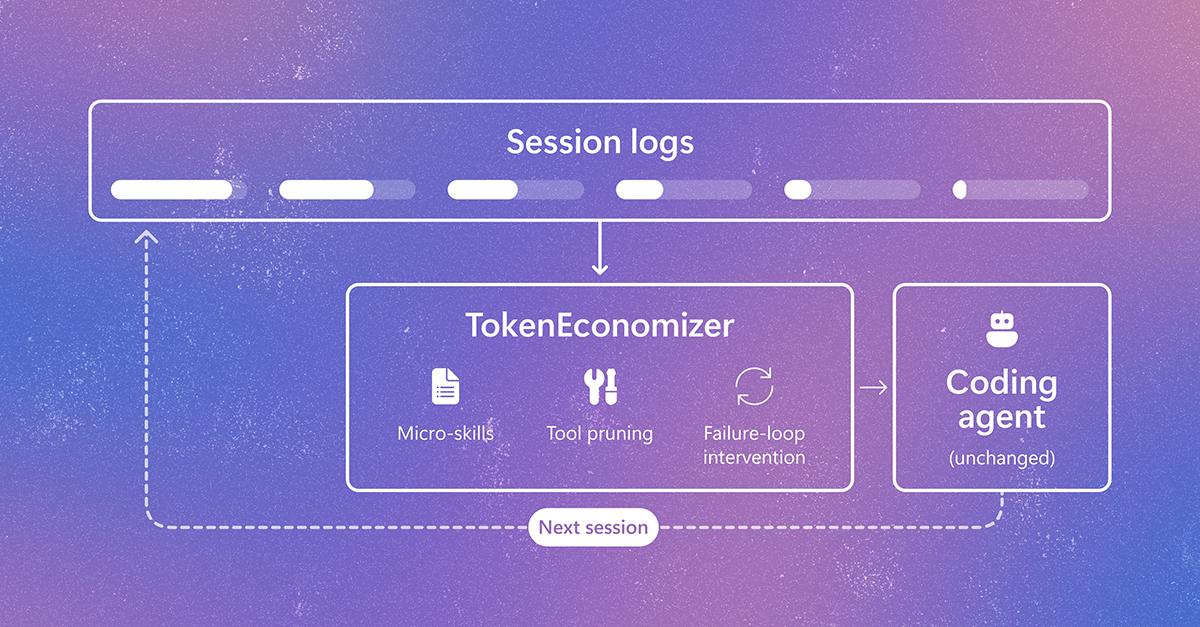
TokenEconomizer: Learning from Experience to Make AI Coding Agents More Efficient

AI coding agents are increasingly help developers fix bugs and build features largely on their own, but every interaction with their models consumes tokens. In each session, an agent sends instructions, tool descriptions, and session history to its model. Most efforts to reduce this cost focus on individual tasks. Yet developers return to the same […] The post TokenEconomizer: Learning from Experience to Make AI Coding Agents More Efficient appeared first on Microsoft Research.

We use cookies to run the site and, with your consent, for analytics and to show ads. See our Cookie Policy.