This work presents Uranus, a data-driven robot simulator built around a joint-trajectory-conditioned autoregressive diffusion model, providing a unified interface for synchronized multi-view generation across diverse robot embodiments and camera configurations.
Abstract
Scalable simulation is essential for robot data generation, policy training, evaluation, and safe iteration, yet real-world interaction is costly and conventional simulators require labor-intensive construction. We present Uranus, a data-driven robot simulator built around a joint-trajectory-conditioned autoregressive diffusion model. Uranus offers three key capabilities: (1) streaming, open-ended rollout, which receives future joint-position trajectories online and autoregressively generates one latent frame per step, corresponding to four RGB frames, without a fixed horizon; (2) low-latency generation, achieving 24 FPS after inference optimization; and (3) scalable, extensible robot control, providing a unified interface for synchronized multi-view generation across diverse robot embodiments and camera configurations. We conduct comprehensive quantitative and qualitative evaluations on both in-distribution and out-of-distribution data, providing an objective assessment of Uranus and clearly identifying its current limitations. We release the code and model weights to empower the community with practical tools and insights.
Adapting robot manipulation policies to new tasks and environments remains highly data-intensive, while the data needed for further improvement depends on the policy's current capabilities and failure modes. We introduce EmbodiRSI, an agentic system for recursive self-improvement (RSI) in a real-to-sim-to-real setting,...
Hao-Ran Lang, Hao-Tao Lu, Shi-Yu Sang et al.· 1 citation
Many real-world robotic applications require dynamically sensitive manipulation, where success depends not only on reaching a target state but on maintaining stable object dynamics throughout execution. We study the stable transport of liquid-filled containers, where a robot must move objects to target locations while...
Ying-Yue Li, Chenyangguang Zhang, Rui-Da Zhang et al.· IEEE Robotics and Automation...· 0 citations
Vision-language-action (VLA) models, world-action models (WAMs), and offline reinforcement learning methods are rapidly expanding the design space of embodied policies, yet turning these algorithms into reliable robot systems remains constrained by fragmented data formats, training stacks, evaluation protocols, inferen...
Yin-Hao Li, Wei-Xin Mao, Zi-Han Lan et al.· 1 citation
DynaForge combines low-frequency global planning with high-frequency object-centric inverse kinematics across task phases, and applies a residual policy to correct actions during dynamic interaction, showing the ability of DynaForge for sim-to-real transfer.
Yi-Yang Jin, Yu Zheng, Xiao He et al.· 0 citations
MILER, an end-to-end policy framework with zero-shot sim-to-real transfer of both perception and control, is presented and extensively evaluated on a diverse test track comprising numerous challenges.
Thomas Steinecker, Denis Trescher, Alexander Bienemann et al.· 0 citations
Aerial manipulators extend robotic manipulation into 3D workspaces that are difficult for ground-based robots to access, creating new opportunities for general-purpose manipulation. However, extending Vision-Language-Action (VLA) models to aerial robots introduces distinct challenges due to the tight coupling between m...
Rui Huang, Yan-Lin Mu, Li-Dong Li et al.· 0 citations
Related blog posts
MIT News · Artificial Intelligence· news.mit.eduJul 30, 2026
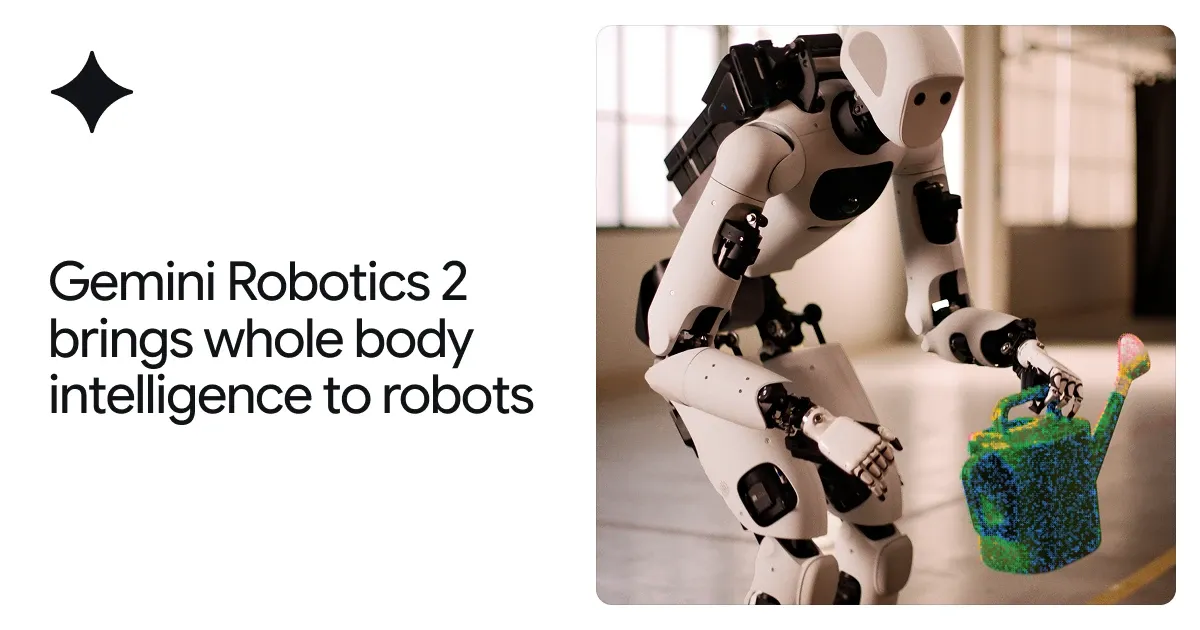
From feet to fingertips — we are teaching robots intelligent whole-body control, fine dexterity, and teamwork to complete a broad range of complex tasks.
With $2.1 million funding from Google.org, the open-source Public Transit Intelligence Hub will unify public transit monitoring, operations, and passenger communication.
We use cookies to run the site and, with your consent, for analytics and to show ads.
See our Cookie Policy.