Commonsense-Grounded Path Planning from Abstract Instructions
Masafumi EndoKohei HondaRyo Yonetani
Sep 2026
Artificial IntelligenceRobotics
Abstract
We present \emph{commonsense ranked search} (CoRS), a novel path planner that turns an abstract instruction into a route that follows commonsense. While existing methods respect the considerations written down in advance, a robot working among people must follow those left unstated too, as with a wet floor that a worker avoids without being told. CoRS leverages large language models (LLMs) and vision-language models (VLMs) as commonsense knowledge to reason about these latent considerations in its planning. Given an abstract instruction (\emph{e.g.}, ``move carefully'') and visual observations of each region in the environment, CoRS derives a consideration for each region, as in ``this wet floor is slippery and worth a detour.'' It then compares the considerations between regions to see which of the two the robot should avoid more, as in ``the crowd is worse than the wet floor.'' These judgments sort the regions into a commonsense ranking, whose costs drive a conventional search that always returns a valid route. We build a benchmark for planning under latent considerations, with three environments, 1350 problems, and five instructions at three levels of abstraction. Experiments show that CoRS discovers the unstated considerations and goes around the ones worth a detour while crossing the rest, a behavior that recent LLM-based planners do not achieve.

GAOKAO-Bench is introduced, an intuitive benchmark that employs questions from the Chinese GAOKAO examination as test samples, including both subjective and objective questions that contribute a robust evaluation benchmark for future large language models and offers valuable insights into the advantages and limitations...
Xiaotian Zhang, Chun-yan Li, Yi Zong et al.· arXiv.org· 216 citations· ⚡17
This work investigates the possibilities of using LLMs in a resume screening setting via a document retrieval framework that simulates job candidate selection and finds that the MTEs are biased, significantly favoring White-associated names in 85% of cases and female-associated names in only 11.1% of cases.
This work shows that orders of magnitude enhancement in performance could be obtained by a combination of hardware improvements and tight quantum-HPC integration and introduces high-performance architectures for quantum-probabilistic computing with custom-designed accelerators to tackle today's industry-scale classical...
Masoud Mohseni, Artur Scherer, K. Johnson et al.· arXiv.org· 121 citations· ⚡9
This paper presents a comprehensive overview of the Ultralytics YOLO family, emphasizing architectural evolution, benchmarking, deployment, and emerging directions from YOLOv5 through YOLO27, and examines detection, segmentation, depth, classification, pose, oriented detection, tracking, export, quantization, and deplo...
This work revisits schema linking when using the latest generation of large language models (LLMs) and finds empirically that newer models are adept at utilizing relevant schema elements during generation even in the presence of large numbers of irrelevant ones.
Karime Maamari, Fadhil Abubaker, Daniel Jaroslawicz et al.· arXiv.org· 109 citations· ⚡19
A novel threat is unveiled in which attackers steer the RAG system's response by injecting malicious passages into its knowledge base, enabling the attacker to steer the response without altering the user input or modifying the RAG weights.
Jiaqi Xue, Meng Zheng, Yebowen Hu et al.· arXiv.org· 109 citations· ⚡8
Related blog posts
MIT News · Artificial Intelligence· news.mit.eduJul 30, 2026
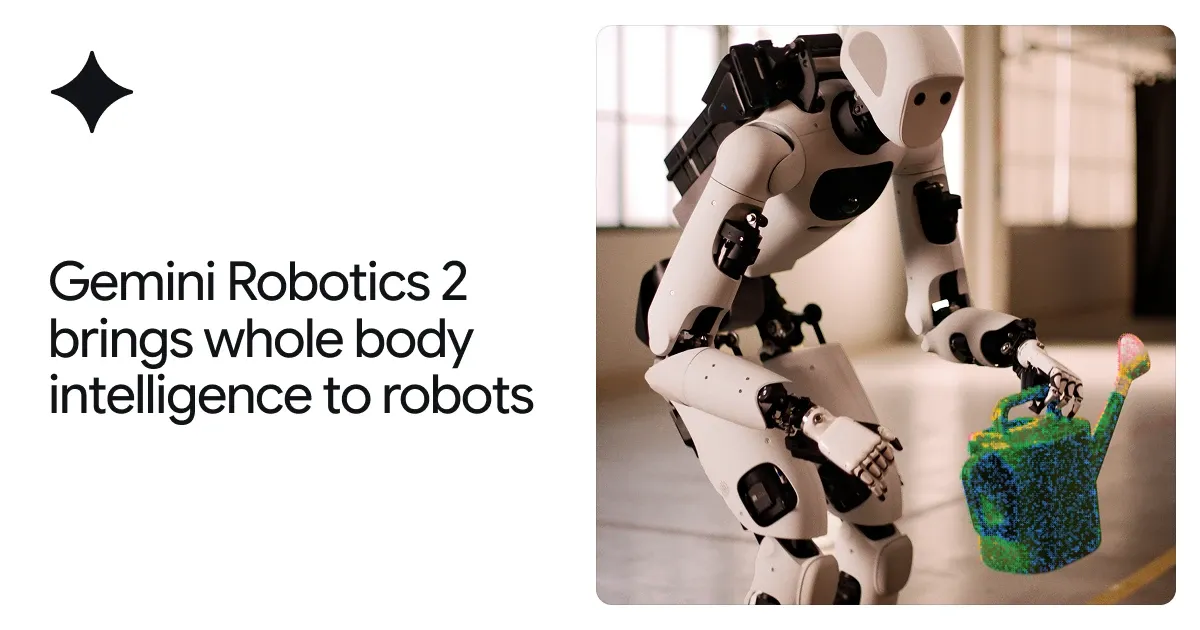
From feet to fingertips — we are teaching robots intelligent whole-body control, fine dexterity, and teamwork to complete a broad range of complex tasks.
With $2.1 million funding from Google.org, the open-source Public Transit Intelligence Hub will unify public transit monitoring, operations, and passenger communication.
We use cookies to run the site and, with your consent, for analytics and to show ads.
See our Cookie Policy.