Mixture-of-Experts (MoE) models are increasingly deployed alongside Speculative Decoding (SD) to accelerate inference, but combining the two is challenging. SD improves the inference speed of dense models by verifying groups of tokens in parallel. However, the inference speedup for SD with MoEs depends heavily on the number of tokens being verified. Using more verification tokens results in more experts being transferred from DRAM to the Neural Processing Unit (NPU), which increases the memory transfer cost. This negatively impacts model runtime, as memory transfer is typically the bottleneck in inference. In this work, we investigate the impact of MoE router design during training on the speed of MoEs with SD. We find that routers with high degrees of expert coactivation result in much faster runtimes, mitigating the impact of using more verification tokens. Motivated by this observation, we assess the impact of various router design choices on expert coactivation and runtime using billion-parameter transformer models. We find that combining a global load-balancing loss, shared experts, a consistency loss, and an autoregressive expert selection mechanism during training results in significantly stronger expert coactivation. This increased coactivation translates into higher overall runtime throughput: our exploration yields a model that improves throughput by 21% over MoE baselines, while maintaining on-par accuracy with the baseline MoE.
This paper investigates developing real-world perception for active agents, proposes Gibson Environment for this purpose, and showcases a set of perceptual tasks learned therein.
F. Xia, Amir Zamir, Zhi-Yang He et al.· 2018 IEEE/CVF Conference on...· 1,069 citations· ⚡112
This publication proposes a definition and a classification of agile software development approaches and analyses ten software development methods that can be characterized as being "agile" against the defined criterion.
P. Abrahamsson, O. Salo, Jussi Ronkainen et al.· arXiv.org· 727 citations· ⚡54
The results indicate that software engineering work practices are chosen opportunistically, adapted and configured to provide value under the constrains imposed by the startup context.
Nicolò Paternoster, Carmine Giardino, M. Unterkalmsteiner et al.· Information and Software Tec...· 394 citations· ⚡54
The possibility of inferring high-dimensional data inference in a model that consists of a prior and an auxiliary differentiable constraint given some additional information is considered, thereby allowing a range of potential applications in adapting models to new domains and tasks.
Alexandros Graikos, Esmeralda S. Whitammer, N. Jojic et al.· Neural Information Processin...· 316 citations· ⚡15
It is proved that any global minimizer of the trajectory balance objective can define a policy that samples exactly from the target distribution, and empirically demonstrate the benefits of the trajectories balance objective for GFlowNet convergence, diversity of generated samples, and robustness to long action sequenc...
Esmeralda S. Whitammer, Moksh Jain, Emmanuel Bengio et al.· Neural Information Processin...· 302 citations· ⚡60
Consequences of happiness and unhappiness that are beneficial and detrimental for developers' mental well-being, the software development process, and the produced artifacts are found.
D. Graziotin, Fabian Fagerholm, Xiaofeng Wang et al.· Journal of Systems and Softw...· 236 citations· ⚡13
Related blog posts
MIT News · Artificial Intelligence· news.mit.eduAug 27, 2026
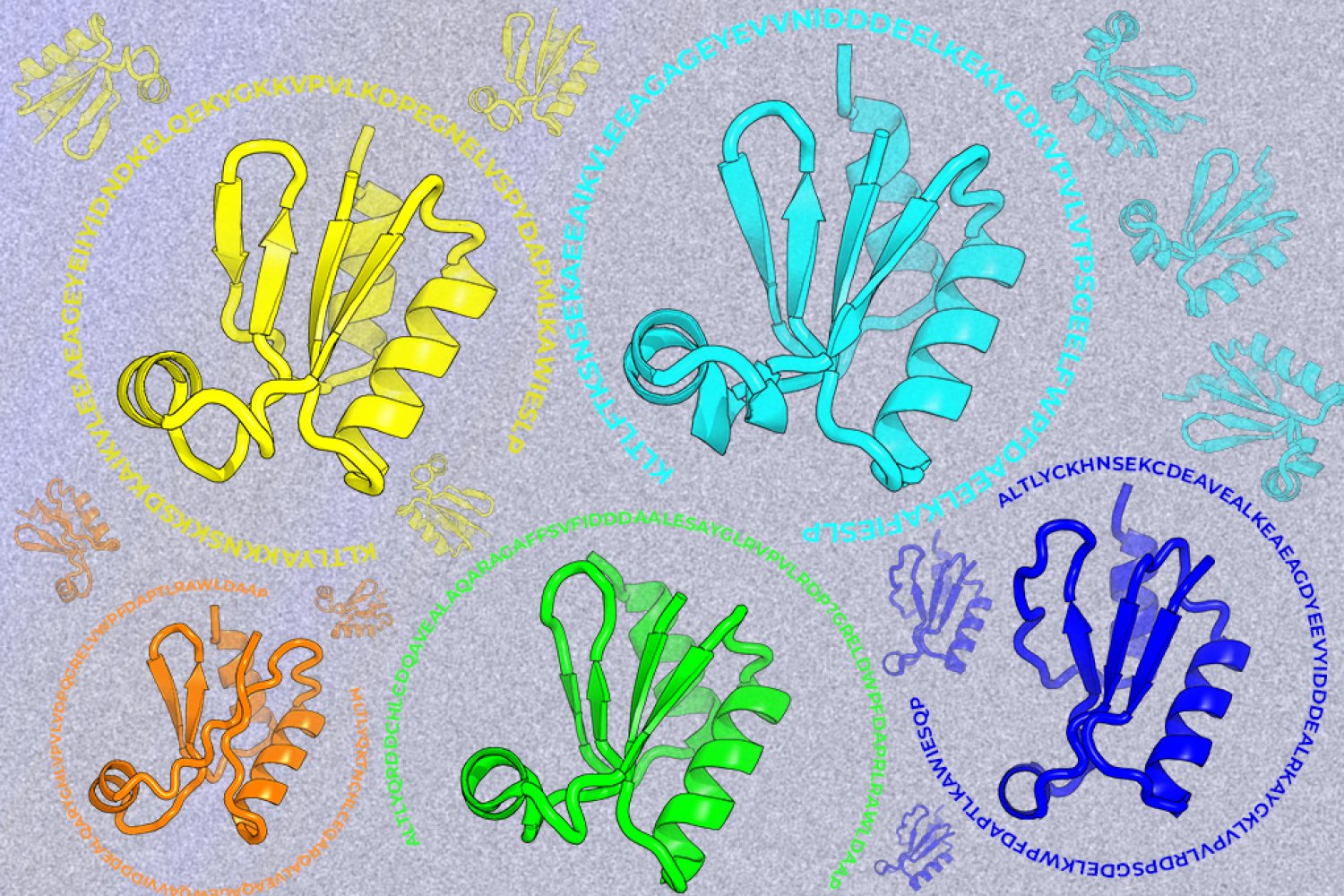
A new machine-learning framework aims to improve the success rate of computational protein design while moving away from results that reproduce sequences found in nature.