Skip to content

From Latent Biomarkers to Clinical Rules: Embedding-Guided Rule Mining and Attribution-Based Translation for Interpretable Tabular Learning

Aug 2026 · 0 citations · 24 references
Computer Science

Abstract

Clinical decision support tools are most useful when accurate predictions are accompanied by understandable explanations. Rule-based models provide transparency, but rules derived directly from raw clinical measurements may miss patterns arising from interactions between multiple variables. We present a four-step pipeline that mines decision rules in the latent space of an FT-Transformer and translates them back into measurable clinical features. Embedding dimensions that consistently separate patient groups are treated as latent biomarkers, rules are mined using small decision trees, and selected rules are translated using gradient-input saliency and CLS attention attribution. We evaluate the framework on six public clinical and population health datasets at four embedding dimensions. Translated rules outperformed raw-feature rules in five of six datasets, with mean AUROC gains ranging from 0.04 to 0.23. On the heart disease dataset, embedding-space rules reached 0.98 AUROC, but translation reduced this to 0.72, showing that high-performing latent rules cannot always be represented by simple raw-feature conditions. These results show that latent-space rule discovery can uncover predictive patterns while translating them into clinically measurable features that can be evaluated by clinicians.
View source

Similar papers

#machine learning Review Open access Oct 2014

Software development in startup companies: A systematic mapping study

The results indicate that software engineering work practices are chosen opportunistically, adapted and configured to provide value under the constrains imposed by the startup context.

Nicolò Paternoster, Carmine Giardino, M. Unterkalmsteiner et al. · 394 citations · ⚡54

Diffusion models as plug-and-play priors

The possibility of inferring high-dimensional data inference in a model that consists of a prior and an auxiliary differentiable constraint given some additional information is considered, thereby allowing a range of potential applications in adapting models to new domains and tasks.

Alexandros Graikos, Esmeralda S. Whitammer, N. Jojic et al. · 316 citations · ⚡15

Trajectory Balance: Improved Credit Assignment in GFlowNets

It is proved that any global minimizer of the trajectory balance objective can define a policy that samples exactly from the target distribution, and empirically demonstrate the benefits of the trajectories balance objective for GFlowNet convergence, diversity of generated samples, and robustness to long action sequenc...

Esmeralda S. Whitammer, Moksh Jain, Emmanuel Bengio et al. · 302 citations · ⚡60
#machine learning Review Open access Jun 2014

Why Early-Stage Software Startups Fail: A Behavioral Framework

This state-of-practice investigation was performed using a literature review followed by a multiple-case study approach and presents how inconsistency between managerial strategies and execution can lead to failure by means of a behavioral framework.

Carmine Giardino, Xiaofeng Wang, P. Abrahamsson · 175 citations · ⚡19
#artificial intelligence Open access Jul 2024

Gender, Race, and Intersectional Bias in Resume Screening via Language Model Retrieval

This work investigates the possibilities of using LLMs in a resume screening setting via a document retrieval framework that simulates job candidate selection and finds that the MTEs are biased, significantly favoring White-associated names in 85% of cases and female-associated names in only 11.1% of cases.

Kyra Wilson, Aylin Caliskan · 131 citations · ⚡8
#machine learning Review Open access Oct 2016

“Failures” to be celebrated: an analysis of major pivots of software startups

This study conducts a case survey study based on the secondary data of the major pivots happened in 49 software startups, and demonstrates that customer need pivot is the most common among all pivot types.

Sohaib Shahid Bajwa, Xiaofeng Wang, Anh Nguyen-Duc et al. · 127 citations · ⚡15

Related blog posts

Microsoft Research Blog Sep 30, 2026

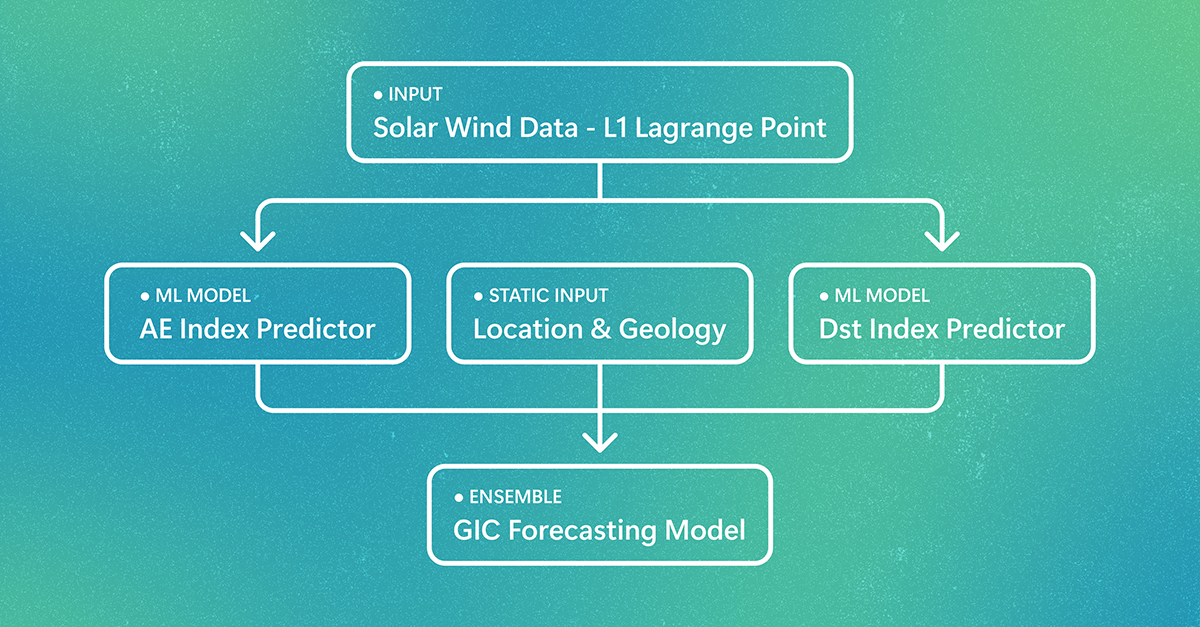
Forecasting space weather risks on power grids

Extreme space-weather events can damage power systems on Earth and degrade GPS accuracy and satellite operations. A new machine learning system can predict where damage is likely to occur 30-60 minutes before a storm arrives. The post Forecasting space weather risks on power grids appeared first on Microsoft Research.

We use cookies to run the site and, with your consent, for analytics and to show ads. See our Cookie Policy.