Transfer and multi-nucleon transfer reactions are essential tools for probing nuclear structure and reaction dynamics, requiring precise determination of the identity, energy, and emission angles of reaction products. The increasing granularity of modern silicon telescope arrays enhances experimental capabilities but challenges detector calibration, as conventional channel-by-channel approaches become inefficient and difficult to scale. In this work, we present a fully automated, physics-informed calibration framework based on neural networks, specifically designed for highly segmented silicon detector arrays. The method formulates calibration as a global optimization problem, in which detector gains and geometrical corrections are determined simultaneously by minimizing the width of the reconstructed excitation energy under two-body kinematics constraints. The approach relies exclusively on experimental data and well-established physical principles, without requiring explicit modeling of detector response. A distinctive feature is the use of multiple neural network sub-models sharing a common loss function with embedded physics constraints, enabling coherent and self-consistent calibration across all detector channels. This strategy ensures scalability, robustness, and reproducibility, making it particularly suitable for next-generation detector systems with increasing complexity. The performance of the method is demonstrated using experimental data from the Particle-Identification Silicon-Telescope Array (PISTA) in high-resolution fission studies in inverse kinematics. The results show excellent agreement with theoretical kinematics, high-quality particle identification, and a significant improvement in calibration efficiency. The proposed framework provides a general and adaptable solution for the calibration of complex detector systems in modern nuclear physics experiments.
This paper investigates developing real-world perception for active agents, proposes Gibson Environment for this purpose, and showcases a set of perceptual tasks learned therein.
F. Xia, Amir Zamir, Zhi-Yang He et al.· 2018 IEEE/CVF Conference on...· 1,069 citations· ⚡112
The results indicate that software engineering work practices are chosen opportunistically, adapted and configured to provide value under the constrains imposed by the startup context.
Nicolò Paternoster, Carmine Giardino, M. Unterkalmsteiner et al.· Information and Software Tec...· 394 citations· ⚡54
The possibility of inferring high-dimensional data inference in a model that consists of a prior and an auxiliary differentiable constraint given some additional information is considered, thereby allowing a range of potential applications in adapting models to new domains and tasks.
Alexandros Graikos, Esmeralda S. Whitammer, N. Jojic et al.· Neural Information Processin...· 316 citations· ⚡15
It is proved that any global minimizer of the trajectory balance objective can define a policy that samples exactly from the target distribution, and empirically demonstrate the benefits of the trajectories balance objective for GFlowNet convergence, diversity of generated samples, and robustness to long action sequenc...
Esmeralda S. Whitammer, Moksh Jain, Emmanuel Bengio et al.· Neural Information Processin...· 302 citations· ⚡60
An algorithm is proposed which leverages disentangled semantic factors to generate adversarial perturbation by altering controlled semantic attributes to fool the learner towards various "adversarial" targets.
Haonan Qiu, Chaowei Xiao, Lei Yang et al.· arXiv.org· 208 citations· ⚡17
This work proposes a HALO that directly maximizes the utility of generations instead of maximizing the log-likelihood of preferences, and suggests that the best loss depends on the inductive biases most appropriate for a given setting, an oft-overlooked consideration.
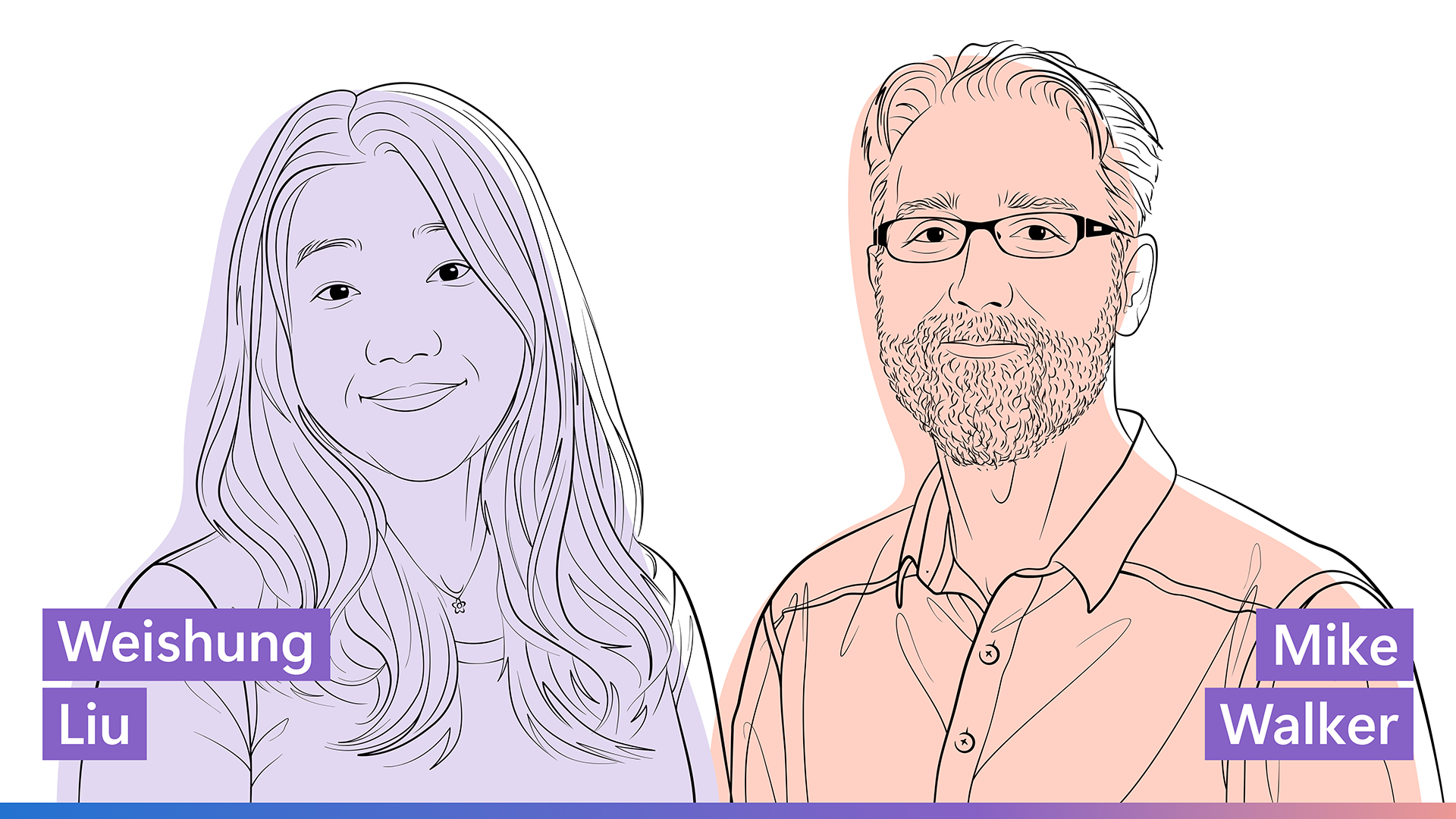
Research Manager Mike Walker reflects on a career spanning hacker culture, cybersecurity, and AI, sharing lessons about trust, teamwork, leadership, and why solving difficult problems requires curiosity, judgment, agility—and an understanding of the rules. The post Learn the rules: The hacker mindset appeared first on Microsoft Research.
Learn how Google Antigravity and our Cheminformatics Skills accelerate drug discovery workflows, search compounds, and propose novel rigidified macrocycles.
MIT News · Artificial Intelligence· news.mit.eduOct 28, 2026
Professor Paris Smaragdis develops computers with superhuman hearing for applications like speech recognition, music understanding, and environmental monitoring.
MIT News · Artificial Intelligence· news.mit.eduOct 27, 2026
Prabha Jha used her experience with MIT Open Learning’s program for senior executives to develop AI solutions for her employer, Verizon, and to write a book.
We use cookies to run the site and, with your consent, for analytics and to show ads.
See our Cookie Policy.