This work introduces a generalization of Deep Clustering Networks to the federated scenario, named FedDCN, that simultaneously optimizes a reconstruction loss and a clustering loss and ensures robustness and latent space alignment in non-identically-independently distributed data scenarios.
Abstract
Clustering high-dimensional data is a fundamental task in unsupervised machine learning with applications to a variety of domains. In the centralized data scenario, this task is commonly solved using deep clustering methods that utilize deep neural network architectures to learn clustering-friendly latent space representations. In Federated Learning, where data is distributed between clients and is private, deep clustering methods are less explored. In particular, recently introduced federated deep clustering methods, despite showing very promising performance, still fall short in reliably providing good performance if data across clients are non-identically-independently distributed. In this work, we introduce a generalization of Deep Clustering Networks to the federated scenario, named FedDCN, that simultaneously optimizes a reconstruction loss and a clustering loss. To ensure robustness and latent space alignment in non-identically-independently distributed data scenarios, FedDCN generates synthetic data augmentations, and its learning objective includes a geometric regularization for latent space alignment. Through experimental evaluation, the effectiveness of the approach under IID and non-IID assumptions is demonstrated, and future research directions are identified.

DAPA (Distribution-Aware Personalised Aggregation), a personalised federated deep learning framework that adaptively tailors the global aggregation to each client based on inter-client distribution similarity, is proposed and establishes a convergence bound showing that DAPA achieves a tighter error floor than uniform...
A flexible encoder based on low-rank embedding that adaptively captures the most informative components in the feature space of the input data while filtering out redundant or noisy information, effectively alleviating over-connected affinities is proposed.
Li Guo, Qian Wang· Journal of King Saud Univers...· 0 citations
Overall, FedMVC represents a promising framework for privacy-preserving unsupervised learning in distributed environments and key research challenges include formal privacy–utility trade-offs, convergence under extreme data heterogeneity, and the integration of large language models for improved interpretability.
An SI framework for deep clustering with a fixed pretrained encoder that provides a principled approach to quantifying the statistical reliability of structures discovered by deep clustering and enables valid statistical testing of differences between clusters identified in the latent space.
Eina Mizui, Tomohiro Shiraishi, S. Nishino et al.· arXiv.org· 1 citation
Clustered Federated Learning (FL) partitions a client population into groups of similar local distributions and trains one specialized model per cluster, mitigating client drift that degrades single-model methods under non-IID data. Prior methods discover cluster structure inside the training loop through gradient simi...
A novel Bayesian VFL framework for multivariate high-dimensional reduced-rank regression, termed BayesVFLReg, which enables precise coefficient estimation while safeguarding both feature and response privacy and is computationally scalable for large, high-dimensional datasets and facilitates efficient variable selectio...
Brigham Halverson, Sharmistha Guha, Jessica A. Bernard et al.· arXiv.org· 0 citations
Related blog posts
MIT News · Artificial Intelligence· news.mit.eduOct 13, 2026
Machine-learning networks can learn without detailed instructions from a designer. Those that do may offer insight into how the brain reorganizes itself during learning.
MIT News · Artificial Intelligence· news.mit.eduSep 29, 2026
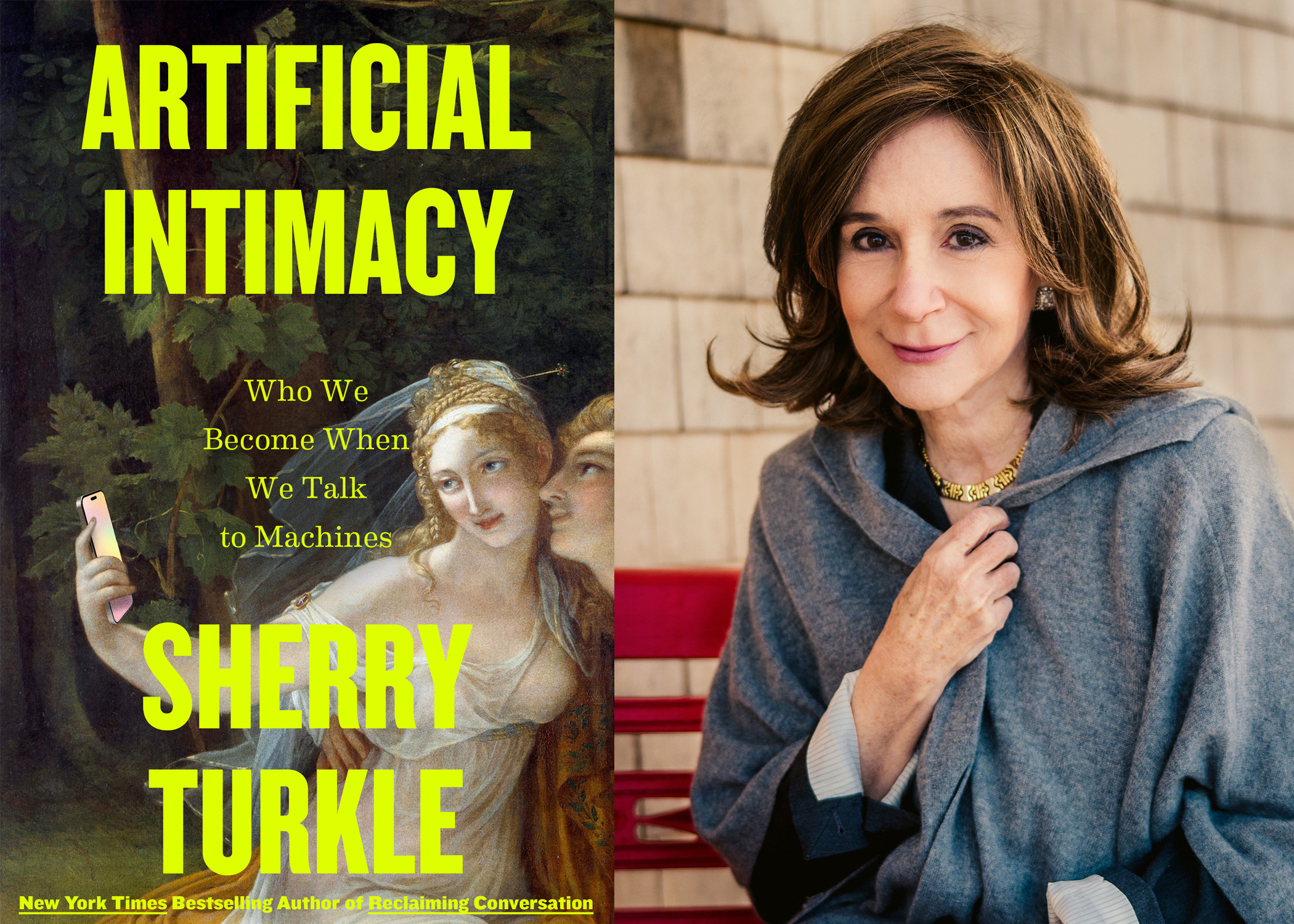
Professor Sherry Turkle’s new book, “Artificial Intimacy,” offers a withering critique of chatbots and the antisocial dynamics she believes they encourage.