Fine-tuning Vision-Language-Action (VLA) models commonly relies on human teleoperation demonstrations, while reinforcement learning (RL) with sparse binary rewards faces an exploration challenge when successful trajectories are rarely sampled. We propose SynthDemo-RL, a teacher-student framework in which an automated teacher converts simulator-privileged state into successful manipulation trajectories, a VLA student is distilled from them by supervised fine-tuning (SFT), and PPO with binary task-success rewards refines the student. We study reward coverage, the fraction of tasks for which at least one success is observed under the fixed evaluation protocol, as a complement to the average success rate. On LIBERO-PRO, a public benchmark of perturbed LIBERO tasks for which no demonstrations exist, 27 of 57 scored tasks are at exactly 0% success for a pi_0.5 policy fine-tuned on the original LIBERO tasks. Direct PPO from this policy, under the same PPO recipe and the same RL compute as SynthDemo-RL's refinement stage, rescues 10 of these 27 tasks and leaves 17 at 0%. SynthDemo-RL, with 50 synthesized trajectories per task and no new human demonstrations, rescues all 27 and reaches average success rates of 97.8% and 97.1% on the Position and Task axes of LIBERO-PRO, respectively. On standard LIBERO, the same pipeline reaches 96.0% with no human demonstrations, within 1.7 points of pi_0.5 trained on 50 human demonstrations per task. We further validate the pipeline on RoboTwin 2.0 and verify that trajectories from a policy trained in a MuJoCo twin execute open-loop on a physical robot.
GAOKAO-Bench is introduced, an intuitive benchmark that employs questions from the Chinese GAOKAO examination as test samples, including both subjective and objective questions that contribute a robust evaluation benchmark for future large language models and offers valuable insights into the advantages and limitations...
Xiaotian Zhang, Chun-yan Li, Yi Zong et al.· arXiv.org· 216 citations· ⚡17
This work investigates the possibilities of using LLMs in a resume screening setting via a document retrieval framework that simulates job candidate selection and finds that the MTEs are biased, significantly favoring White-associated names in 85% of cases and female-associated names in only 11.1% of cases.
This work shows that orders of magnitude enhancement in performance could be obtained by a combination of hardware improvements and tight quantum-HPC integration and introduces high-performance architectures for quantum-probabilistic computing with custom-designed accelerators to tackle today's industry-scale classical...
Masoud Mohseni, Artur Scherer, K. Johnson et al.· arXiv.org· 121 citations· ⚡9
This paper presents a comprehensive overview of the Ultralytics YOLO family, emphasizing architectural evolution, benchmarking, deployment, and emerging directions from YOLOv5 through YOLO27, and examines detection, segmentation, depth, classification, pose, oriented detection, tracking, export, quantization, and deplo...
This work revisits schema linking when using the latest generation of large language models (LLMs) and finds empirically that newer models are adept at utilizing relevant schema elements during generation even in the presence of large numbers of irrelevant ones.
Karime Maamari, Fadhil Abubaker, Daniel Jaroslawicz et al.· arXiv.org· 109 citations· ⚡19
A novel threat is unveiled in which attackers steer the RAG system's response by injecting malicious passages into its knowledge base, enabling the attacker to steer the response without altering the user input or modifying the RAG weights.
Jiaqi Xue, Meng Zheng, Yebowen Hu et al.· arXiv.org· 109 citations· ⚡8
Related blog posts
MIT News · Artificial Intelligence· news.mit.eduJul 30, 2026
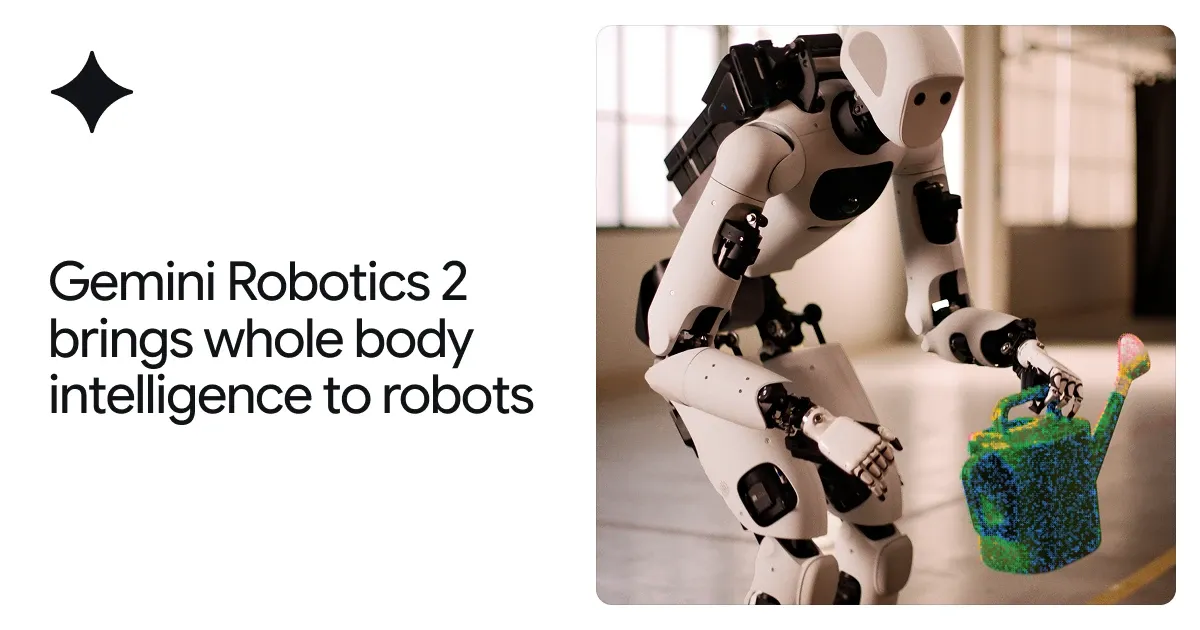
From feet to fingertips — we are teaching robots intelligent whole-body control, fine dexterity, and teamwork to complete a broad range of complex tasks.
With $2.1 million funding from Google.org, the open-source Public Transit Intelligence Hub will unify public transit monitoring, operations, and passenger communication.
We use cookies to run the site and, with your consent, for analytics and to show ads.
See our Cookie Policy.