Skip to content

IoT and ML for Predictive Disaster Response and Environmental Monitoring

Sep 2026

Abstract

Rising natural calamities demand intelligent disaster management beyond traditional reactive methods. IoT-ML integration revolutionizes this by enabling real-time environmental monitoring via sensors, drones, and satellites tracking temperature, humidity, air quality, seismic activity, and water levels. ML algorithms—decision trees, CNNs, RNNs—analyze data streams for anomaly detection, disaster forecasting, and early warnings, reducing fatalities and economic losses from earthquakes, floods, hurricanes, and wildfires. Post-disaster, AI assesses damage from imagery for efficient resource allocation. Challenges like data accuracy, cybersecurity, interoperability, and computation persist, addressable by edge computing, federated learning, and blockchain for scalable, resilient systems.


View source

Similar papers

#computer vision Review Sep 2017

Agile Software Development Methods: Review and Analysis

This publication proposes a definition and a classification of agile software development approaches and analyses ten software development methods that can be characterized as being "agile" against the defined criterion.

P. Abrahamsson, O. Salo, Jussi Ronkainen et al. · 727 citations · ⚡54
#computer vision Jun 2008

The impact of agile practices on communication in software development

The study shows that agile practices improve both informal and formal communication, but indicates that, in larger development situations involving multiple external stakeholders, a mismatch of adequate communication mechanisms can sometimes even hinder the communication.

M. Pikkarainen, Jukka Haikara, O. Salo et al. · 401 citations · ⚡48
#machine learning Review Open access Oct 2014

Software development in startup companies: A systematic mapping study

The results indicate that software engineering work practices are chosen opportunistically, adapted and configured to provide value under the constrains imposed by the startup context.

Nicolò Paternoster, Carmine Giardino, M. Unterkalmsteiner et al. · 394 citations · ⚡54

Related blog posts

MIT News · Artificial Intelligence Aug 27, 2026

Looking beyond natural sequences

A new machine-learning framework aims to improve the success rate of computational protein design while moving away from results that reproduce sequences found in nature.

Microsoft Research Blog Aug 20, 2026

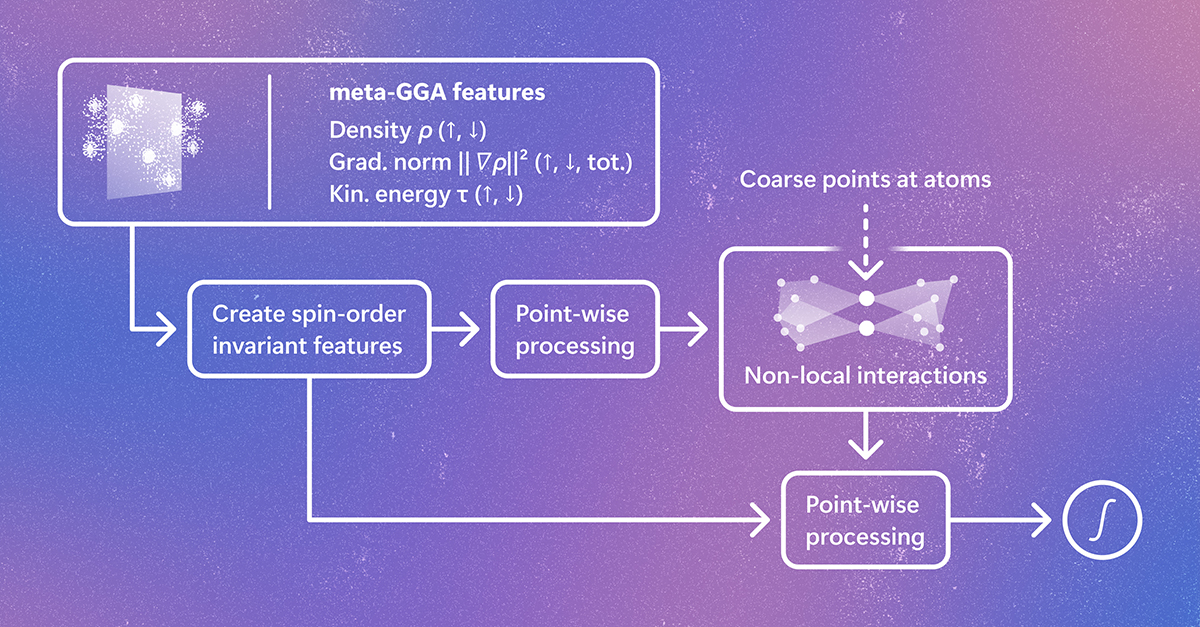
Broadening access to Skala creates a faster path to predictive DFT 

Skala 1.1, the updated deep-learning exchange-correlation functional from Microsoft Research, provides greater accuracy, expanded accessibility across the computational chemistry ecosystem, and a living benchmark to track computational performance. The post Broadening access to Skala creates a faster path to predictive DFT  appeared first on Microsoft Research.

We use cookies to run the site and, with your consent, for analytics and to show ads. See our Cookie Policy.