SIF is introduced, a metric built on the notion of partial-nodes that is independent of historical workload knowledge that matches both theory and production and COMPASS-ABS is proposed, which employs the COMPact-ASSured (COMPASS) algorithm to confine the cluster state within a tight Anchor-Based Space (ABS).
Abstract
With the rapid advancement of deep learning technology, shared GPU clusters receive an increasing number of deep learning training (DLT) jobs. Yet resource fragmentation make such clusters underutilized and forces the DLT jobs running on them to endure long turnaround times. Extensive research has been devoted to quantifying fragmentation and developing scheduling algorithms that alleviate its impact. However, existing fragmentation measures break down in the absence of workload distribution information, while current schedulers cannot continuously maintain resource fragmentation at a low level. To tackle these problems, we first introduce Scheduler-Induced Fragmentation (SIF), a metric built on the notion of partial-nodes that is independent of historical workload knowledge. We then propose COMPASS-ABS, which employs the COMPact-ASSured (COMPASS) algorithm to confine the cluster state within a tight Anchor-Based Space (ABS), whose construction fully leverages the topological alignment between dominant workload size and node capacity. Moreover. We also prove that it ensures SIF is bounded by $\frac{2}{N}$ under a workload composition condition that matches both theory and production. Evaluations implemented on a physical cluster and a simulated cluster demonstrate COMPASS-ABS effectiveness at improving resource utilization, reducing DLT job completion time by reducing fragmentation.
DeepShare is a scheduler that uses a continuous tenant-assurance signal to coordinate these decisions at runtime to achieve a more advantageous utilization-QoS trade-off than optimizing quotas, scheduling, and resource sharing independently.
Jing-Hao Wang, Yi-Hang Zhou, Xiao Zhou et al.· 0 citations
Experimental evaluations demonstrate the effectiveness of the framework ASTRA, which achieves lower time-to-accuracy than a resource-heterogeneity-aware baseline and several compression-based frameworks, while preserving convergence quality and robustness across heterogeneous hybrid cloud environments.
Tuan Anh Vuong, Thanh Loi Hoang, Huan Le et al.· IEEE Access· 0 citations
The symbiotic scaling of artificial intelligence models and high-performance computing systems continually creates algorithmic challenges in their convergence. Foundation models (FMs) are a crucial example, requiring months-long training on thousands of cutting-edge GPUs. Sharded data parallelism (DP) is the dominant s...
Gianluca Mittone, Marco Aldinucci· European Conference on Paral...· 0 citations
Concord, a novel GPU sharing-enabled workload scheduler that outperforms state-of-the-art schedulers, achieves a 1.68 × reduction in JCT and a 29% improvement in GPU utilization in high-load scenarios.
Xin-Hua Wang, Wei-Wei Lin, Hai-Jie Wu et al.· 0 citations
ElastiCo is presented, an elastic co-location framework that enables training and inference workloads to safely share GPUs through three integrated mechanisms that decomposes the resulting multi-resource allocation problem into per-job configuration selection subproblems via dynamic per-resource shadow prices.
Jing-Hao Wang, Yi-Hang Zhou, Xiaoyang Sun et al.· 0 citations
This work proposes Turbo, a first-of-its-kind in-network aggregation system that accelerates long-context inference by offloading query broadcast and attention aggregation to switches and introduces a rolling forward scheme that propagates states to enable cross-stage updates.
Ying Wan, Yuchen Xu, Chuwen Zhang et al.· Conference on Applications,...· 0 citations
Related blog posts
MIT News · Artificial Intelligence· news.mit.eduOct 2, 2026
Martin Trust Center Managing Director Bill Aulet introduces Dear Dreamer, a free platform for middle and high school students who want to learn about entrepreneurship.
Microsoft Research Blog· microsoft.comSep 30, 2026
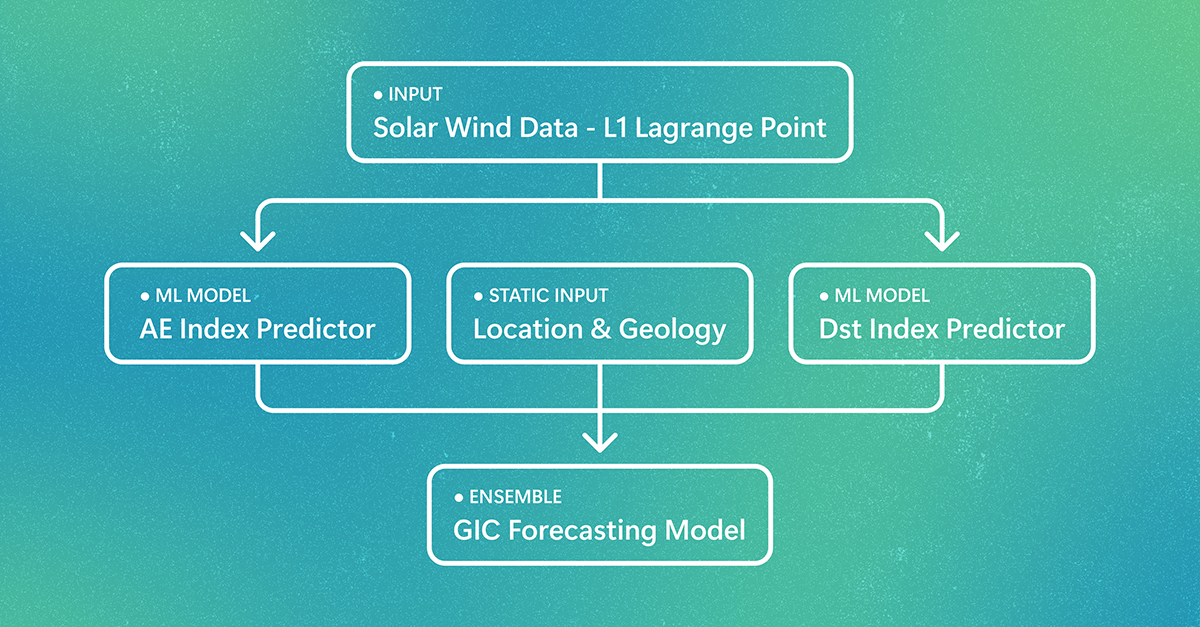
Extreme space-weather events can damage power systems on Earth and degrade GPS accuracy and satellite operations. A new machine learning system can predict where damage is likely to occur 30-60 minutes before a storm arrives. The post Forecasting space weather risks on power grids appeared first on Microsoft Research.
We use cookies to run the site and, with your consent, for analytics and to show ads.
See our Cookie Policy.