Skip to content

FreqSpaNet: Frequency and Spatial Learning of SFPF for Physical Layer Hardware Integrity Detection

Sep 2026 · 0 citations · 14 references
Computer Science

TL;DR

FreqSpaNet, an SFPF representation learning network for open set hardware anomaly detection, is proposed, an SFPF representation learning network for open set hardware anomaly detection that captures shared information while preserving the distinct characteristics of the frequency and spatial representations.

Abstract

Unauthorized hardware replacement can preserve a wireless device's logical identity while altering its physical implementation, posing a challenge to hardware integrity verification. Spatio-frequency polarization fingerprints (SFPFs) capture device-dependent responses across multiple frequencies and directions, but their frequency and spatial dimensions exhibit different structural dependencies. We propose FreqSpaNet, an SFPF representation learning network for open set hardware anomaly detection. A frequency branch captures local variations among neighboring frequencies, while a geometry-aware spatial branch models directional relationships using angular information. The two representations are combined through adaptive fusion, and complementary pretraining further captures shared information while preserving the distinct characteristics of the frequency and spatial representations. Experiments show that FreqSpaNet achieves a mean AUROC of 96.31\%, 9.05 points above the baseline. Results under seven hardware replacement scenarios further verify the effectiveness of FreqSpaNet.


View source

Similar papers

Sep 2026

SFPF: Spatio-Frequency Polarization Fingerprint for Anomalous Wireless Device Detection

Periodic inspection of deployed wireless devices is necessary because unauthorized hardware replacement may preserve communication functions, credentials, and logical identity, making anomalous devices difficult to detect. Such inspections are conducted under controlled measurement conditions to verify that each device...

Xiao-Xuan Huang, Jin-Long Xu, Da-Yu Shen et al. · 0 citations
Open access 2026

Lightweight Memory Network for Drone Type RF Fingerprint Identification in Dynamic Environments

Radio frequency fingerprint identification (RFFI) is a crucial physical layer security technique for unauthorized drone identification. However, current drone RFFI methods are primarily designed for line-of-sight (LOS) video transmission or remote control signals while suffering significant performance degradation unde...

Fei-Fei Zhu, Fu-Hui Zhou, Qi-Hui Wu · 0 citations
Open access 2026

EJ-ANet: A Lightweight Envelope-Jitter Asymmetric Network for Drone Radio Frequency Fingerprint Identification

Drone radio frequency fingerprint identification (RFFI) provides a passive solution for fine-grained drone recognition. However, time-frequency image-based methods introduce additional preprocessing costs, while raw in-phase/quadrature (IQ) networks remain limited in modeling complementary temporal variations. This let...

Shen-Feng Ye, Dan-Yang Jiang, Zi-Hang Qi · 0 citations
Preprint Sep 2026

5GDescrambler: Locating, Descrambling, and Decoding 5G Scheduling Information (long version)

Tracking users in 5G NR has recently been successfully demonstrated by exploiting various side-channels. This allows for identification of individuals, classification of user activity in real time as well as tracking by fingerprinting, affecting billions of users with a 5G subscription and companies with private 5G dep...

Fritz Windisch, Thorsten Strufe · 0 citations
Open access Sep 2026

SFAD-Net: A Dual-Stream Spatial–Frequency Attention Network for Fingerprint Presentation Attack Detection

This paper proposes SFAD-Net, a lightweight dual-stream spatial–frequency attention network for fingerprint presentation attack detection that integrates complementary spatial and wavelet-based frequency representations with a lightweight attention-guided fusion mechanism to improve discriminative feature learning whil...

Eswar Karri, Archana Pallakonda, Rayappa David Amar Raj et al. · 0 citations

Related blog posts

MIT News · Artificial Intelligence Nov 17, 2026

Learning the language of machine learning

By studying the computational foundations of language learning, Associate Professor Jacob Andreas builds intelligent systems that can communicate effectively with humans.

Microsoft Research Blog Nov 16, 2026

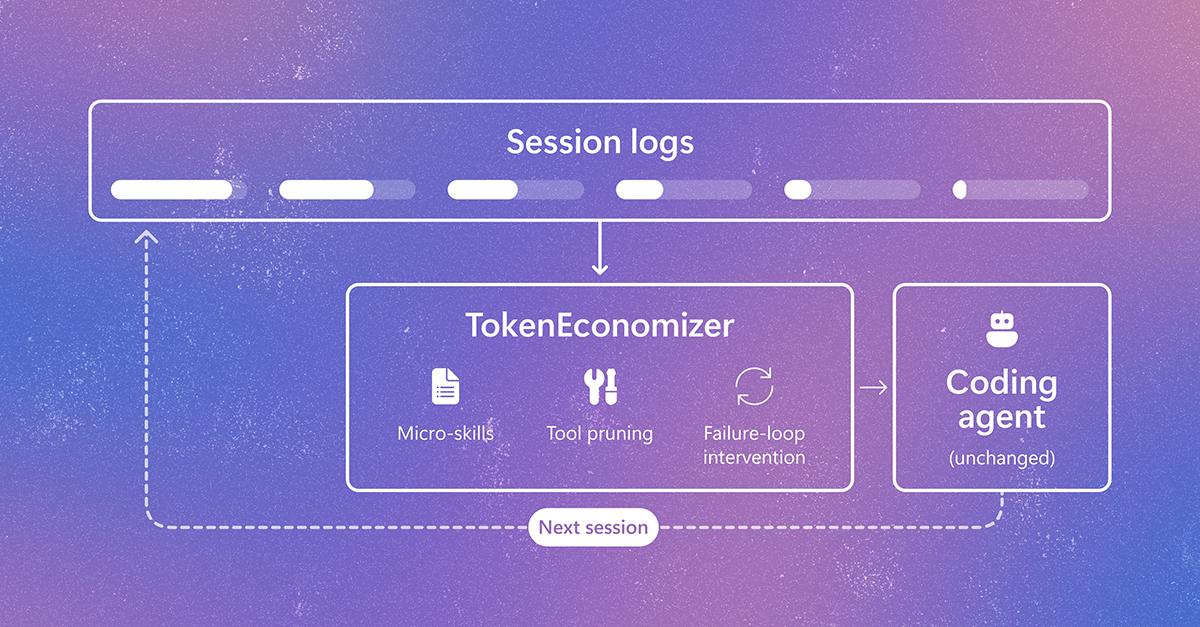
TokenEconomizer: Learning from Experience to Make AI Coding Agents More Efficient

AI coding agents are increasingly help developers fix bugs and build features largely on their own, but every interaction with their models consumes tokens. In each session, an agent sends instructions, tool descriptions, and session history to its model. Most efforts to reduce this cost focus on individual tasks. Yet developers return to the same […] The post TokenEconomizer: Learning from Experience to Make AI Coding Agents More Efficient appeared first on Microsoft Research.

We use cookies to run the site and, with your consent, for analytics and to show ads. See our Cookie Policy.