Sep 2026· International Journal for Research in Applied Science and Engineering Technology· 0 citations
IoT and Edge/Fog Computing
TL;DR
This paper outlines research directions to enable the development and deployment of cloud-to-edge and cloud-to-thing computing environments in the future and presents future research challenges such as hardware heterogeneity, network dynamics, and the development of energy-efficient edge systems.
Abstract
The needs of scenarios such as the rapidly expanding Internet of Things (IoT) ecosystem or real-time services are
examples of situations where a centralized cloud model may not suffice‚ as all data resides on the cloud and traditional cloud
computing practices have limitations․ Low latency‚ high bandwidth and privacy issues arise due to the ever-growing amount of
data being generated by connected devices․ One way to address these issues is to move computation‚ storage and networking
resources closer to the edge where data is generated․ Edge computing can minimize latency in latency-sensitive applications and
can also help reduce network congestion by offloading processing from the core network․ This paper surveys the recent works in
edge computing‚ classifying the existing body of work in edge computing into four categories based on four dimensions: physical
architecture‚ algorithmic optimization techniques‚ performance objectives‚ and security mechanisms․ The survey provides
examples of representative works for each dimension‚ analyses the corresponding performance-energy trade-offs based on
processing performance‚ energy consumption‚ and security objectives‚ and presents future research challenges such as
hardware heterogeneity‚ network dynamics‚ and the development of energy-efficient edge systems․ The paper also outlines
research directions to enable the development and deployment of cloud-to-edge and cloud-to-thing computing environments in
the future․

The present work proposes a novel approach for intelligent self-optimization in an edge cloud employing IoT storage nodes that aims to proactively place docker and virtual machine images in specific nodes to minimize the transfer delays, the bandwidth used, and the occupied memory in the edge nodes.
A high rate of increment in the internet-based devices generates huge amounts of data every day in almost all aspects of life. These internet-enabled devices don’t have any storage, processing, or subject capacity to handle and store this large quantity of correct and voluminous data. Nevertheless, the current fog comp...
Sharmila Patil-Karpe, Anjali R. Deshpande, Rupali Shelke· Journal of High Speed Networ...· 0 citations
A systematic literature review was conducted following PRISMA guidelines, analyzing peer-reviewed studies published between 2021 and 2026 across major databases, and reveals that hardware–software co-design and custom neural accelerators are crucial for overcoming operational bottlenecks.
Marco Fiore, Francesca Lanera· Electronics· 1 citation
Cloud–edge continuums are driving the shift of cloud-native applications from centralized data centers to latency-, mobility-, privacy-, and energy-saving applications. The serverless architecture provides an attractive “Function-as-a-Service” (FaaS) model in this transition, as it is driven by events, elastic and fine...
Abdullah Abbasi, D. Hakro, Asad Ullah et al.· Future Internet· 0 citations
The rapid expansion of IoT devices has resulted in a paradigm shift from centralized cloud computing models to highly distributed computing continua that incorporate IoT devices, edge gateways, fog nodes, regional cloudlets, and hyperscale cloud data centers. In this survey, we provide an overview of Edge-Fog-Cloud-IoT...
Patrick Effraim, Micheal Mensah, Bismark Budu· Journal of King Saud Univers...· 0 citations
This work introduces a federated learning framework on campus that provides a resource-conscious multi-layer federating strategy that controls the number of devices taking part in the process as well as the frequency at which aggregation is done based on each device’s capability.
C. Reddy, S. Bhargav, G. Thirupathi et al.· International Journal of Ele...· 0 citations
Related blog posts
MIT News · Artificial Intelligence· news.mit.eduOct 2, 2026
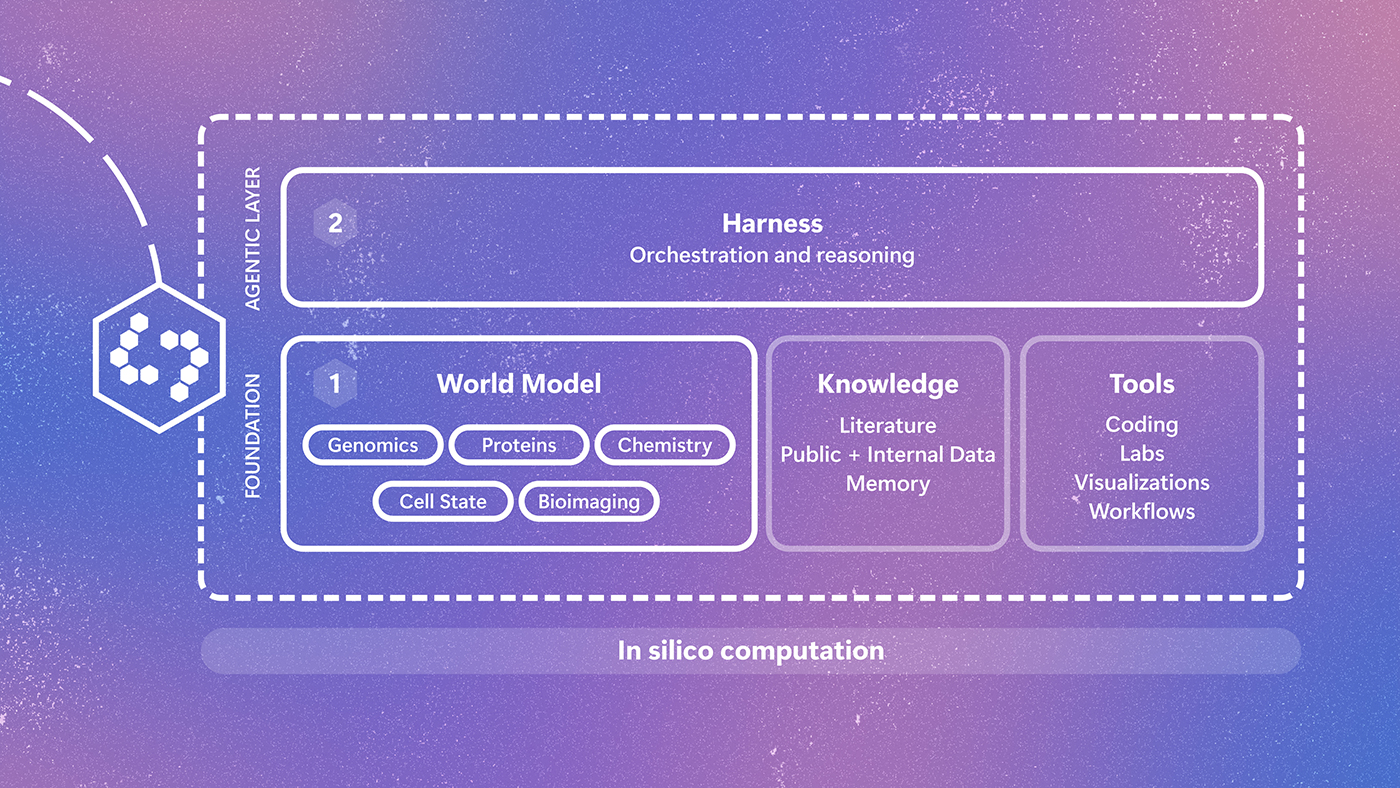
Biology doesn't operate in silos, and neither should the AI representation of it. Quine is an early-stage research effort to create a multimodal world model of biology. By connecting insights across biological scales and modalities, Quine helps scientists computationally search a space far larger than intuition allows and prioritize hypotheses before they reach the lab. Experimental results provide important feedback, helping researchers sharpen future research directions. The post Introducing Q…