Skip to content

E2E-DRTO: a micro end-to-end routing and transmission collaborative optimization method for large scale networks

Sep 2026 · International Conference on Internet of Things, Communication Engineering, and Artificial Intelligence · Vol 14373, pp. 1437310 - 1437310-9 · 0 citations · 15 references
Engineering

Abstract

With the rapid development of large-scale networks such as data center networks and wide area networks, how to achieve efficient traffic scheduling under complex topologies and dynamic traffic demands has become a key issue. Traditional methods typically separate routing selection from transmission rate control, or rely on reinforcement learning for joint optimization. However, the former is difficult to achieve global optimality, while the latter suffers from unstable training and low convergence efficiency. This paper proposes E2E-DRTO, a differentiable end-to-end framework for jointly optimizing multi-path routing and transmission rates in large-scale networks. Unlike conventional soft-routing schemes that only relax path selection, the proposed method couples differentiable path splitting with rate control under a unified congestion-aware objective. To improve scalability, each source-destination pair is restricted to a small candidate-path set, which converts the original combinatorial routing problem into a compact differentiable micro-decision space. In addition, a smooth link-delay proxy is derived from a low-order expansion of the queueing-delay function, and its approximation error in the sub-saturation regime is explicitly characterized. Experiments on standardized real and synthetic topologies, averaged over 10 independent runs, show that E2E-DRTO consistently outperforms SP, ECMP-like, soft-routing, RL-based, and GNN-based baselines in average delay and maximum link utilization, while maintaining high demand satisfaction. We further report computational overhead, convergence behavior, and ablation studies on the number of candidate paths and hyperparameter settings, demonstrating that the proposed framework is both effective and practically scalable.
View source

Similar papers

#machine learning Review Open access Oct 2014

Software development in startup companies: A systematic mapping study

The results indicate that software engineering work practices are chosen opportunistically, adapted and configured to provide value under the constrains imposed by the startup context.

Nicolò Paternoster, Carmine Giardino, M. Unterkalmsteiner et al. · 394 citations · ⚡54
#machine learning Review Open access Jun 2014

Why Early-Stage Software Startups Fail: A Behavioral Framework

This state-of-practice investigation was performed using a literature review followed by a multiple-case study approach and presents how inconsistency between managerial strategies and execution can lead to failure by means of a behavioral framework.

Carmine Giardino, Xiaofeng Wang, P. Abrahamsson · 175 citations · ⚡19
#machine learning Review Open access Oct 2016

“Failures” to be celebrated: an analysis of major pivots of software startups

This study conducts a case survey study based on the secondary data of the major pivots happened in 49 software startups, and demonstrates that customer need pivot is the most common among all pivot types.

Sohaib Shahid Bajwa, Xiaofeng Wang, Anh Nguyen-Duc et al. · 127 citations · ⚡15
#machine learning Review Open access May 2016

Key Challenges in Software Startups Across Life Cycle Stages

It is found that what perceived as biggest challenges by software startups do vary across different life cycle stages, even though its significance decreases when the learning focuses of the startups move from problem to solution and their products mature.

Xiaofeng Wang, Henry Edison, Sohaib Shahid Bajwa et al. · 62 citations · ⚡6

Related blog posts

Microsoft Research Blog Sep 30, 2026

Forecasting space weather risks on power grids

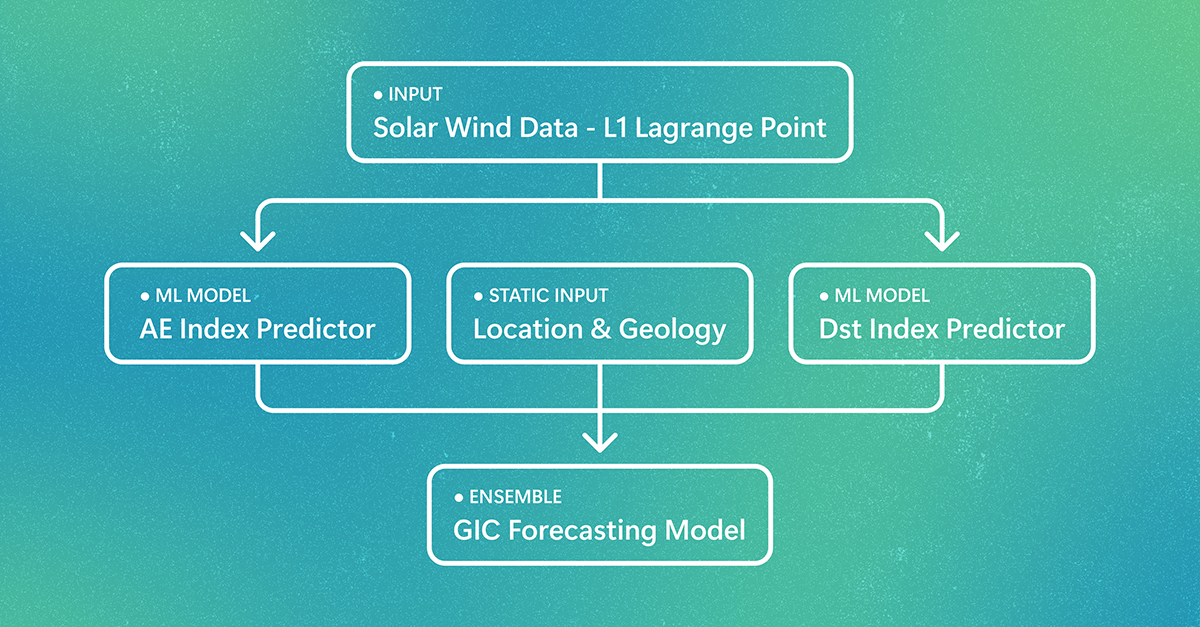
Extreme space-weather events can damage power systems on Earth and degrade GPS accuracy and satellite operations. A new machine learning system can predict where damage is likely to occur 30-60 minutes before a storm arrives. The post Forecasting space weather risks on power grids appeared first on Microsoft Research.

We use cookies to run the site and, with your consent, for analytics and to show ads. See our Cookie Policy.