Skip to content

Heuristic-Supervised-DRL: A Unified Optimization Framework With Convergence Analysis

Oct 2026 · IEEE Transactions on Mobile Computing · Vol 25, pp. 15560-15576 · 0 citations · 46 references

Abstract

Many real-world problems involve hierarchical multi-objective optimization over coupled sequential decisions. A common strategy is to combine heuristic planning with deep reinforcement learning (DRL). While existing hybrid methods often show strong empirical performance, the coupled closed-loop learning dynamics between upper-tier planning and lower-tier control are typically analyzed only empirically, and explicit convergence guarantees for the integrated scheme remain limited. To address this gap, we propose a heuristic-supervised-DRL (HSD) framework that tightly couples (i) a heuristic planner for upper-tier decision-making, (ii) a DRL agent for lower-tier execution, and (iii) an online supervised predictor that serves as an adaptive bridge between planning and execution. The key novelty of HSD lies in this closed-loop architecture and its accompanying theoretical treatment. By formulating the coupled updates as a two-timescale stochastic approximation process, we show that, under standard conditions, the supervised predictor tracks a quasi-stationary regression target and the overall joint process converges almost surely to an asymptotically stable equilibrium. We further analyze robustness under approximate planning errors. As a case study, we instantiate HSD in a multi-UAV-assisted mobile edge computing system. Experimental results show that the proposed framework consistently outperforms representative baselines in key performance metrics, demonstrating both its practical effectiveness and its value as a principled framework for hierarchical optimization in dynamic environments.

View source

Similar papers

#computer vision Review Sep 2017

Agile Software Development Methods: Review and Analysis

This publication proposes a definition and a classification of agile software development approaches and analyses ten software development methods that can be characterized as being "agile" against the defined criterion.

P. Abrahamsson, O. Salo, Jussi Ronkainen et al. · 727 citations · ⚡54
#computer vision Jun 2008

The impact of agile practices on communication in software development

The study shows that agile practices improve both informal and formal communication, but indicates that, in larger development situations involving multiple external stakeholders, a mismatch of adequate communication mechanisms can sometimes even hinder the communication.

M. Pikkarainen, Jukka Haikara, O. Salo et al. · 401 citations · ⚡48
#machine learning Review Open access Oct 2014

Software development in startup companies: A systematic mapping study

The results indicate that software engineering work practices are chosen opportunistically, adapted and configured to provide value under the constrains imposed by the startup context.

Nicolò Paternoster, Carmine Giardino, M. Unterkalmsteiner et al. · 394 citations · ⚡54

Related blog posts

Microsoft Research Blog Sep 29, 2026

Introducing Quine: An AI research system designed for the complexity of biology

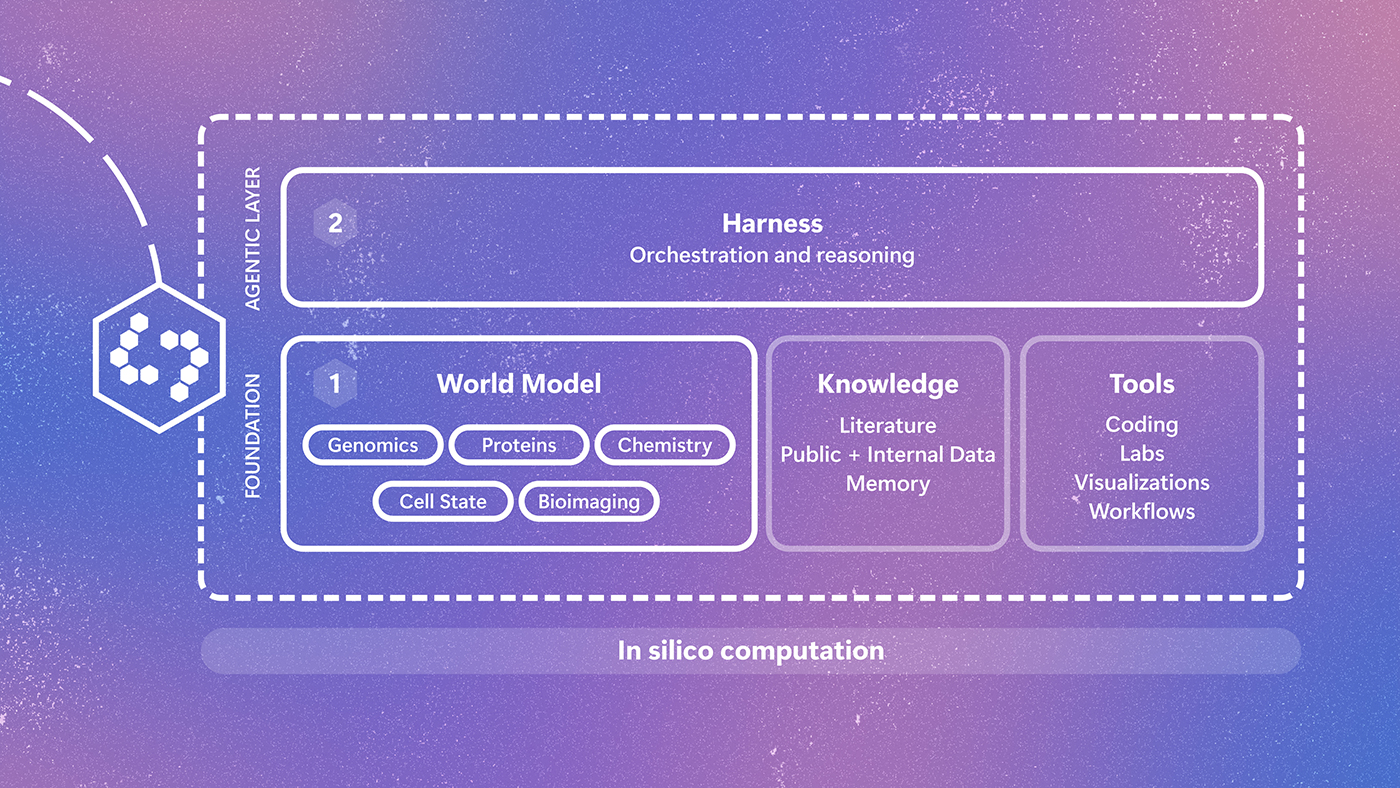
Biology doesn't operate in silos, and neither should the AI representation of it. Quine is an early-stage research effort to create a multimodal world model of biology. By connecting insights across biological scales and modalities, Quine helps scientists computationally search a space far larger than intuition allows and prioritize hypotheses before they reach the lab. Experimental results provide important feedback, helping researchers sharpen future research directions. The post Introducing Q…

We use cookies to run the site and, with your consent, for analytics and to show ads. See our Cookie Policy.