Skip to content

Secure Split Offloading and Trajectory Design for UAV-Assisted Multi-Exit Collaborative DNN Inference

Oct 2026 · IEEE Transactions on Mobile Computing · Vol 25, pp. 18924-18939 · 4 citations · 41 references

Abstract

Collaborative inference (CI) has emerged as a promising paradigm in mobile edge computing, where deep neural network (DNN) models are split and collaboratively processed by wireless devices and edge servers to reduce communication overhead and improve inference efficiency. Unmanned aerial vehicles (UAVs) with agile mobility present significant potential as edge servers in such systems. However, the limited computation resources of UAV servers and the inherent security vulnerabilities of ground-to-air channels pose challenges to UAV-assisted CI. To address these issues, this paper proposes a novel UAV-assisted CI framework via multi-exit DNNs and cooperative jamming. Specifically, this framework integrates an early-exit (EE) mechanism to alleviate computational burdens and employs a cooperative UAV jammer to transmit jamming signals to ensure secure split offloading. Our objective is to minimize total energy consumption while maximizing inference accuracy, subject to inference delay requirements and secure offloading rate constraints by jointly optimizing dual-UAV trajectories, EE selection, DNN partitioning, and computation resource allocation. To solve the formulated mixed-integer nonlinear programming problem, we first derive a closed-form solution for computation resource allocation and reformulate the optimization problem accordingly. We then develop an efficient alternating optimization algorithm that employs the successive convex approximation method for UAVs’ trajectory design and a discrete whale optimization algorithm for EE selection and DNN partitioning. Extensive simulation results demonstrate that the proposed scheme outperforms baselines.

View source

Similar papers

#computer vision Review Sep 2017

Agile Software Development Methods: Review and Analysis

This publication proposes a definition and a classification of agile software development approaches and analyses ten software development methods that can be characterized as being "agile" against the defined criterion.

P. Abrahamsson, O. Salo, Jussi Ronkainen et al. · 727 citations · ⚡54
#computer vision Jun 2008

The impact of agile practices on communication in software development

The study shows that agile practices improve both informal and formal communication, but indicates that, in larger development situations involving multiple external stakeholders, a mismatch of adequate communication mechanisms can sometimes even hinder the communication.

M. Pikkarainen, Jukka Haikara, O. Salo et al. · 401 citations · ⚡48
#machine learning Review Open access Oct 2014

Software development in startup companies: A systematic mapping study

The results indicate that software engineering work practices are chosen opportunistically, adapted and configured to provide value under the constrains imposed by the startup context.

Nicolò Paternoster, Carmine Giardino, M. Unterkalmsteiner et al. · 394 citations · ⚡54

Related blog posts

GPT-Lab Sep 17, 2026

Beyond Prompt Engineering: The Role of Tacit Knowledge in Software Engineering

AI is making software generation faster, but speed does not remove the need for expertise. As more work is delegated to AI, tacit knowledge may become one of the most important human advantages in software engineering. The post Beyond Prompt Engineering: The Role of Tacit Knowledge in Software Engineering appeared first on GPT-Lab.

Microsoft Research Blog Aug 31, 2026

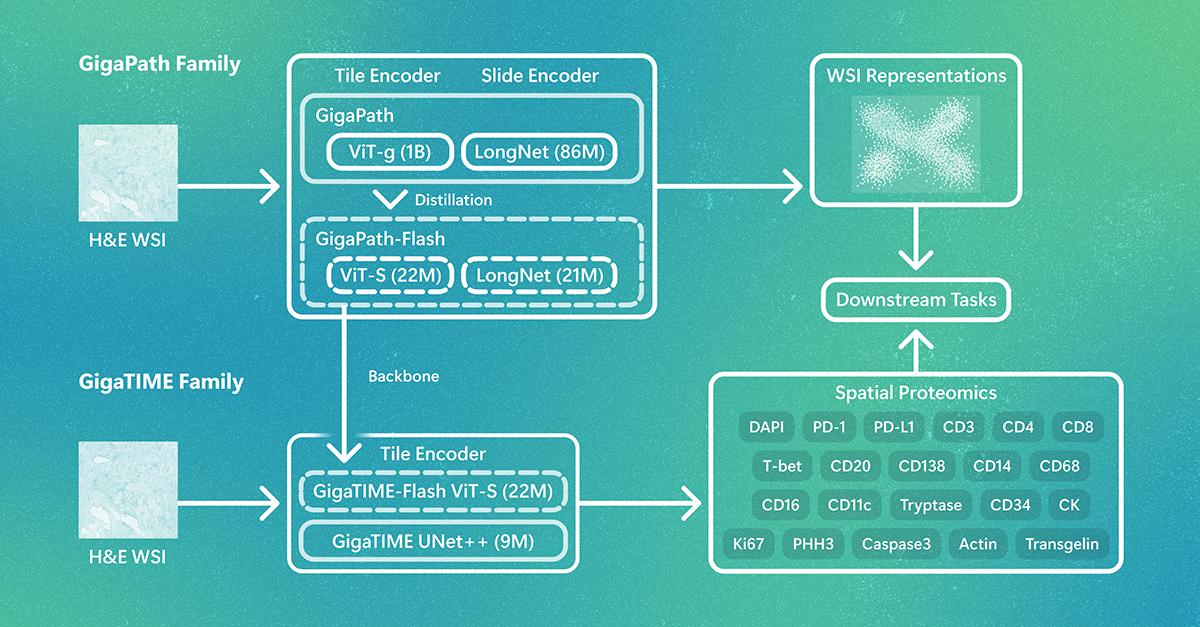
GigaPath-Flash and GigaTIME-Flash: Toward population-scale discovery with efficient pathology foundation models

What if pathology foundation models could do more with less? GigaPath-Flash and GigaTIME-Flash cut computational demands while maintaining strong performance, opening the door to larger studies and broader exploration. The post GigaPath-Flash and GigaTIME-Flash: Toward population-scale discovery with efficient pathology foundation models appeared first on Microsoft Research.

We use cookies to run the site and, with your consent, for analytics and to show ads. See our Cookie Policy.