Skip to content

PinDCO: Whole-Page Aware Dynamic Creative Optimization at Scale

Jul 2026 · Proceedings of the 20th ACM Conference on Recommender Systems · 0 citations · 35 references
Computer Science

TL;DR

This work presents PinDCO, a production DCO system for ad creative retrieval and selection on Pinterest, a billion-scale visual discovery platform, and introduces a Pixel-aware Adjustment Module (PAM) that adjusts scores based on creative size to encourage efficient screen real-estate utilization and better whole-page outcomes.

Abstract

Recent advances in generative AI have substantially accelerated the creation of high-quality ad creatives, dramatically expanding the number of candidate variants per campaign. This shift increases the need for scalable dynamic creative optimization (DCO) systems that can match creatives to the most relevant audiences under stringent latency and cost constraints. We present PinDCO, a production DCO system for ad creative retrieval and selection on Pinterest, a billion-scale visual discovery platform. PinDCO is built around a Creative Component Fusion Network (CCFN) that performs dynamic creative scoring by modeling each creative component (e.g., image, title, layout) with a dedicated tower, using component-specific hyperparameters to account for differing modeling complexity. The component representations are fused to predict a creative-level score conditioned on the ad-level prediction, and we improve training data quality via an exploration-exploitation strategy. To account for Pinterest’s waterfall grid layout, where a creative’s rendered size affects nearby content and session-level engagement, we introduce a Pixel-aware Adjustment Module(PAM) that adjusts scores based on creative size to encourage efficient screen real-estate utilization and better whole-page outcomes. To support the large volume of creative candidates, we further employ a lightweight pre-selection model for early pruning, and optimize serving efficiency through caching and dynamic batching. Extensive offline analyses and online A/B experiments demonstrate the effectiveness of PinDCO, yielding a +3.09% lift in ad Click-Through Rate(CTR) with positive whole-page metrics. With the strong performance, we launched PinDCO in the Pinterest Ads platform.

Read PDF

Similar papers

#machine learning Review Open access Oct 2014

Software development in startup companies: A systematic mapping study

The results indicate that software engineering work practices are chosen opportunistically, adapted and configured to provide value under the constrains imposed by the startup context.

Nicolò Paternoster, Carmine Giardino, M. Unterkalmsteiner et al. · 394 citations · ⚡54

Diffusion models as plug-and-play priors

The possibility of inferring high-dimensional data inference in a model that consists of a prior and an auxiliary differentiable constraint given some additional information is considered, thereby allowing a range of potential applications in adapting models to new domains and tasks.

Alexandros Graikos, Esmeralda S. Whitammer, N. Jojic et al. · 316 citations · ⚡15

Trajectory Balance: Improved Credit Assignment in GFlowNets

It is proved that any global minimizer of the trajectory balance objective can define a policy that samples exactly from the target distribution, and empirically demonstrate the benefits of the trajectories balance objective for GFlowNet convergence, diversity of generated samples, and robustness to long action sequenc...

Esmeralda S. Whitammer, Moksh Jain, Emmanuel Bengio et al. · 302 citations · ⚡60

KTO: Model Alignment as Prospect Theoretic Optimization

This work proposes a HALO that directly maximizes the utility of generations instead of maximizing the log-likelihood of preferences, and suggests that the best loss depends on the inductive biases most appropriate for a given setting, an oft-overlooked consideration.

Kawin Ethayarajh, Winnie Xu, Niklas Muennighoff et al. · 195 citations · ⚡28
#machine learning Review Open access Jun 2014

Why Early-Stage Software Startups Fail: A Behavioral Framework

This state-of-practice investigation was performed using a literature review followed by a multiple-case study approach and presents how inconsistency between managerial strategies and execution can lead to failure by means of a behavioral framework.

Carmine Giardino, Xiaofeng Wang, P. Abrahamsson · 175 citations · ⚡19

Related blog posts

Microsoft Research Blog Oct 12, 2026

Simulating student learning for better AI tutoring

StudentSim is a research system for evaluating and improving AI tutoring tools before they are tested with learners. It models how individuals may engage with tutors, giving feedback to improve tutor performance across subjects like chess, writing, and mathematics. The post Simulating student learning for better AI tutoring appeared first on Microsoft Research.

Microsoft Research Blog Oct 7, 2026

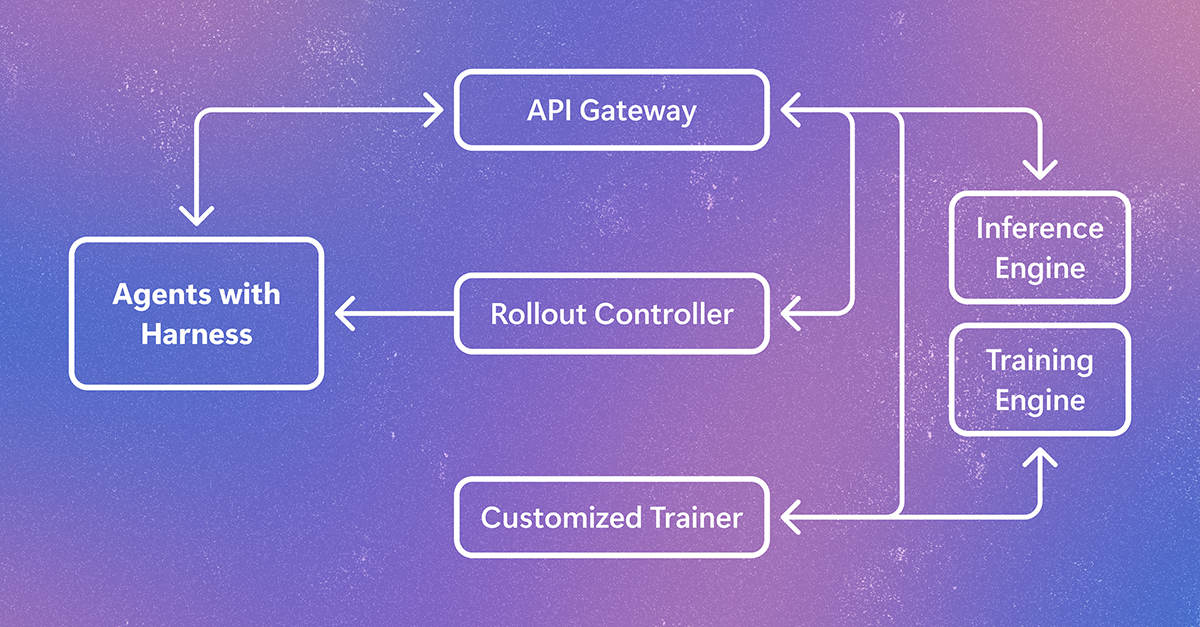
Agent Lightning v1.0: A 3,500-Line Lightweight Agentic RL Framework for Training Agents with Real Harnesses

Training AI agents with reinforcement learning can be challenging because their tools, context, and decision-making are managed by complex frameworks. Agent Lightning connects existing agents to RL training, making it easier to improve them without rebuilding them. The post Agent Lightning v1.0: A 3,500-Line Lightweight Agentic RL Framework for Training Agents with Real Harnesses appeared first on Microsoft Research.

We use cookies to run the site and, with your consent, for analytics and to show ads. See our Cookie Policy.