AgentGUI is introduced, a user-friendly, locally hosted GUI for seamlessly observing and steering AI agents amid multiple concurrent, long-running sessions and features rich agent trajectory visualizations, effective manual and automated steering, and integration with and coordination between open-source and frontier agent frameworks.
Abstract
AI agents are increasingly adept at tackling complex, long-running tasks. With the rapid surge of autonomous capabilities, human oversight is systematically lagging behind due to limited human-centered interfacing. Aiming to address this, we introduce AgentGUI, a user-friendly, locally hosted GUI for seamlessly observing and steering AI agents amid multiple concurrent, long-running sessions. AgentGUI features 1) rich agent trajectory visualizations, 2) effective manual and automated steering, and 3) integration with and coordination between open-source and frontier agent frameworks. A controlled user study demonstrates statistically significant reduction in the time it takes to identify key elements from agent traces (38% faster, p = 0.023). In a preliminary experiment, AgentGUI's automated drift prevention feature raises the task completion rate of small local agents by as high as 34pp across a 0.8B--9B model ladder (N=50 runs per model). AgentGUI is publicly available through its project website (https://agent-gui-project.github.io) and open-source repository (https://github.com/eth-medical-ai-lab/agent-gui), along with a demo video (https://youtube.com/watch?v=GSDyxN1gTF0).

The results show that zero-shot LLM agents can achieve comparable management outcomes to RL agents under the same weather pattern and adapt more effectively than RL when evaluated under a shifted environment, highlighting a promising path toward self-adaptive physical AI agents.
Pera describes a persistent agent organized around perception and control components that continually perceive service-relevant signals from episodic task executions, internal context, and changes in the surrounding environment, and use these signals to construct lifecycle tasks.
Shi-Han Dou, Haoxiang Jia, Shichun Liu et al.· 1 citation
Terminal agents are moving beyond local operations toward completing real-world professional tasks. Short trajectories can demonstrate commands and tool calls, but they do not fully show how agents accumulate evidence through exploration, use it to inform judgments, continually adjust strategies based on feedback, and...
To quantify collaboration effectiveness in addition to conventional binary task success, Causal Collaboration Effectiveness (CCE) is proposed, a graph-based metric that traces causal dependencies between agent actions and measures what fraction of a team's effort actually contributed to the outcome.
Raphael Shu, Yu-Sen Zhang, Y. Cho et al.· 2 citations
A unified, taxonomy-driven, and deployment-oriented survey of agentic AI systems, synthesizing recent advances through a modular reference architecture and a four-dimensional taxonomy that characterizes agents along the axes of autonomy, tool use, collaboration, and safety–governance is presented.
Sparsh Bajoria, Shreyanshu Ranjan, Adhitya M et al.· Cognitive Computation· 1 citation
In cooperative Multi-Agent Reinforcement Learning (MARL), agents are often trained under concurrent participation, while in many tasks some agents act earlier and leave task-relevant information that becomes useful to agents participating later. We study this setting as staggered participation (SP), which introduces a...
Professor Paris Smaragdis develops computers with superhuman hearing for applications like speech recognition, music understanding, and environmental monitoring.
MIT News · Artificial Intelligence· news.mit.eduOct 23, 2026
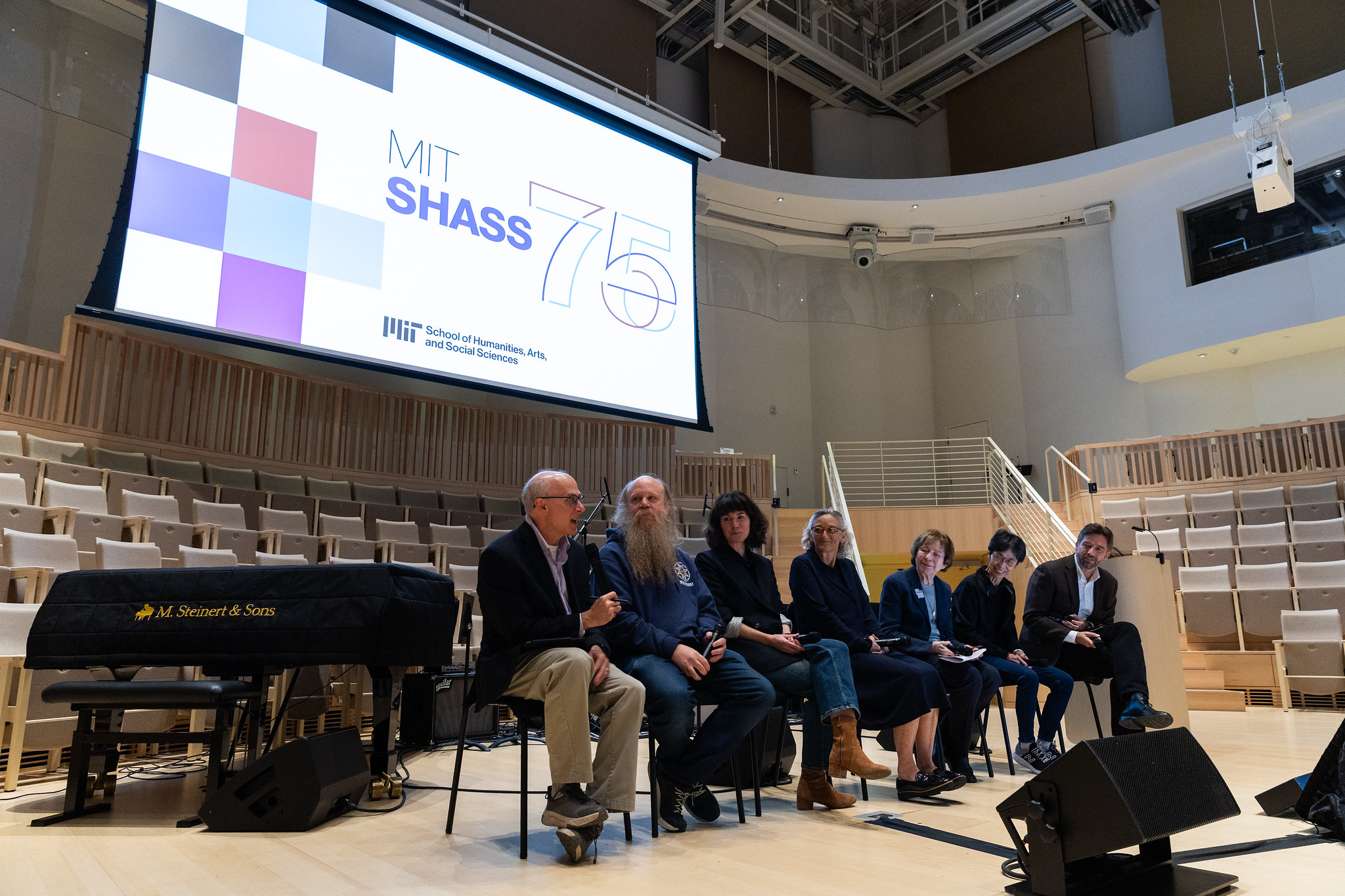
During the School of Humanities, Arts, and Social Sciences’ 75th Anniversary Symposium, President Sally Kornbluth said “MIT has never needed your particular insight and guidance more than we do now.”
MIT News · Artificial Intelligence· news.mit.eduOct 23, 2026
Assistant Professor Benjamin Lindquist studies how engineers deliberately injected randomness into early AI, giving rise to deep-learning models that sometimes hallucinate.
MIT News · Artificial Intelligence· news.mit.eduOct 22, 2026
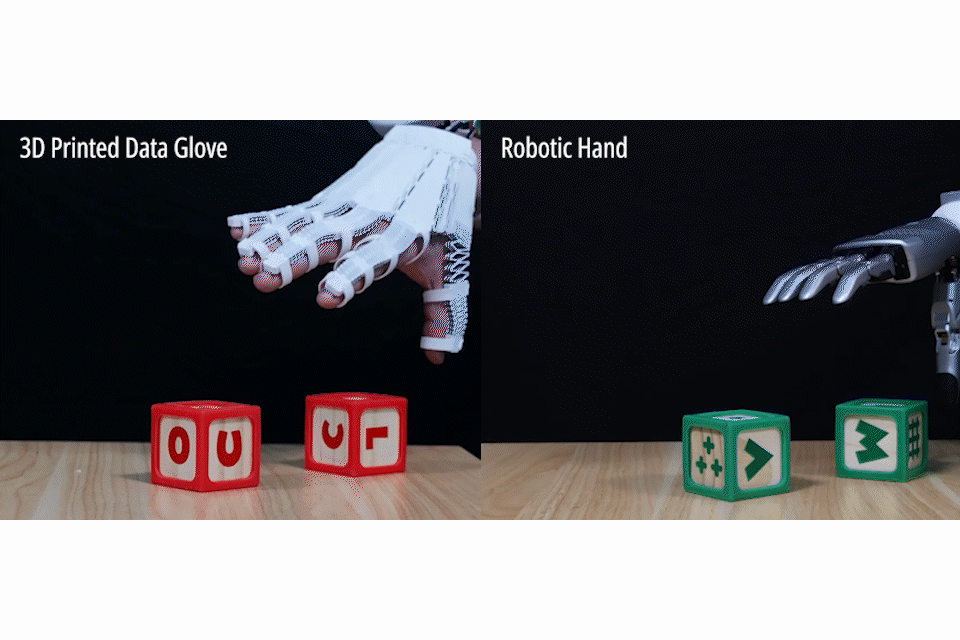
“X-Hinges” helps design and 3D print items like lamps and gloves with an interactive twist: automatically embedded sensors that perceive and adaptively respond to human contact.
We use cookies to run the site and, with your consent, for analytics and to show ads.
See our Cookie Policy.