We analyze gradient descent with Polyak (1964) heavy-ball momentum (HB) whose fixed momentum hyperparameter $\beta \in (0, 1)$ provides exponential decay of memory. Building on Kovachki and Stuart (2021), we prove that on an exponentially attractive invariant manifold the algorithm is exactly plain gradient descent wit...
We present Causal Posterior Estimation (CPE), a novel method for Bayesian inference in simulator models, where evaluating the likelihood function is intractable or computationally expensive, but generating outputs given parameter values is straightforward. CPE approximates the posterior distribution using flow matching...
Machine unlearning, the process of selectively removing data from trained models, is increasingly crucial for addressing privacy concerns and knowledge gaps post-deployment. Despite this importance, existing approaches are often heuristic and lack formal guarantees. In this paper, we analyze the fundamental utility, ti...
Youssef Allouah, Joshua Kazdan, Rachid Guerraoui et al.· 0 citations
Heavy-tailed noise has been widely observed in modern machine learning, motivating the use of methods like gradient clipping and normalization. While these methods are well understood in centralized settings, much less is known in decentralized ones, where applying a nonlinearity to local gradients affects both optimiz...
Aleksandar Armacki, H. Cai, Ali H. Sayed· 0 citations
Reach audiences
Advertise in front of researchers, engineers, and readers.
The sensitivity to instruction phrasing is characterized with statistically tested single-edit swings and an oracle phrase search, which shows that phrasing alone nearly closes the 21-point gap between in-distribution and out-of-distribution tasks.
Small tabular datasets with expert-designed spectral features are the norm in
operational Earth observation, and the networks applied to them are typically
hand-designed. We revisit one such published model -- a Sentinel-2 algal
bloom classifier -- and ask what architecture search adds, holding the task,
the fe...
We study the best arm identification problem in a stochastic environment with a novel form of adversarial perturbations, which we coin Shifting Means. While classically the mean rewards of the $K$ arms are stable in time, in Shifting Means only the gaps $\boldsymbol{\Delta}$ between mean rewards are stable, while their...
Lukas Zierahn, Wouter M. Koolen, Shubhada Agrawal et al.· 0 citations
Rapid and accurate prediction of urban wind and temperature fields is important for urban microclimate design and climate adaptation. Large-eddy simulation (LES) effectively resolves these instantaneous fields, but its application is limited in iterative design of urban microclimate applications due to high computation...
Peng Liu, Shaoxiang Qin, Theodore Potsis et al.· 0 citations
Gradient observations promise more accurate Gaussian process (GP) surrogates, but the cost of incorporating them has long stood in the way of realizing that promise. We propose a derivative GP with a budget of just two directions per observed gradient. One direction focuses on each gradient's direct contribution to tar...
SteerSpeech is presented, a lightweight activation-steering framework that controls emotion by injecting steering vectors into hidden activations that encourages monotonic emotion control while preserving speaker identity and linguistic content, constraining steering drift, and keeping the TTS backbone frozen.
A. Benazir, Darius Petermann, Felix Xiaozhu Lin et al.· 0 citations
General-purpose agents increasingly write code, use tools, and complete complex digital tasks, raising the question of how far these capabilities carry into the physical world. To investigate this, we introduce RobotWorld, a challenging simulation testbed for robot use: turning instructions and observations into physic...
Zhiqin Yang, Chen-Xin Li, Xiao-Meng Hu et al.· 2 citations
The sharp bound of $n(n-1)$ vertices for $n\ge2$ is proved, answering Rote's rotation-assignment open problem, and assignment-based bounds extend the approach to three-dimensional rotations and partial matching at a supplied translation through branch-and-bound.
Subhransu S. Bhattacharjee, Dylan Campbell, Rahul Shome· 0 citations
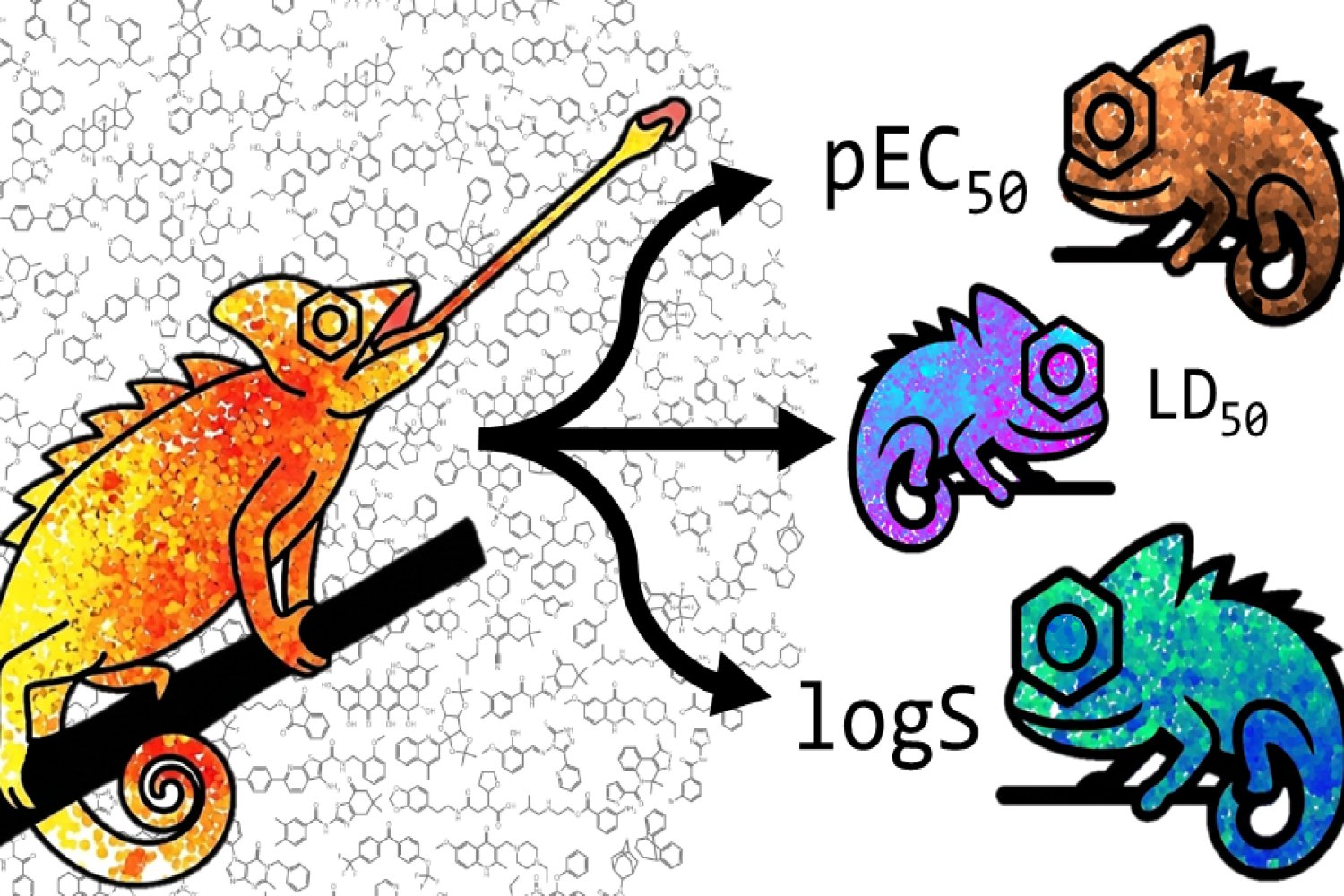
A machine-learning approach called CheMeleon provides a practical way to develop new drugs or other molecules with much less detailed, expensive experimentation.
Research Manager Mike Walker reflects on a career spanning hacker culture, cybersecurity, and AI, sharing lessons about trust, teamwork, leadership, and why solving difficult problems requires curiosity, judgment, agility—and an understanding of the rules. The post Learn the rules: The hacker mindset appeared first on Microsoft Research.
Learn how Google Antigravity and our Cheminformatics Skills accelerate drug discovery workflows, search compounds, and propose novel rigidified macrocycles.
We use cookies to run the site and, with your consent, for analytics and to show ads.
See our Cookie Policy.