Archival film restoration is a challenging problem because historical footage contains compound degradations such as scratches, dust, blur, noise, flicker, and photometric aging, while clean reference videos are unavailable. Existing video restoration methods largely treat these degradations implicitly, reconstructing...
Miko{\l}aj Jastrz\k{e}bski, Wojciech Koz{\l}owski, Kamil Adamczewski· 0 citations
We study stabilizer state testing and learning with limited coherent quantum memory. Here an algorithm sequentially receives copies of an unknown $n$-qubit state, but may keep only $k$ qubits of coherent quantum memory between measurements. With unrestricted memory, seminal work of Gross, Nezami and Walter showed how t...
Srinivasan Arunachalam, Louis Schatzki· 0 citations
Self-supervised image encoders deliver strong features for downstream tasks but need many images for training. A natural remedy to counter this is to make each image count for more. A scene contains many objects, and given masks from human annotators or an off-the-shelf segmentation model, pre-training can focus on ali...
message Passing Language Models, a framework for LLM reasoning in which threads communicate directly via lightweight send and receive primitives, and shows that appropriately prompted large pre-trained models follow the MPLM protocol, achieving competitive results on long-context question answering relative to popular...
For residual learning that refines existing behavior, sample efficiency depends on two things: how much information each rollout returns, and how efficiently the learner uses that information. Reinforcement learning's standard scalar reward carries far less information than the directional task error that defines the t...
Kai Ploeger, Alap Kshirsagar, Jan Peters· 0 citations
Large multimodal language models (MLLMs) have emerged as powerful tools for guiding evolutionary search toward interpretable programmatic policies. In existing program-evolution systems, however, reusable knowledge is usually carried by whole programs in the population, and it is difficult to trace how a visual observa...
Modern protein representation models support tasks such as enzyme design and drug discovery, but their reliance on static data such as sequence and native structure limits their ability to capture the conformational dynamics that drive protein function. We investigate whether persistent homology (PH) can provide descri...
Dominik Geng, Florian Graf, Martin Uray et al.· 0 citations
Long-horizon prediction of a chaotic system is governed by fidelity to its invariant measure, and which parts of that measure a learned predictor needs is a physical question not known in advance. We establish a quantum statistical memory advantage for interrogating it. A quantum statistical prior (Q-Prior), trained on...
Maida Wang, Xiao Xue, Minh Chung et al.· 0 citations
Machine learning is increasingly used to accelerate materials discovery across large compositional and structural design spaces, but limited and heterogeneous data make reliable uncertainty estimation essential. In this work, we investigate uncertainty quantification for permanent magnet modeling across three complemen...
Clemens Wager, Heisam Moustafa, Alexander Kovacs et al.· 0 citations
In-context learning lets a language model perform a task specified by examples in its prompt. Function vectors capture task information in a compact activation assembled from attention-head outputs. Across two rule families and three Pythia models, we find two opposed functional populations among candidate function-vec...
Price statistics increasingly draw on scanner, web-scraped and receipt data, whose product descriptions are short, noisy and carry no standard product code, so each item must be coded to a consumption classification such as COICOP. National statistical offices already report that lightweight text classifiers are adequa...
We study the problem of multiclass PAC learning with bandit feedback in the realizable setting. In this framework, there is an unknown data distribution over an instance space $\mathcal{X}$ and a label space $\mathcal{Y}$, as in classical multiclass PAC learning, but the learner does not observe the labels of the i.i.d...
Steve Hanneke, Qinglin Meng, Shay Moran et al.· 0 citations
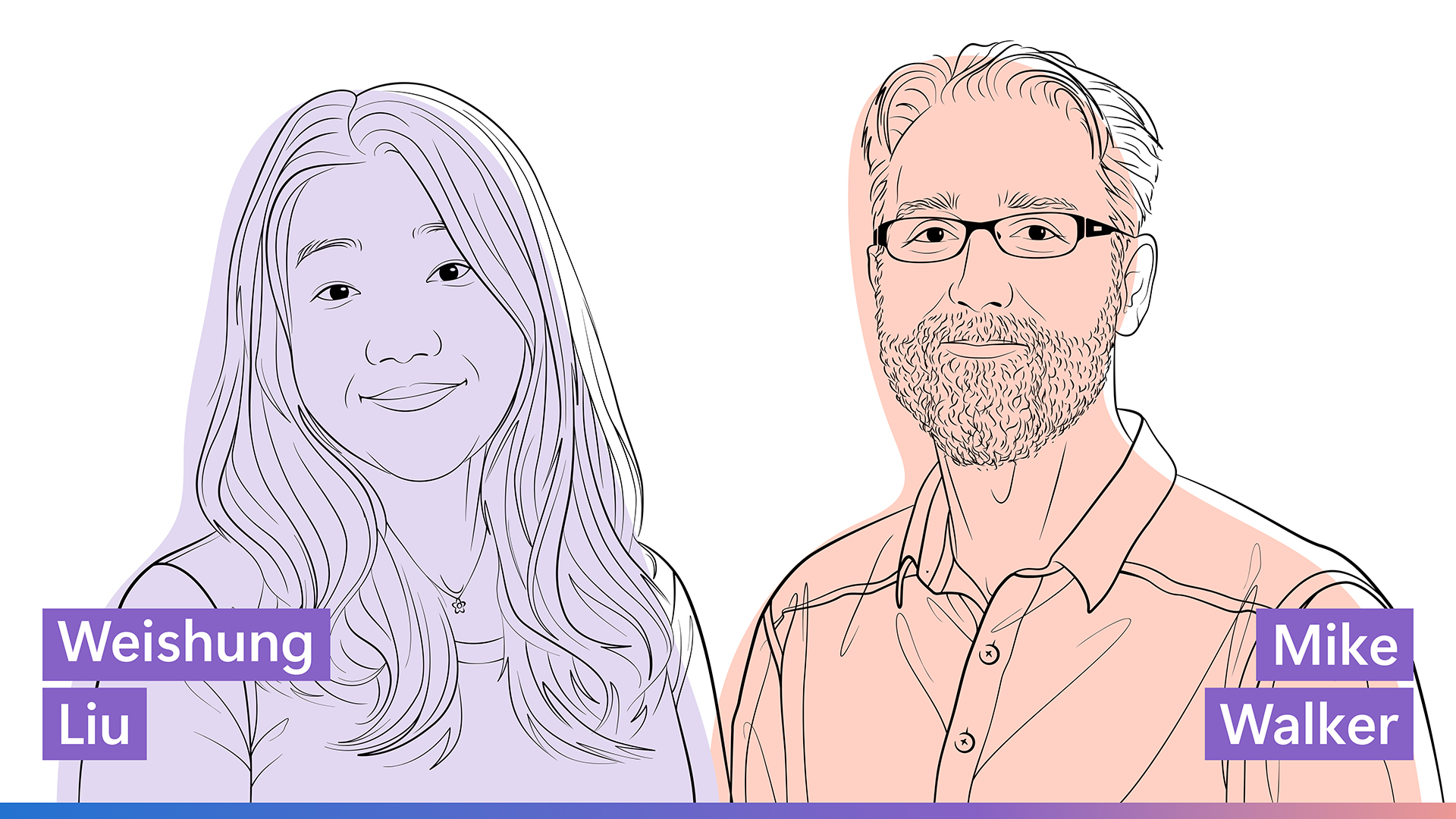
Research Manager Mike Walker reflects on a career spanning hacker culture, cybersecurity, and AI, sharing lessons about trust, teamwork, leadership, and why solving difficult problems requires curiosity, judgment, agility—and an understanding of the rules. The post Learn the rules: The hacker mindset appeared first on Microsoft Research.
Learn how Google Antigravity and our Cheminformatics Skills accelerate drug discovery workflows, search compounds, and propose novel rigidified macrocycles.
MIT News · Artificial Intelligence· news.mit.eduOct 28, 2026
Professor Paris Smaragdis develops computers with superhuman hearing for applications like speech recognition, music understanding, and environmental monitoring.
MIT News · Artificial Intelligence· news.mit.eduOct 27, 2026
Prabha Jha used her experience with MIT Open Learning’s program for senior executives to develop AI solutions for her employer, Verizon, and to write a book.