Text-to-image diffusion models generate images by iterative denoising, so their internal layers produce trajectories of activations rather than single static representations. Sparse autoencoders (SAEs) have recently been used to decompose diffusion activations into interpretable features, but most approaches analyze in...
Calvin Yeung, Prathyush Poduval, Ali Zakeri et al.· 0 citations
Understanding how humans and artificial intelligence systems predict and plan by interacting with their environment is a fundamental challenge at the intersection of neuroscience and machine learning. Most brain-encoding studies focus on aligning artificial models with brain activity during language comprehension or pa...
Learning latent representations from temporal, multimodal, and partially observed data requires specifying what information a latent state should retain, discard, and organize. Existing approaches encode these requirements through heterogeneous objectives, making methods difficult to compare and learned representations...
Model providers increasingly release the weights of large language models. Although these models are safety-aligned before release, their safeguards can often be removed by fine-tuning on harmful data. A growing class of defenses aims to make alignment robust to such malicious fine-tuning, but these defenses are typica...
Itay Zloczower, Eyal Lenga, Gilad Gressel et al.· 0 citations
Reach audiences
Advertise in front of researchers, engineers, and readers.
Discrete diffusion language models (DLMs) generate text by iteratively denoising all positions in parallel, offering an alternative to autoregressive models. Controlled generation methods for DLMs, imported from autoregressive models, apply uniform intervention at every denoising step. We show this uniform schedule is...
Active vision -- where a policy controls its own gaze during manipulation -- has emerged as a key capability for imitation learning, with multiple independent systems demonstrating its benefits in the past year. Yet there is no shared benchmark to compare approaches or quantify what active vision contributes, on which...
How can an arbitrary attribution method be generalized from first principles to capture interactions? We answer this with the metagame, a conceptual framework for quantifying second-order interaction effects of model explanations. We cast the attribution value $\phi_i$ of feature $i$ as a cooperative game among the oth...
Machine Learning (ML) has transformed many scientific fields, yet key applications still lack standardized benchmarks. Raman spectroscopy, a widely used technique for non-invasive molecular analysis, is one such field where progress is limited by fragmented datasets, inconsistent evaluation, and models that fail to cap...
Mario Koddenbrock, Christoph Lange, Robin Legner et al.· 0 citations
Human behavior is difficult to observe continuously at scale, yet it leaves measurable traces in everyday device use. We test whether encrypted smartphone network traffic---a ubiquitous, always-on, passive sensing modality---can passively capture behavioral patterns related to sleep, stress, and loneliness. We model sh...
Rameen Mahmood, Omar El Shahawy, Souptik Barua et al.· 0 citations
HealthPoint (HP) is proposed, a unified clinical point cloud paradigm for multi-level incomplete EHRs that enables flexible event-level interaction and fine-grained self-supervision, supporting robust modality recovery and effective use of unlabeled data.
Bohao Li, Tao Zou, Jun-Chen Ye et al.· arXiv.org· 0 citations
Bi-CamoDiffusion is introduced, an evolution of the CamoDiffusion framework for camouflaged object detection. It integrates edge priors into early-stage embeddings via a parameter-free injection process, enhancing boundary sharpness and preventing structural ambiguity. An optimization objective that unifies spatial acc...
Patricia L. Suarez, Leo Thomas Ramos, Angel D. Sappa· 0 citations
BONSAI is introduced, a default-aware BO policy that prunes low-impact deviations from a default configuration while explicitly controlling the loss in acquisition value and theoretically bound the regret incurred by BONSAI.
Sam Daulton, David Eriksson, M. Balandat et al.· arXiv.org· 1 citation
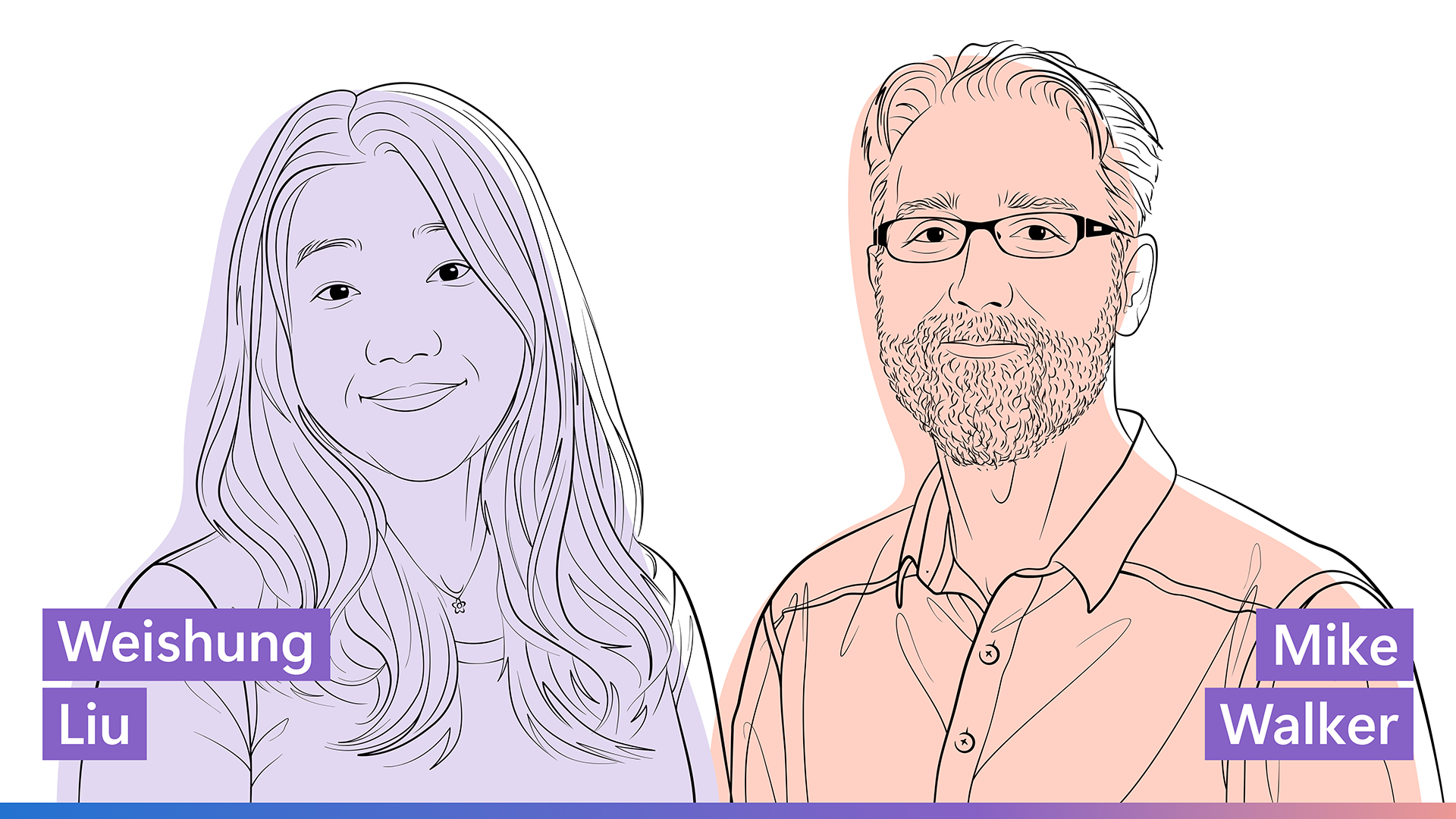
Research Manager Mike Walker reflects on a career spanning hacker culture, cybersecurity, and AI, sharing lessons about trust, teamwork, leadership, and why solving difficult problems requires curiosity, judgment, agility—and an understanding of the rules. The post Learn the rules: The hacker mindset appeared first on Microsoft Research.
Learn how Google Antigravity and our Cheminformatics Skills accelerate drug discovery workflows, search compounds, and propose novel rigidified macrocycles.
MIT News · Artificial Intelligence· news.mit.eduOct 28, 2026
Professor Paris Smaragdis develops computers with superhuman hearing for applications like speech recognition, music understanding, and environmental monitoring.
MIT News · Artificial Intelligence· news.mit.eduOct 27, 2026
Prabha Jha used her experience with MIT Open Learning’s program for senior executives to develop AI solutions for her employer, Verizon, and to write a book.