Switching stochastic differential equations (SSDEs) describe continuous-time dynamics whose parameters switch according to a latent regime process that follows a continuous-time Markov chain (CTMC). By allowing dynamics to change between regimes, SSDEs represent heterogeneous system behavior and have been applied acros...
We analyze the first-order deterministic diffusion sampler of Karras et al. (2022), termed EDM, in 2-Wasserstein distance by separating two sources of error: local discretization error and its amplification by subsequent learned steps. We prove that local error admits a universal bound: for any data distribution with f...
Split Gibbs sampling (SGS) is a popular framework for posterior sampling in Bayesian imaging inverse problems. It decouples a Gaussian data-fidelity term from a complex prior through an auxiliary variable, so the data variable is updated exactly and only the prior-side conditional is hard to sample. Existing samplers t...
Split conformal prediction uses prediction errors on held-out (calibration) data to determine how wide the prediction intervals should be. It guarantees distribution-free finite-sample coverage when these errors and the error at the target site are exchangeable. This assumption may fail under spatial dependence and non...
Ayush Baran Sen, Arkajyoti Saha· 0 citations
Reach audiences
Advertise in front of researchers, engineers, and readers.
Policy learning in digital experimentation faces three challenges: weak signal-to-noise ratios, rich covariate spaces, and massive data volumes. We formalize this regime by modeling treatment-effect estimates from increasingly fine covariate partitions as Gaussian observations with bounded signal-to-noise ratios. We es...
Benedikt Koch, Winston Chou, Aur\'elien Bibaut et al.· 0 citations
This review introduces ML methods that are most relevant to experimentalists working in condensed matter physics and materials science and follows the ARPES workflow, reviewing existing ML applications at each step and discussing their advantages, limitations, and potential for future development.
S. Ekahana, Aalok Tiwari, Pratik Saud et al.· 0 citations
This work unifies prior approaches through the framework of priority sampling, designing algorithms that establish a smooth tradeoff between the number of MIPS indices and number of retrieved keys and designing algorithms that outperform top-$k and sampling approaches used in prior work and yield attention approximatio...
Stepan Zharkov, Krish Singal, Ashwin Padaki et al.· 0 citations
Generative recommenders return a limited candidate set and may omit observed targets before reranking. A training strategy appends these missed targets to reranker training lists, although inference still ranks only original candidates. This operation simultaneously changes retrieved-target weight, adds supervision ove...
Gaussian processes (GPs) are widely used across machine learning, spatial statistics, time-series analysis, optimization, Bayesian statistics, and scientific applications. A central component of a GP model is its kernel, which is typically specified through a parametric family. Among the most widely used choices is the...
Calibration is an essential requirement for probabilistic predictions to be useful for decision making. While state-of-the-art prediction methods often yield miscalibrated predictive distributions, several post-hoc recalibration schemes have been proposed to generate calibrated predictions. However, popular recalibrati...
This work derives the optimal controller in closed form and approximate it in a reproducing kernel Hilbert space (RKHS), which reduces the problem of constructing the optimal controller to solving a single equality-constrained quadratic program, whose solution can be characterized by a linear Karush-Kuhn-Tucker system.
Bo-Ya Hou, Shan Wang, Siddharth Ambekar et al.· 0 citations
Accurate forecasting models are usually large, expensive to update online, and fixed in architecture once trained. We apply ONE-NAS, an online neuroevolutionary architecture search that evolves a population of small recurrent networks as each window of data arrives, to daily cross-sectional stock return prediction, and...
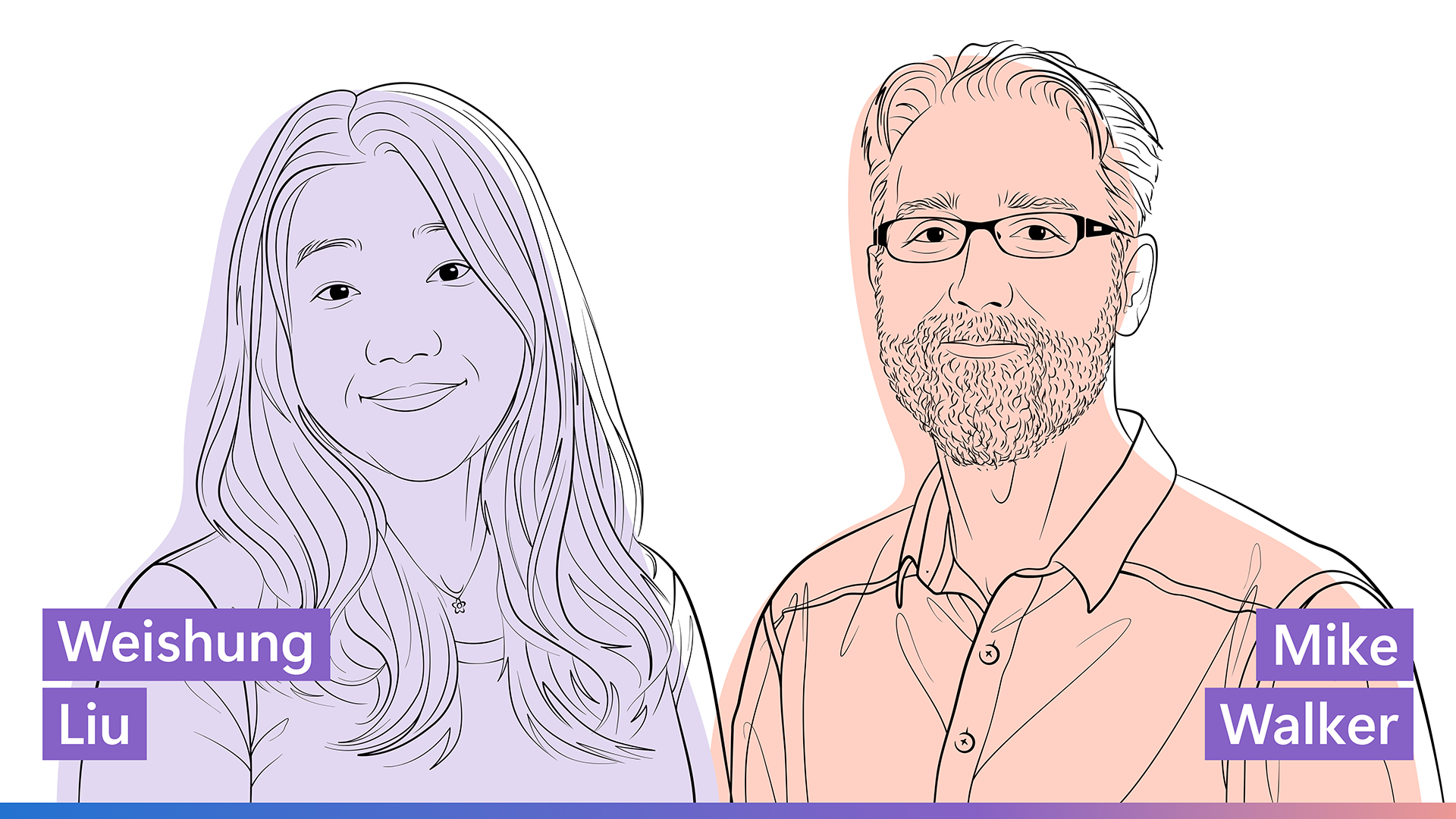
Research Manager Mike Walker reflects on a career spanning hacker culture, cybersecurity, and AI, sharing lessons about trust, teamwork, leadership, and why solving difficult problems requires curiosity, judgment, agility—and an understanding of the rules. The post Learn the rules: The hacker mindset appeared first on Microsoft Research.
Learn how Google Antigravity and our Cheminformatics Skills accelerate drug discovery workflows, search compounds, and propose novel rigidified macrocycles.
MIT News · Artificial Intelligence· news.mit.eduOct 28, 2026
Professor Paris Smaragdis develops computers with superhuman hearing for applications like speech recognition, music understanding, and environmental monitoring.
MIT News · Artificial Intelligence· news.mit.eduOct 27, 2026
Prabha Jha used her experience with MIT Open Learning’s program for senior executives to develop AI solutions for her employer, Verizon, and to write a book.