Fusing a learned camera-noise fingerprint with an RGB appearance backbone is an appealing route to generator-independent deepfake detection, because the noise residual is grounded in image-formation physics rather than in the texture statistics of a particular generator. We test, on FaceForensics++, whether a Noiseprin...
Diffusion models generalize early in training and later reproduce individual training samples. Standard tests detect memorization only once one-shot generation produces near-copies, leaving a released model unaudited until its outputs fail. We show that memorization is encoded in the geometry of the learned energy land...
Nikhil Verma, Siddharthan Dileep, Anoop Singh et al.· 0 citations
To the authors' knowledge, Evi-VN is the first graph fraud detection framework to use feature isolated evidence chains to correct hard regions shared across GNNs, and selectively applies this evidence only to likely hard samples via virtual class nodes, preserving both the reliable predictions and the input design of e...
Repairing scientific models from functional observations differs fundamentally from supervised prediction: feedback may certify a solution without revealing which structural correction is responsible. We study this setting for genome-scale metabolic model (GEM) repair, where multiple reaction edits can explain the same...
Xuan Gong, Hanbo Huang, Wenbin Dai et al.· 0 citations
Reach audiences
Advertise in front of researchers, engineers, and readers.
Consensus can make pseudo-label learning more reliable, but only when its predictors contribute genuinely different evidence. Multiple models that repeat the same boundary provide additional votes without additional information. We address this problem by con structing decision sources through controlled changes to wit...
Accurate trajectory forecasting and well-defined predictive uncertainty are crucial for reliable, safety-critical applications such as autonomous driving. Most trajectory prediction approaches provide point estimates only, while uncertainty-aware approaches typically quantify uncertainty only in the trajectory space. I...
We study personalized federated linear stochastic approximation (LSA), a framework which notably encompass personalized temporal difference learning. In this setting, heterogeneous agents collaborate to solve distinct linear fixed-point equations, each corresponding to an agent-specific learning problem. A central open...
Safwan Labbi, Paul Mangold, Eric Moulines· 0 citations
We study online sparse linear regression (OSLR) where any algorithm is restricted to accessing only $b$ out of $d$ attributes per instance for prediction and $b_0\geq 0$ additional attributes after prediction, which was proved to be NP-hard. Previous work focused on designing computationally efficient algorithms under...
Xiaofeng Cao, Junfan Li, Langzhang Liang et al.· 0 citations
Acquiring realistic microstructure data through Electron Backscatter Diffraction (EBSD) is costly and time consuming, often relying on specialised equipment. As microstructures strongly influence material properties, generating realistic samples is essential for modelling the behaviour of polycrystalline materials. We...
Dawid Lipinski, Jixiang Qing, Henry Moss· 0 citations
Synthetic tasks are increasingly used both as probes of language-model capability and as pretraining data. Both uses are often justified by loss reduction: falling loss is treated as informative, and faster loss reduction with more sampling as evidence that a task is worth sampling. We separate three signals. A task is...
Federated reinforcement learning (FRL) enables distributed agents to collaboratively train decision-making policies, but its decentralized training process also exposes global policy learning to Byzantine manipulation. Existing poisoning attacks primarily focus on how to construct malicious updates, while trajectory-le...
Population gradient flow is a common tool for reasoning about how neural networks adapt, including after pretraining. We show that it can mispredict finite-batch stochastic gradient descent (SGD) qualitatively, and we trace the discrepancy to a specific mechanism. In a two-unit ReLU regression, a source task drives the...
Ruo-Yu Zhao, Ming-Xuan Zhang, Jian-Bo Dai et al.· 0 citations
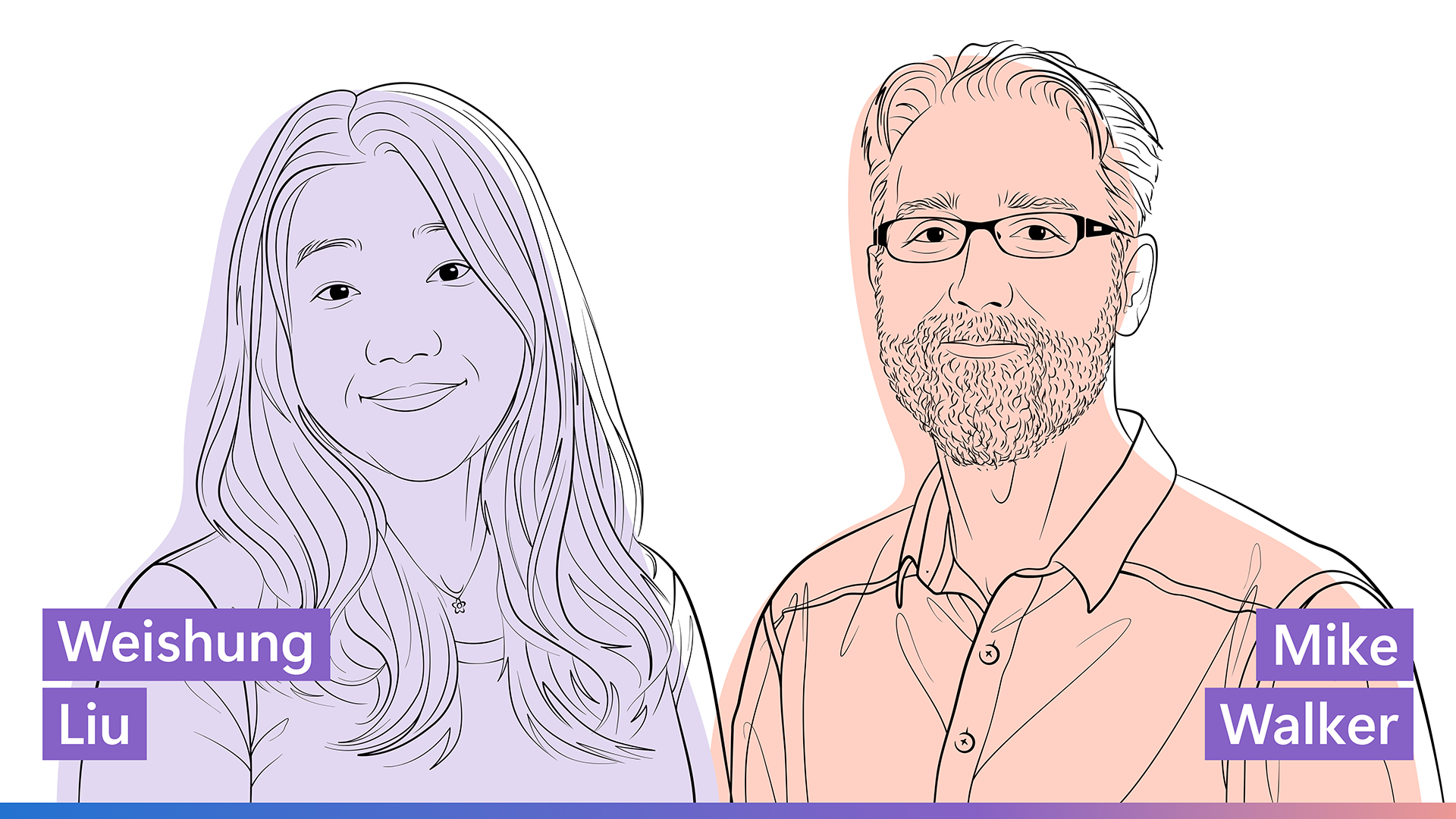
Research Manager Mike Walker reflects on a career spanning hacker culture, cybersecurity, and AI, sharing lessons about trust, teamwork, leadership, and why solving difficult problems requires curiosity, judgment, agility—and an understanding of the rules. The post Learn the rules: The hacker mindset appeared first on Microsoft Research.
Learn how Google Antigravity and our Cheminformatics Skills accelerate drug discovery workflows, search compounds, and propose novel rigidified macrocycles.
MIT News · Artificial Intelligence· news.mit.eduOct 28, 2026
Professor Paris Smaragdis develops computers with superhuman hearing for applications like speech recognition, music understanding, and environmental monitoring.
MIT News · Artificial Intelligence· news.mit.eduOct 27, 2026
Prabha Jha used her experience with MIT Open Learning’s program for senior executives to develop AI solutions for her employer, Verizon, and to write a book.
Assistant Professor Benjamin Lindquist studies how engineers deliberately injected randomness into early AI, giving rise to deep-learning models that sometimes hallucinate.
We use cookies to run the site and, with your consent, for analytics and to show ads.
See our Cookie Policy.