Uniform random rotations are useful in fast Johnson--Lindenstrauss embeddings, kernel approximation, communication-efficient learning, and recent AI compression pipelines, but are computationally expensive to generate and apply in high dimensions. A practical alternative repeats Walsh--Hadamard transforms with random s...
This paper investigates Koopman operator-based approaches for multivariable control of a two-spool turbofan engine. A physics-based component-level model is developed to generate training data and validate the controllers. A meta-heuristic extended dynamic mode decomposition is adapted, with a cost function designed to...
Large language models (LLMs) contain billions of parameters, but many exact weight values are not essential. We apply scalar $K$-means clustering to pretrained models, replacing each weight matrix with only 16--64 shared values. For Llama~3.1-8B-Instruct and SmolLM2-135M, this preserves strong accuracy without retraini...
Sampling from unnormalized densities using diffusion models has emerged as a powerful paradigm. However, while recent approaches that use least-squares `matching' objectives have improved scalability, they often necessitate significant trade-offs, such as restricting prior distributions or relying on unstable optimizat...
Denis Blessing, Lorenz Richter, Julius Berner et al.· 0 citations
Reach audiences
Advertise in front of researchers, engineers, and readers.
Networks of modern industrial systems are increasingly monitored by distributed sensors, where each system comprises multiple subsystems that generate high-dimensional time-series. These subsystems are often interdependent, making it important to understand how temporal patterns observed at one subsystem relate to thos...
Ayse Tursucular, Ayush Mohanty, Nazal Mohamed et al.· 0 citations
Scaling Federated Learning (FL) to billion-parameter models forces a challenging trade-off between privacy, scalability, and model utility. Existing solutions often tackle these challenges in isolation, sacrificing accuracy, relying on costly cryptographic tools, or introducing communication and optimization inefficien...
Dario Fenoglio, Pasquale Polverino, Akash Dhasade et al.· 0 citations
Credal geometry is established as a principled framework for quantifying conformal uncertainty and understanding its limitations, reducing potentially exponential computations to linear time after sorting the conformal p-values.
Siu Lun Chau, Soroush H. Zargarbashi, Yusuf Sale et al.· 5 citations
Multipurpose batch processes become increasingly popular in manufacturing industries since they adapt to low-volume, high-value products and shifting demands. These processes often operate in a dynamic environment, which faces disturbances such as processing delays and demand changes. To minimise long-term cost and sys...
This paper uses classical high-rate quantization theory to provide new insights into mixture-of-experts (MoE) models for regression tasks. Our MoE is defined by a segmentation of the input space to regions, each with a single-parameter expert that acts as a constant predictor with zero-compute at inference. Motivated b...
While adaptive experimental design has outgrown one-dimensional, staircase-based adaptations, most cognitive experiments still control a single factor and summarize performance with a scalar. In contrast, we validate here a Bayesian, two-axis, active-classification approach in an immersive virtual testing environment,...
Dom CP Marticorena, Chris Wissmann, Zeyu Lu et al.· 0 citations
Trajectory prediction is essential for formulating proactive strategies that anticipate user mobility and support advance preparation. Therefore, how to reduce the forecasting error in user trajectory prediction within an acceptable inference time arises as an interesting issue. However, trajectory data contains both g...
Wei Hao, Bin Chong, Ronghua Ji et al.· 0 citations
Foundation model ensembles can improve accuracy and robustness, but full fine-tuning and parameter-space merging are often expensive or impossible when candidate models have different architectures. We propose Optimizable Model Averaging (OMA), a black-box approach that learns nonnegative model-combination weights, one...
Learn how Google DeepMind and GovTech Singapore uses lightweight on-device Gemma models to intercept conversational scams in private chats with zero cloud data egress.
MIT News · Artificial Intelligence· news.mit.eduOct 13, 2026
Machine-learning networks can learn without detailed instructions from a designer. Those that do may offer insight into how the brain reorganizes itself during learning.
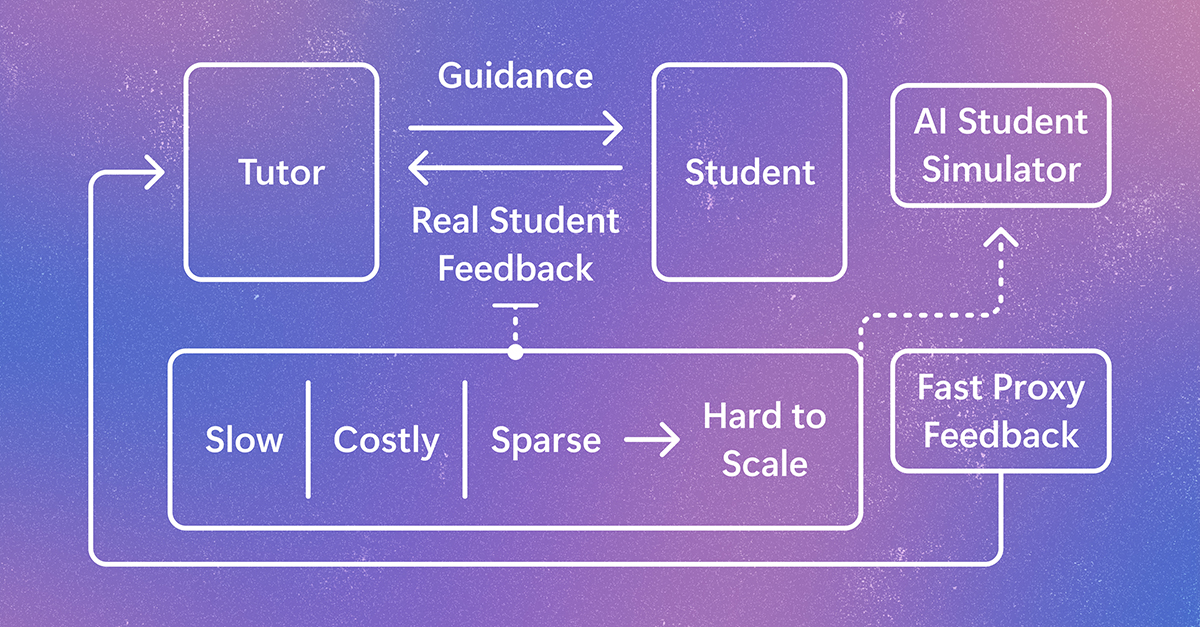
StudentSim is a research system for evaluating and improving AI tutoring tools before they are tested with learners. It models how individuals may engage with tutors, giving feedback to improve tutor performance across subjects like chess, writing, and mathematics. The post Simulating student learning for better AI tutoring appeared first on Microsoft Research.
We use cookies to run the site and, with your consent, for analytics and to show ads.
See our Cookie Policy.