We introduce $qt$Bench, a benchmark of 29 open problems in algebraic combinatorics. These problems ask for a simple combinatorial algorithm that explains given polynomial coefficients or identities. To help AI agents search for such algorithms, we provide a scaffold for playing with combinatorial objects, countering ch...
Eugenio Cainelli, Lorenzo Luccioli, Alessandro Iraci et al.· 0 citations
Training LLM agents to interact with users over multiple turns is challenging because the learning signal depends not only on the agent, but also on the user simulator and environment, which jointly shape the agent's experience. Simulated users can be stochastic or inconsistent, while environments may contain unreliabl...
Multi-step retrosynthesis planning is often considered solved once a route to purchasable starting materials is found, but such a route should also be practical in real-world chemistry. Recent LLM-based planners formulate this process as sequential decision-making over an AND-OR graph, yet typically expand a single mol...
Yejun Kim, Yongjun Jeong, Seongjun Yun et al.· 0 citations
The results support ChronoScribe's division of labor, in which the LLM handles interpretation, configuration, and communication while the TSFM handles numerical forecasting.
Yu-Chen Jiao, Miao Zhang, Yuxuan Liu et al.· 0 citations
Reach audiences
Advertise in front of researchers, engineers, and readers.
Multi-agent debate has shown promise for improving the reasoning of large language models, yet recent theory suggests its benefits are highly regime-dependent. While interaction can amplify informative signals under corrective conditions, symmetric debate dynamics are neutral in expectation, often making majority votin...
Seungdong Yoa, Ye Seul Sim, Suhee Yoon et al.· 0 citations
Before changing a deployed AI agent (a stricter safety gate, a new model), organizations must approve the change, starting from existing logs. Extending classical risk analysis to partial records and partial changes to running systems, agent-risk replays logged episodes, assuming nothing else changes and the agent does...
Mamba-based super-resolution models are efficient alternatives to Transformer-based restoration backbones, but their low-bit post-training quantization remains challenging because selective scan, Mamba's input-dependent state-space operator, induces different activation ranges across spatial tokens. Thus, a single laye...
This paper proposes ONESHOT, which uses a single confirmed anomaly to weight the pool rather than to choose one detector from it, and shows that a single confirmed anomaly is enough to come close to the best detector for the series.
Seung-Han Lee, Jun Seo, Jaehoon Lee et al.· 0 citations
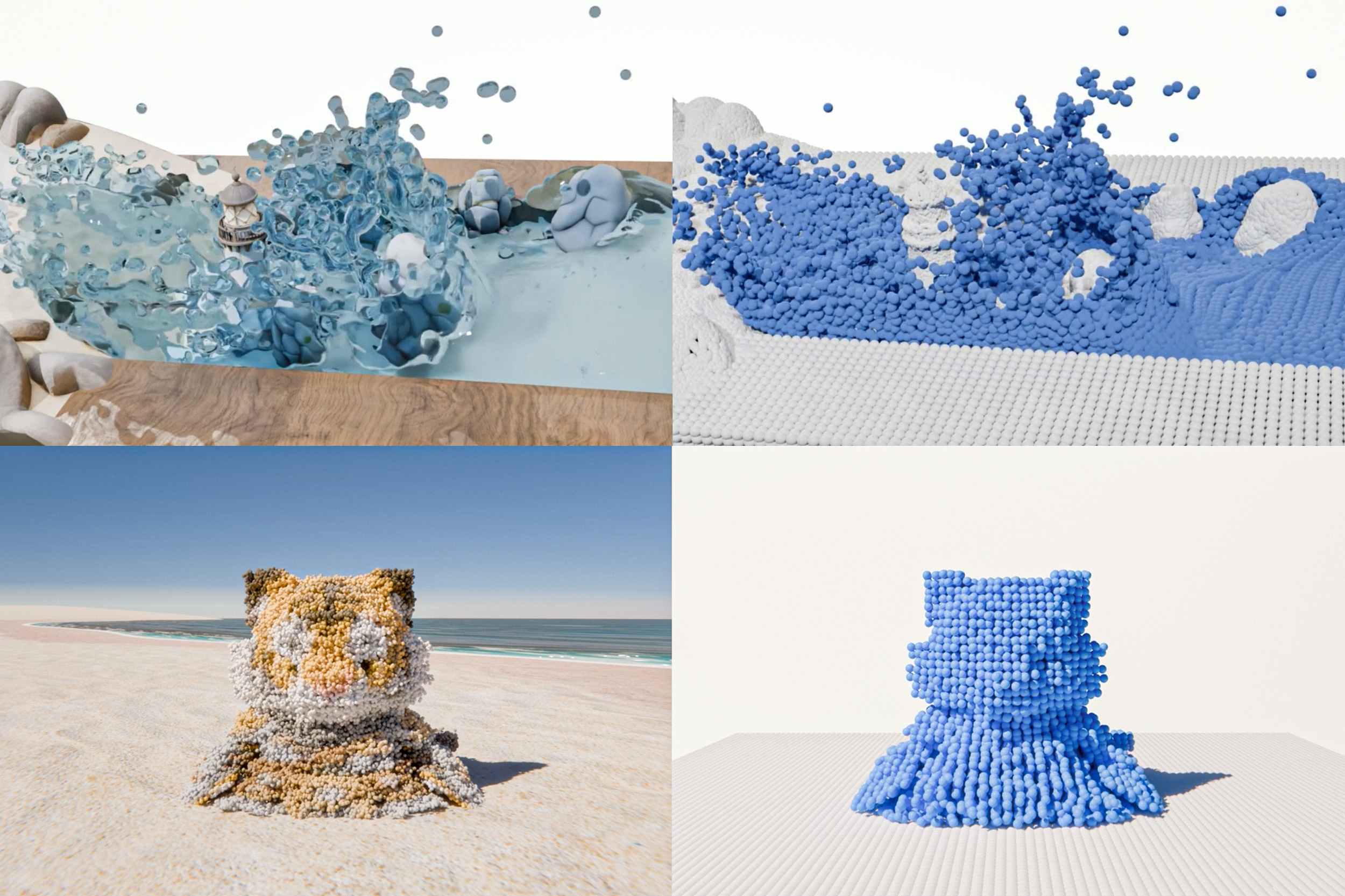
We propose the task of Interactive 4D Volumetric Liquid Forecasting: predicting the spatiotemporal evolution of a future dense 3D liquid velocity field conditioned on how a solid object moves through it. This task provides an upstream physical forecasting primitive for systems that need to reason about motion-condition...
Co-circulating influenza, COVID-19, and respiratory syncytial virus (RSV) create a shared hospital-admission burden, because beds, staff, testing capacity, and respiratory support are allocated to total demand rather than to one pathogen at a time. This makes respiratory forecasting a target-construction problem as wel...
Frontier models are now trained for complex multi-agent tasks, from running a company to engaging in negotiations. These tasks necessitate training models to be persuasive. But what does this optimization pressure mean for model alignment? In this work, we study how reinforcement learning (RL) training for persuasion a...
Boyi Wei, Ruta Desai, Peter Henderson et al.· 0 citations
Computational fluid dynamics (CFD) is computationally expensive for iterative building design. Deep learning surrogates offer faster predictions, but generalization across varying room dimensions remains challenging. This study compares two geometry-conditioned neural network surrogate models for rapid indoor airflow a...
By studying the computational foundations of language learning, Associate Professor Jacob Andreas builds intelligent systems that can communicate effectively with humans.
MIT News · Artificial Intelligence· news.mit.eduNov 17, 2026
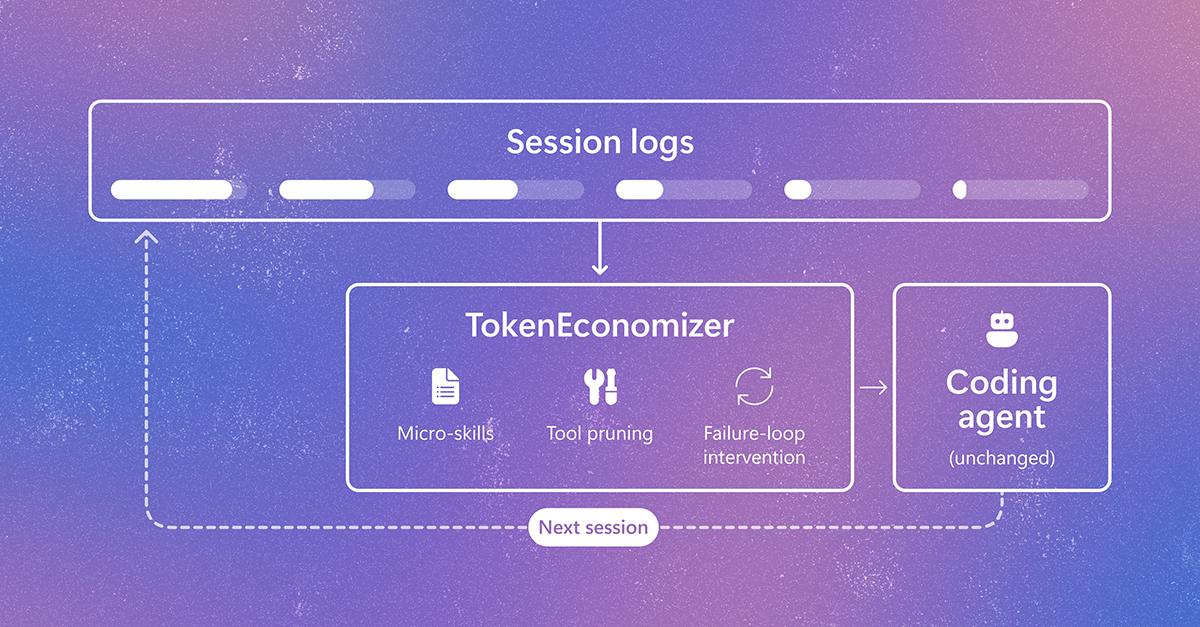
AI coding agents are increasingly help developers fix bugs and build features largely on their own, but every interaction with their models consumes tokens. In each session, an agent sends instructions, tool descriptions, and session history to its model. Most efforts to reduce this cost focus on individual tasks. Yet developers return to the same […] The post TokenEconomizer: Learning from Experience to Make AI Coding Agents More Efficient appeared first on Microsoft Research.
MIT News · Artificial Intelligence· news.mit.eduNov 13, 2026